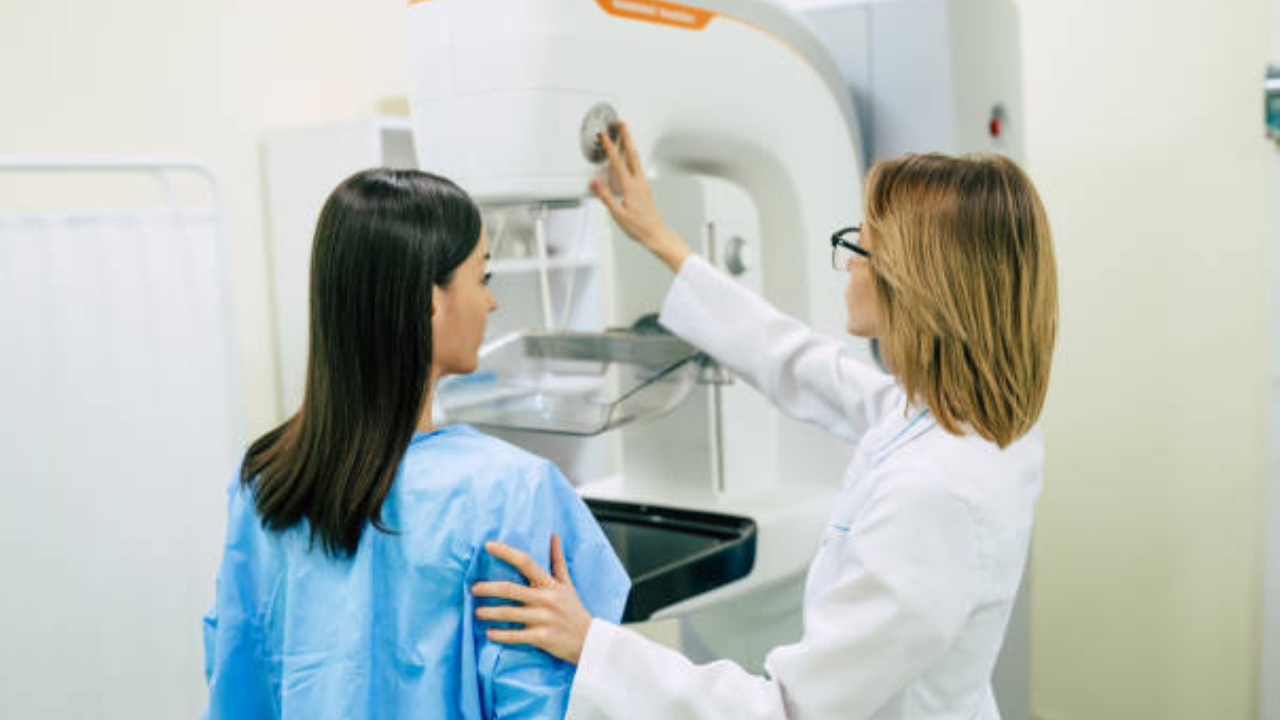
Have you been putting off scheduling your mammogram? You're not alone.
As a breast imaging specialist, I hear concerns about mammograms almost daily – not just from patients but often from their friends, family members, and sometimes even from other healthcare providers. Many women avoid this potentially life-saving screening because of misconceptions that have spread through word of mouth.
Let's address these myths head-on, because the truth is simple: early detection saves lives. When breast cancer is caught at stage 1, the 5-year survival rate exceeds 98%, compared to just 27% when detected at stage 4.
Myth 1: Mammograms are extremely painful
Is it going to hurt? This is probably the most common question I hear from first-time mammogram patients.
Many women have heard horror stories about mammogram pain from friends or family. Some who had mammograms years ago with older technology might have had uncomfortable experiences that they've shared widely.
The reality:
Modern mammography is much more comfortable than it used to be
What you'll feel is pressure, not sharp pain
These compress the breast more gently
The compression only lasts for a few seconds per image
One of my patients recently told me, I've been avoiding this for years because my sister said it was torture. I can't believe how quick and manageable it actually was!
The brief discomfort of a mammogram is a small price to pay for something that could potentially save your life.
Myth 2: Mammogram radiation causes cancer
Many women worry that the radiation exposure from mammograms might actually cause the very disease they're trying to detect.
The reality:
Today's digital mammography uses minimal radiation
A mammogram's radiation exposure (0.4 mSv for standard 4 views) is roughly equivalent to:
The natural background radiation you receive over 7 weeks
About 1/7 of a CT scan
Far less than a single transatlantic flight
Medical experts worldwide agree: the benefits of early detection through mammography far outweigh the minimal radiation risks.
Myth 3: If my lump doesn't hurt, it's probably harmless
I've seen many patients delay seeking care because their breast lump wasn't causing any pain.
The reality:
Most early breast cancers are painless
By the time a cancer causes pain, it has often grown significantly
Pain is not a reliable indicator of whether a lump is cancerous or benign
Any new lump deserves prompt medical attention, whether it hurts or not.
Myth 4: If I can't feel a lump, I don't need a mammogram
Many women rely solely on self-exams to detect problems.
The reality:
Even careful self-exams can miss small tumors
Most lumps aren't detectable by touch until they're at least 2cm (about the size of a grape)
Mammography can find tumors as small as 0.5cm
In larger breasts, even significant lumps can be difficult to feel
Did you know? Mammograms can detect cancer up to three years before it can be felt as a lump.
Myth 5: Young women don't need mammograms
There's a common belief that breast cancer is only a concern for older women.
The reality:
While routine screening typically starts at 40, younger women with symptoms may need diagnostic mammograms
For women under 30, ultrasound is usually the first test
If you have a family history of breast cancer, screening might start earlier
Young women with genetic risk factors may need screening as early as age 25
Myth 6: Men don't get breast cancer or need mammograms
Breast cancer is often thought of as exclusively a women's health issue.
The reality:
About 1-2% of all breast cancer cases in India involve men
Men with suspicious breast symptoms should receive the same thorough evaluation as women
Male breast cancer is often diagnosed at later stages due to lower awareness
Myth 7: I only need a mammogram every 2-3 years
Let's clear up the confusion about how often you should get screened.
For most women:
Ages 40-70: Annual mammography
Over 70: Discuss with your doctor based on overall health
For high-risk women (with genetic risk factors or strong family history):
Start by age 30 (or 10 years before the age when your relative was diagnosed)
Annual mammography or breast MRI as per your doctor’s recommendation.
When to get checked: Symptoms that shouldn't wait
Any of these symptoms warrant a prompt evaluation, regardless of your age:
A new lump or thickening in the breast or armpit
Changes in breast size, shape, or appearance
Skin changes (dimpling, redness, or puckering)
Nipple changes or discharge
Persistent pain in one spot
For women under 30, ultrasound is typically the first test. For women 30 and older, mammography is usually recommended first for suspicious symptoms.
Modern mammography is safer, faster, and more comfortable than ever before. At our center, we've invested in the latest digital technology and comfort measures to make your experience as pleasant as possible.
Don't let myths and misconceptions keep you from getting this potentially life-saving screening. A few moments of mild discomfort could literally save your life by detecting cancer at its earliest, most treatable stage.
Dr. Namrata Singal Sawant, Director and Senior Breast & Women's Imaging Consultant Radiologist at Vcare Imaging Diagnostic Center, Mumbai