In the backstreets of Sydney city centre, nestled among financial institutions and cafes that only open on weekdays, sits the bar and live music venue Frankie’s Pizza. By day its doors are inconspicuous to the suits that walk past, but at night the basement bar is home to beer-swilling hipsters and loudspeakers, and on one Sunday afternoon during the summer, Frankie’s inaugural vinyl fair.
An obvious choice considering its patronage. Inside, the dancefloor turned into a pop-up shop with subcultures as clearly definable as a high school playground. Metalheads manned the decks, backpack wearing hip-hop types flicked meticulously crate by crate, and self-conscious vintage-wearing hipsters gathered in the booths. The mission was simple. Drink beer. Buy vinyl.
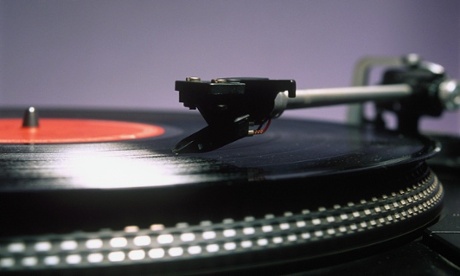
Much has been written about the format’s resurgence over the years – from the increasing popularity of Record Store Day to Jack White’s Lazaretto becoming the biggest-selling vinyl album in the US since 1994, the humble vinyl is, well, breaking records.
In Australia, vinyl is on to a winner according to 2014 Aria wholesale figures, with a sales increase of 127% at a time when CD sales and digital downloads are down. But some parts of the industry are unconvinced. Major labels believe it’s still a niche market, vinyl’s much-loved sound quality and “warmth” were dismissed in a controversial LA Weekly article, and Neil Young called it “nothing but a fashion statement”.
“I saw it [trending], maybe about two years ago when a bunch of bearded hipsters came into the shop,” says Pete Pasqual, employee at Revolve Records in Erskineville in Sydney’s inner west. “There were about eight of them and they all looked like … who’s that guy who won all the Aria awards?”
Chet Faker? “Yeah … but with lesser beards. And they were talking about taking their parent’s stereo system. Then I started seeing younger faces coming through again and from then it was just an onslaught of kids.”
Revolve, whose industry customers have included Cut Chemist, Jurassic 5 and former Dead Kennedys singer Jello Biafra, is also a regular stomping ground for more anonymous crate diggers. With floor-to-ceiling vinyl and some secondhand books and bric-a-brac thrown in, it may look like a hoarder’s paradise but there are some rare gems worth more than their weight in plastic to be found: the Cure’s Friday I’m in Love on pink vinyl ($200); a rare pressing by eccentric, free jazz Australian musician Louis Burdett ($200); and the store’s most expensive item, U2’s Pride (In the Name of Love) on clear vinyl (one of only 50 in the world and worth $7,500).
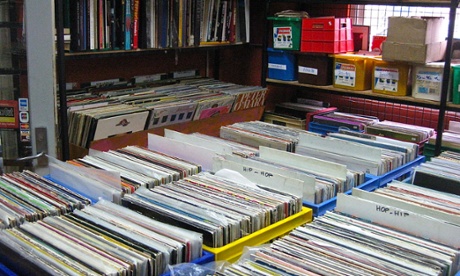
“Collectors are ultimately in search of the perfect beat,” says Pasqual, whose personal collection amounts to more than 40,000 records. “Whether they’re into punk, classical or rock and pop, they’re always searching for something they don’t know about.”
But being the crazy crate digger or the anally alphabetising collector is not to everyone’s taste. In an age of streaming and downloads, the vinyl market is increasingly driven by a younger demographic rejecting digital disposability for more “bespoke” items to symbolise their appreciation of music.
A 2013 study by UK market research agency ICM found that 14% of 18- to 24-year-olds purchased vinyl compared to only 5% of 35-to 44-year-olds, while in the same survey in 2014, 25- to 34-year-olds were the main consumer group at 26%.
“The older market are not going back to vinyl,” says Paul Rigby, co-owner of Zenith Records. “They prefer the convenience of CDs, and they’re just getting their heads around MP3s and downloads. They bought vinyl because that’s what was available to them [at that time].”
Zenith is Australia’s only remaining vinyl factory. Based in East Brunswick, Melbourne business is booming; in fact, it’s struggling to keep up with demand. Orders come through locally as well as from Asia, but it’s one of the smallest manufacturers in the world, with only three pressing machines, all around 40 years old.
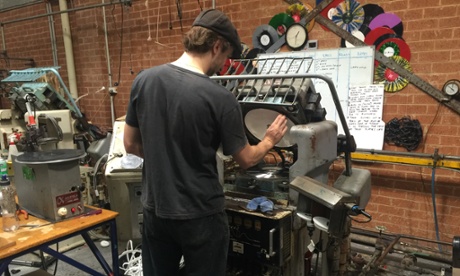
In the lead-up to Record Store Day 2015, they’ve been working two shifts a day and the weekends just to get orders out in time. “We’ve got about two months worth of work backlogged,” says Rigby.
Australian artists like Courtney Barnett, Gang of Youths and Ben Lee will be releasing limited editions of their work for Record Store Day. More mainstream artists are also jumping on the bandwagon. So far, Zenith have pressed records by the likes of Kylie Minogue, Kasey Chambers and the Veronicas, who are releasing a special tour edition of their album as part of a VIP package.
“With the younger folks, the vinyl become a merchandise item. They’ll buy the T-shirt, they’ll buy the record. They’re collector’s pieces – not strictly a music storage medium. They represent more than that to the younger market,” says Rigby.
But don’t go throwing away your MP3 player just yet. For a lot of labels, the painstaking process of mastering, cutting, testing and pressing an album to vinyl is both an investment and a risk.
“To be frank, even though vinyl sales have increased amazingly over the last few years, it still makes up a small portion of royalty income,” says Ed Sholl, label manager at Future Classic. “The majority comes form digital downloads, streaming has also grown, and then there’s CD sales. So [vinyl] is still very much a small pie.”
Home to acts like Flume, Jagwar Ma and Chet Faker, Future Classic attempts to put out every release on vinyl, but admit that digital is still its main marketing tool to promote music. In terms of revenue, Aria’s vinyl figures are paltry compared to subscription streaming, which shot up by 111% and made more than $23m, compared with vinyl’s $6m.
“There’s certainly a difference between how much you make from selling an album and from streaming an album,” says Sholl. “It’s nice to see something like vinyl having a rebirth and staying relevant, a nice yardstick of permanence in what is a rapidly changing industry.”
-
Record Store Day 2015 is on 18 April across Australia and worldwide