Brazil's textile and fashion industry - in pictures
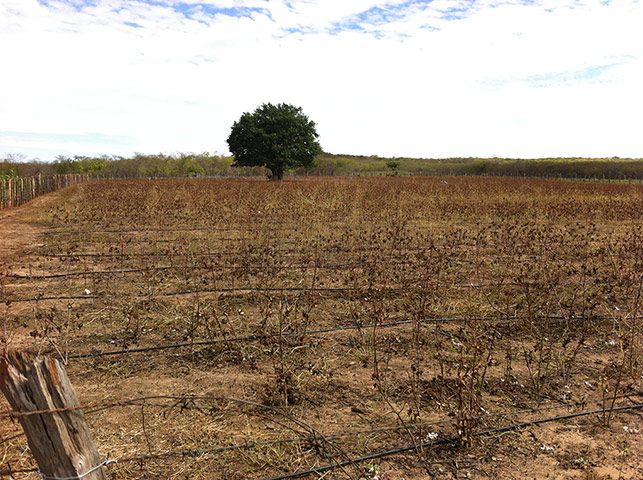
View from Coopa Roca headquarters in the heart of Rocinha. Ahead of the World Cup in 2014 and the Olympic Games in 2016, the Brazilian government is trying to make places like Rocinha safer. Policemen regularly patrol the favela’s borders and, according to its inhabitants, violence has dramatically decreased since last December when these operations started. Photograph: Ilaria PasquinelliNorth-east Brazil is the driest region in the country. Many areas are affected by progressive desertification caused by monocultures and the heavy use of tractors and chemicals, which compact the soil and drain it of nutrients. Farmers believe that the practice of burning the fields cleans the soil but, as a result, the soil is impoverished and does not absorb water.Photograph: Ilaria PasquinelliCotton field on a farm that is part of cooperative Copapi, near Apodi, Rio Grande do Norte, north-east Brazil. This farm is managed according to agroecology principles, where responsible farming practices that support soil recovery are used, guaranteeing the long-term survival of their family businesses. Agroecology is more demanding than even organic farming. It is based on the diversification of crops that are cultivated together based on their compatibility (eg cotton and sesame or cotton and corn) and their ability to enrich and conserve the soil.Photograph: Ilaria Pasquinelli
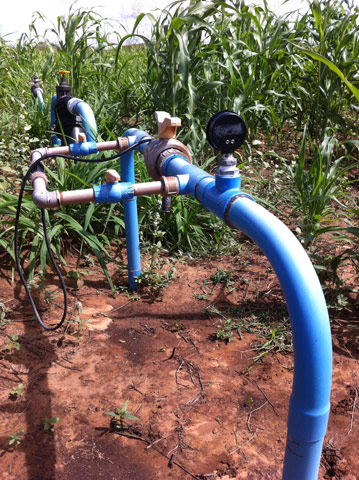
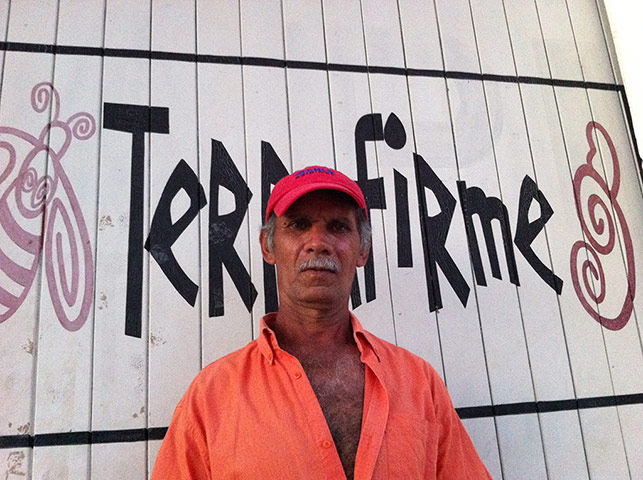
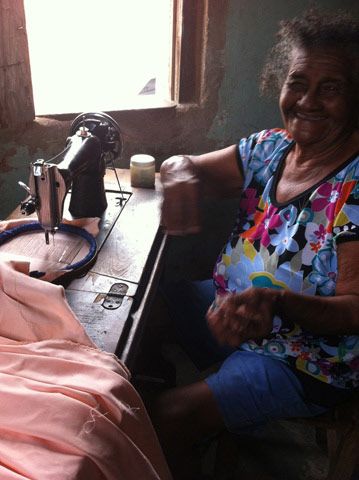
Artisanal drip irrigation system on an agroecologic farm. One of the agroecologic principles is to conserve water and use efficient irrigation systems. Therefore, mainstream artificial irrigation is avoided. This system was created to provide irrigation in very dry seasons only. On agroecologic farms, toxic materials are not used. Instead, re-use and recycling practices are widely implemented. As a result, fertilisers are made in-house and, when cotton is harvested, the seed is separated by the fibre and then re-used the following season for sowing.Photograph: Ilaria PasquinelliThe last plant of organic cotton to be harvested this season. North-east Brazil represents only 4% of the Brazilian cotton production but it is where organic cotton farms and agroecologic communities tend to be concentrated. The majority of cotton is grown in Mato Grosso, east of central Brazil and controlled by large corporations that are uninterested in organic production.Photograph: Ilaria PasquinelliZemario has been a farmer for 30 years and today he is a multiplicator at Copapi. This means he’s gained so much experience in farming that he can train other farmers. Copapi was founded in 2004, originally for the production and commercialisation of honey. Today 259 Copapi families are engaged in agroecologic farming, 126 of which are directly involved in cotton farming.Photograph: Ilaria PasquinelliBenedith, from the community of Corrego, near Apodi has been a home worker for 40 years. She sews hammocks that are then sold at local markets. A hammock takes Benedith between one and two weeks to sew, working five hour days. Other women in the community also make hammocks or create artisanal products like hats or interiors accessories that are then sold in markets and shops across the country.Photograph: Ilaria PasquinelliTalented sewer and teacher to young seamstresses in Petrópolis textile centre. She is contracted to work for several different brands on contracts, among them for the sustainable French-Brazilian brand Tudo Bom. Her sewing workshop is part of her house and, from here, she can give work to up to five local sewers. Working from home allows her to take care of her family and house at the same time.Photograph: Ilaria PasquinelliBeautiful embroidered lamps made in Rocinha, the biggest favela in Rio de Janeiro and South America, with an estimated 300,000 inhabitants. Coopa Roca is a cooperative that has worked in Rocinha since the 1980s. These lamps are hand-embroidered by the women of Rocinha collaborating with the cooperative. Coopa Roca now works with around 80 favela women of mainly north-eastern origin, the area where many embroidery techniques have originated from. Photograph: Ilaria PasquinelliTudo Bom? t-shirts in the brand’s new store in Rio de Janeiro. The flag ship store will officially be launched in September. Tudo Bom? garments are made with organic cotton from the Apodi communities, as well as other areas in north-east Brazil. Tudo Bom? owns the whole of its supply-chain. It buys cotton directly from communities avoiding intermediaries, yarn is spun and knitted by Brazilian textile manufacturers and garments are sewn by home workers in Petrópolis under transparent, fair conditions.Photograph: Ilaria Pasquinelli
Sign up to read this article
Read news from 100’s of titles, curated specifically for you.