Brazil's indigenous rights hinge on one tribe's legal battle
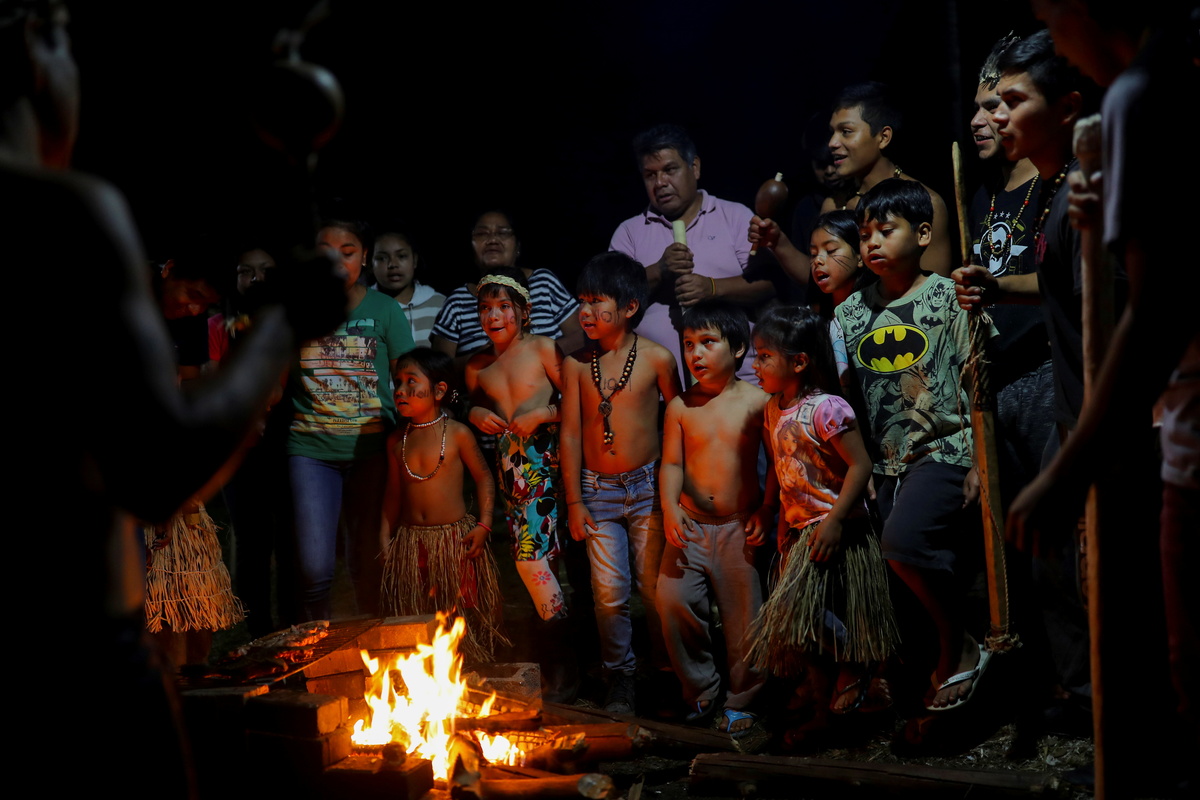
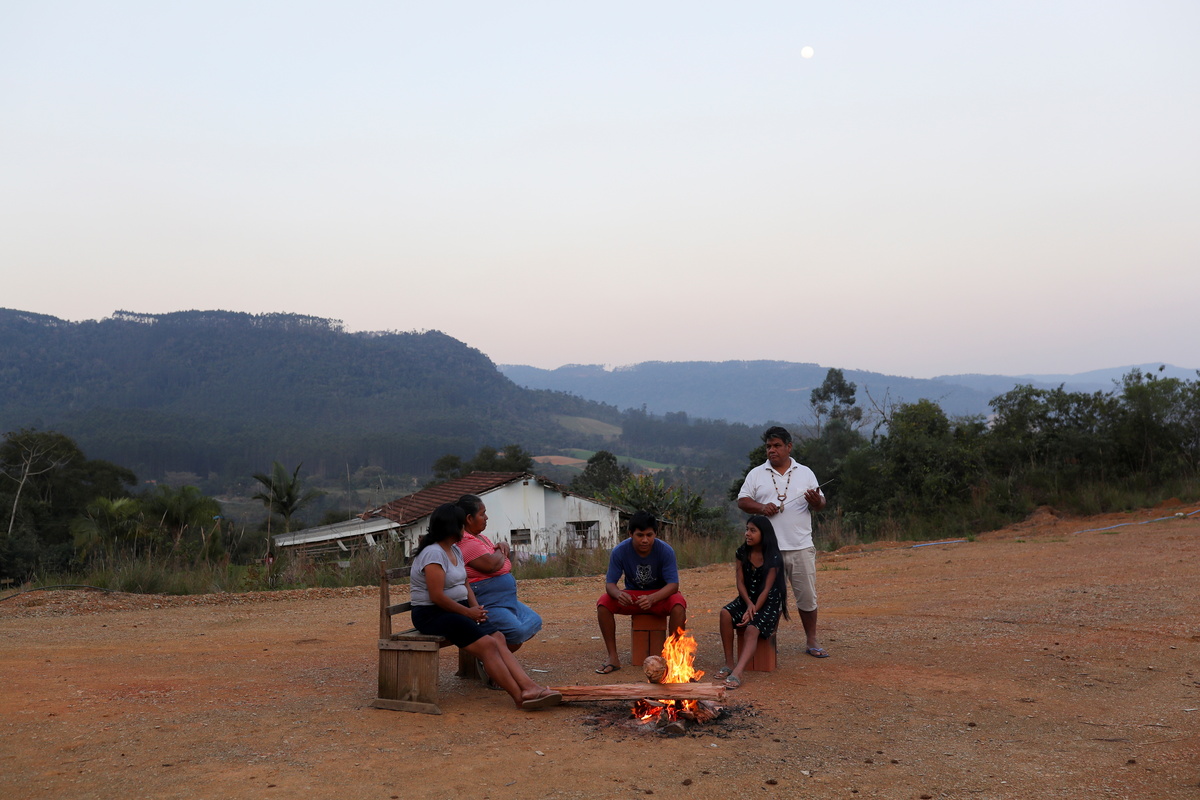
Xokleng indigenous people sing in their own language around a bonfire during a reunion in Xokleng Laklano indigenous land, Jose Boiteux, Santa Catarina state, Brazil, August 17, 2021. Determined to keep their traditions alive, the Xokleng gather around bonfires at night to tell stories in their own language and keep up their rituals of dance and prayer, sometimes painting the faces of their young ones. REUTERS/Amanda Perobelli
Pushed into a degraded corner of their ancestral lands, the Xokleng people of southern Brazil anxiously await a Supreme Court ruling that could restore territory they lost decades ago.
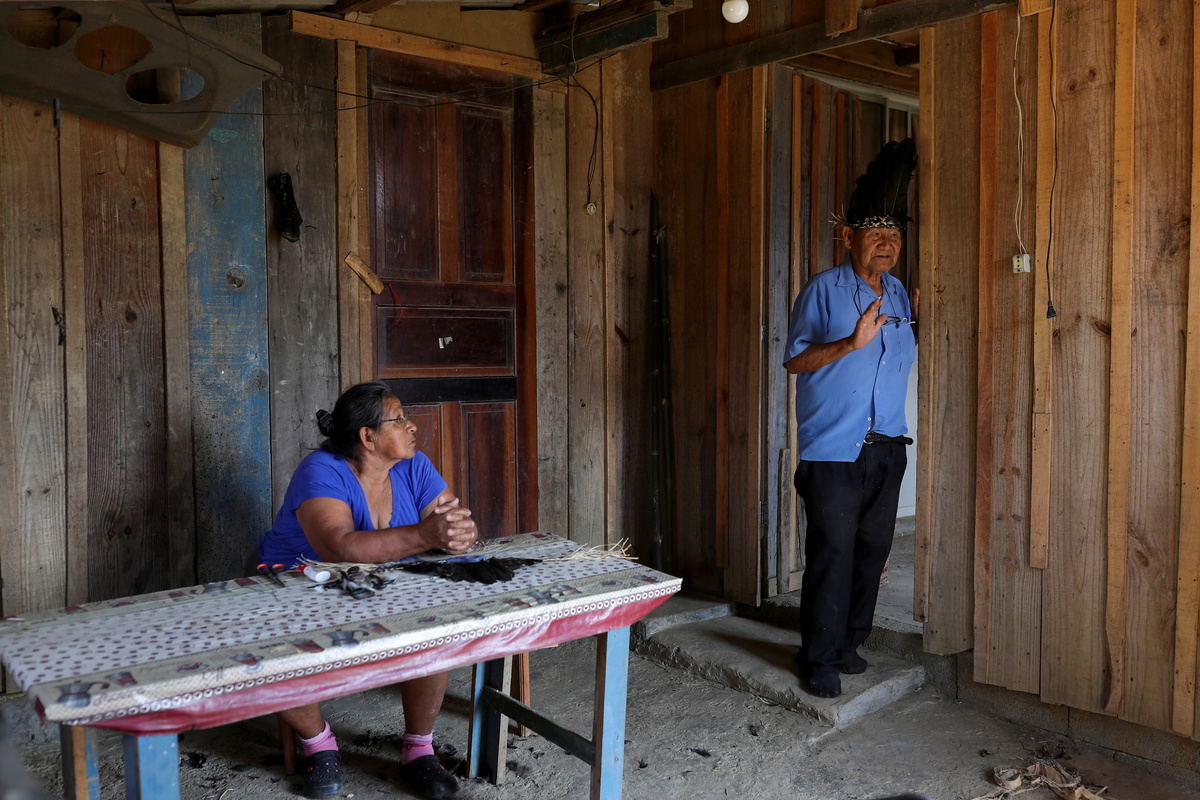
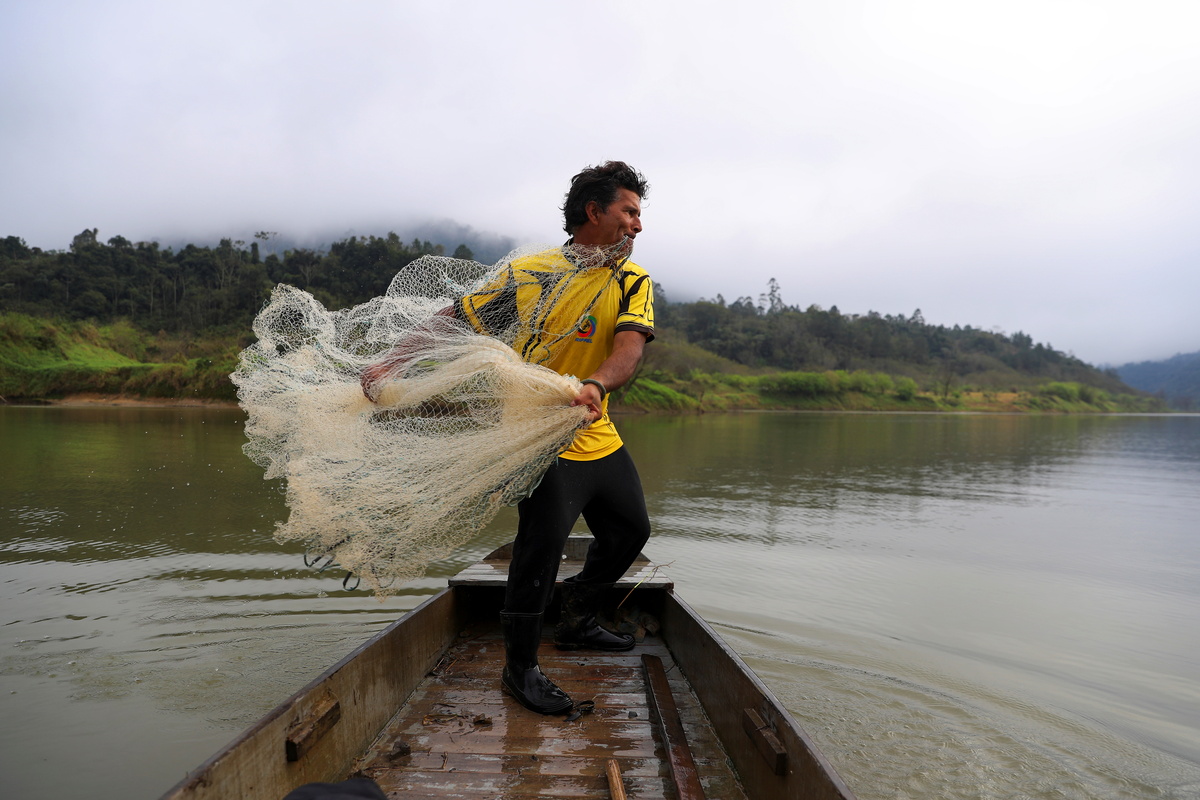
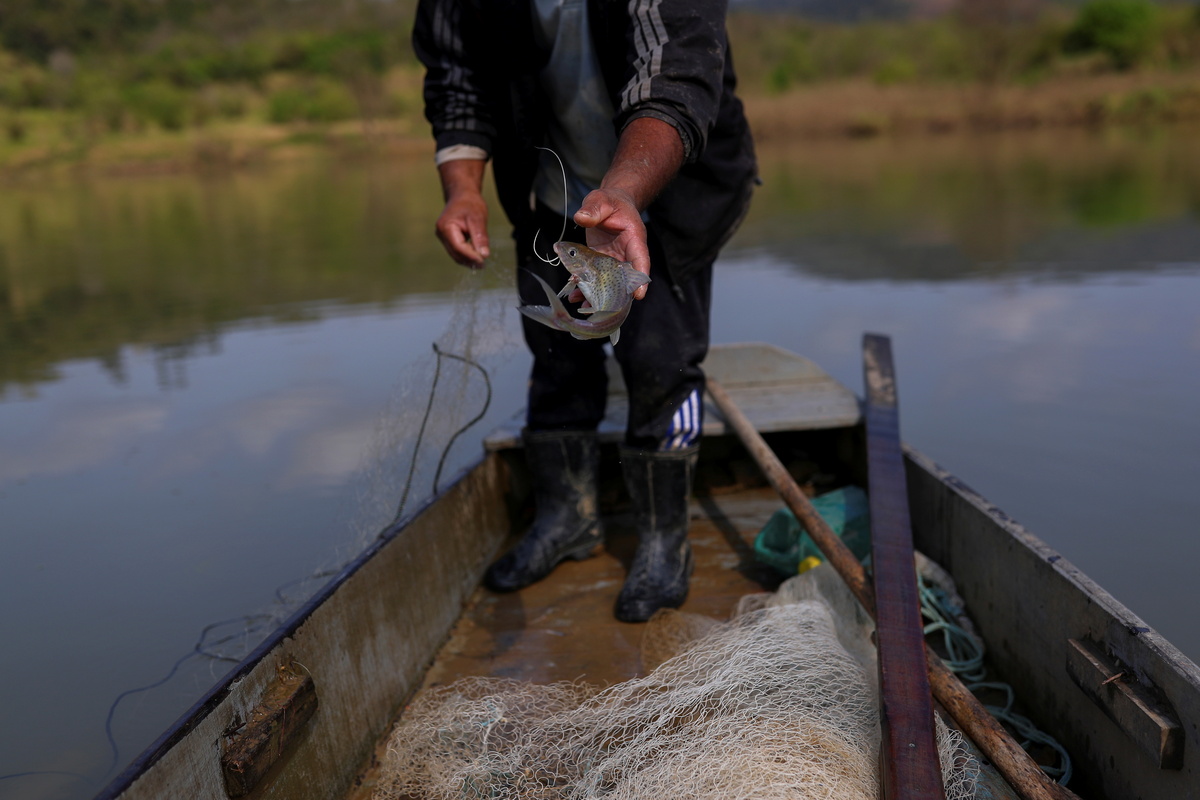
Sitting by a wood stove, Xokleng elders recall the days when plentiful fish and game fed their families, before the bulk of their fertile lands were sold by the state to tobacco farmers in the 1950s.
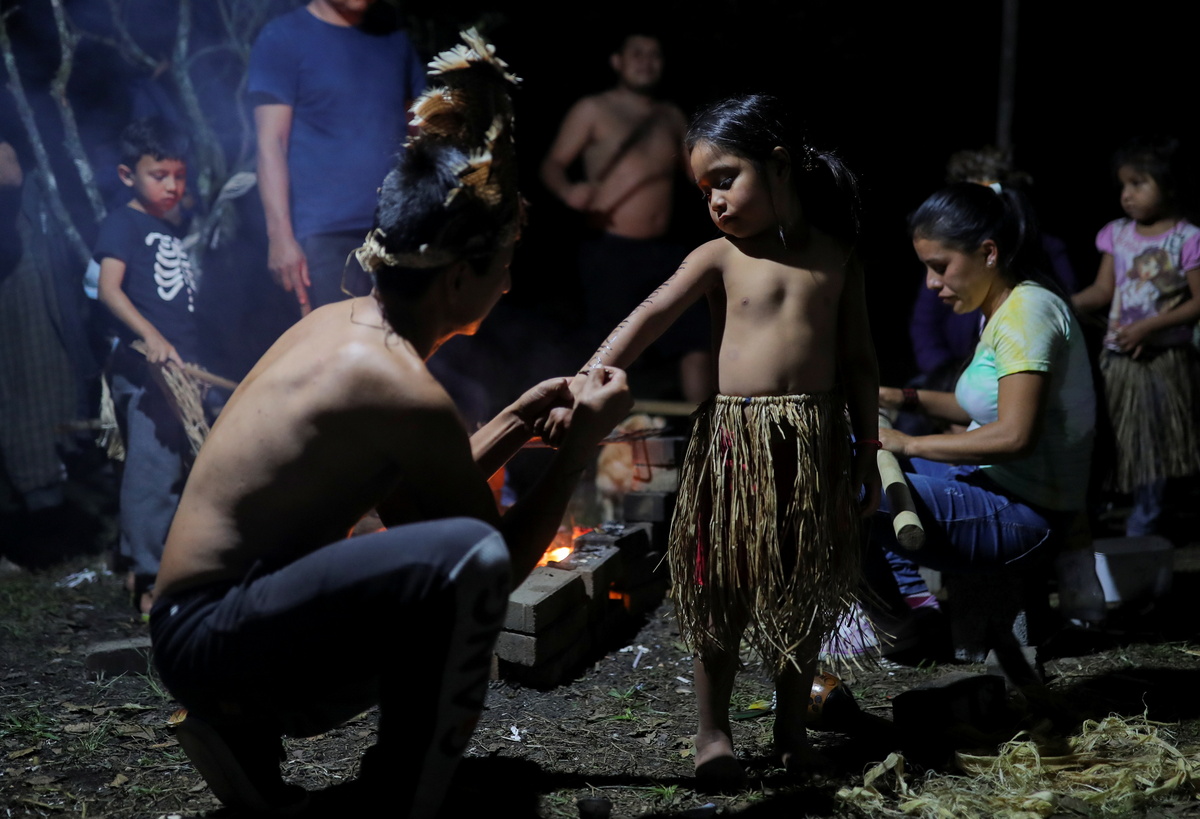
Ezaltino Juvei, 27, paints Xokleng traditional patterns on Rosa Kamam Pripra, 5, during a reunion at Xokleng Laklano Indigenous Land, Jose Boiteux, Santa Catarina state, Brazil, August 17, 2021. Determined to keep their traditions alive, the Xokleng gather around bonfires at night to tell stories in their own language and keep up their rituals of dance and prayer, sometimes painting the faces of their young ones. REUTERS/Amanda Perobelli
Now the Xokleng pray that Brazilian courts will fulfill a dying shaman's prophecy that they would one day win their lands back.
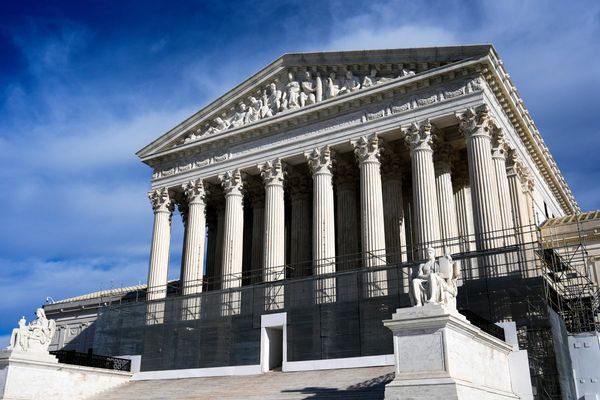
On Wednesday, the top court in Brasilia will decide whether the Santa Catarina state government has applied an overly narrow interpretation of indigenous rights by only recognizing tribal lands occupied by native communities at the time Brazil's constitution was ratified in 1988.
The case was sparked when the state government used that interpretation to evict a group of Xokleng from a nature reserve in their ancestral lands. The decision was appealed by Brazil's indigenous affairs agency Funai on behalf of the Xokleng.
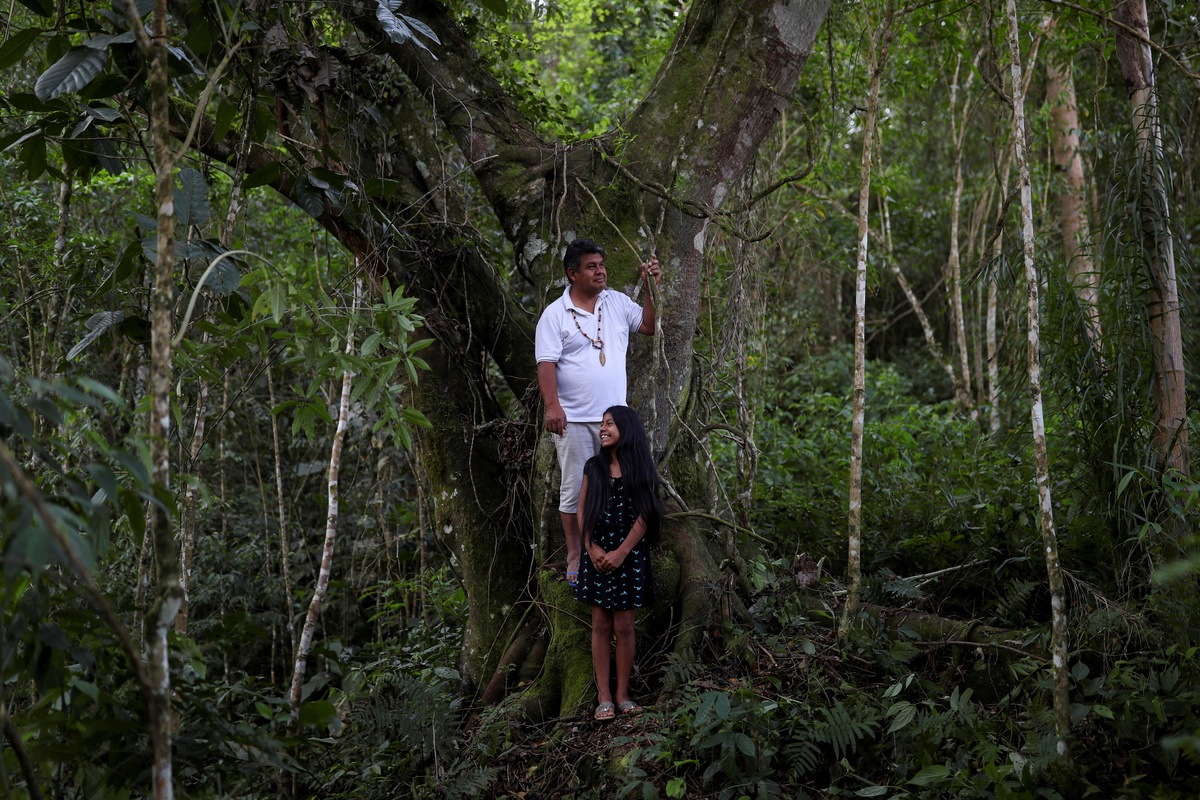
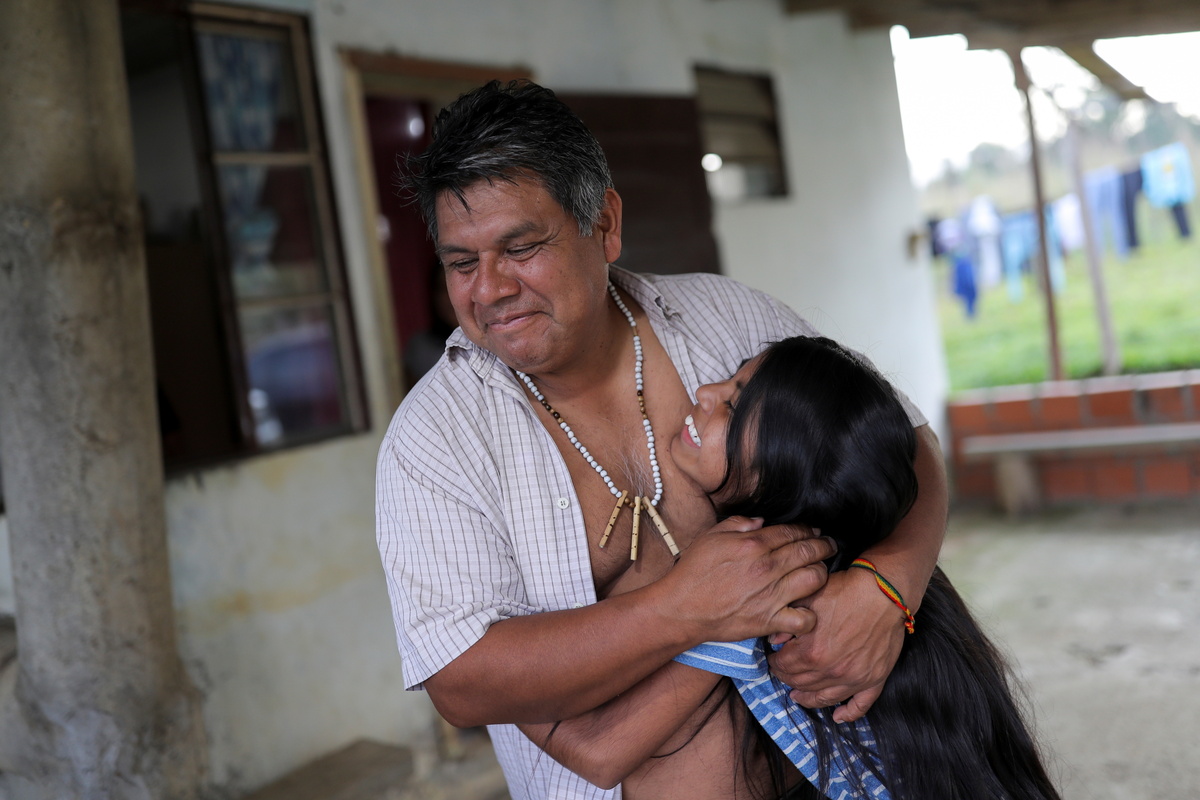
Lazaro Kamlem, 47, cacique of Palmeira village, poses for a photograph with his daughter Ludmila, 10, near a tree in Xokleng Laklano indigenous land, Jose Boiteux, Santa Catarina state, Brazil, August 20, 2021. Kamlem is a descendent of Shaman Kamlem, the Xokleng medicine man who said on his deathbed in 1925 that they would lose their land to "white men," but would one day gain it back. "We are here and we will resist to the end. This struggle will not be over," said Kamlem. REUTERS/Amanda Perobelli
It was "another attempt to eliminate us," said Brasilio Pripra, a 63-year old community leader. "Our people have lived here for thousands of years."
The state's solicitor general, Alisson de Bom de Souza, who will represent Santa Catarina in court on Wednesday, said he was seeking a decision that respects indigenous rights without hurting other constitutional rights of Brazilians.
The Xokleng were cleared off their traditional hunting grounds over a century ago to make room for European settlers, mostly Germans fleeing economic and political turmoil.
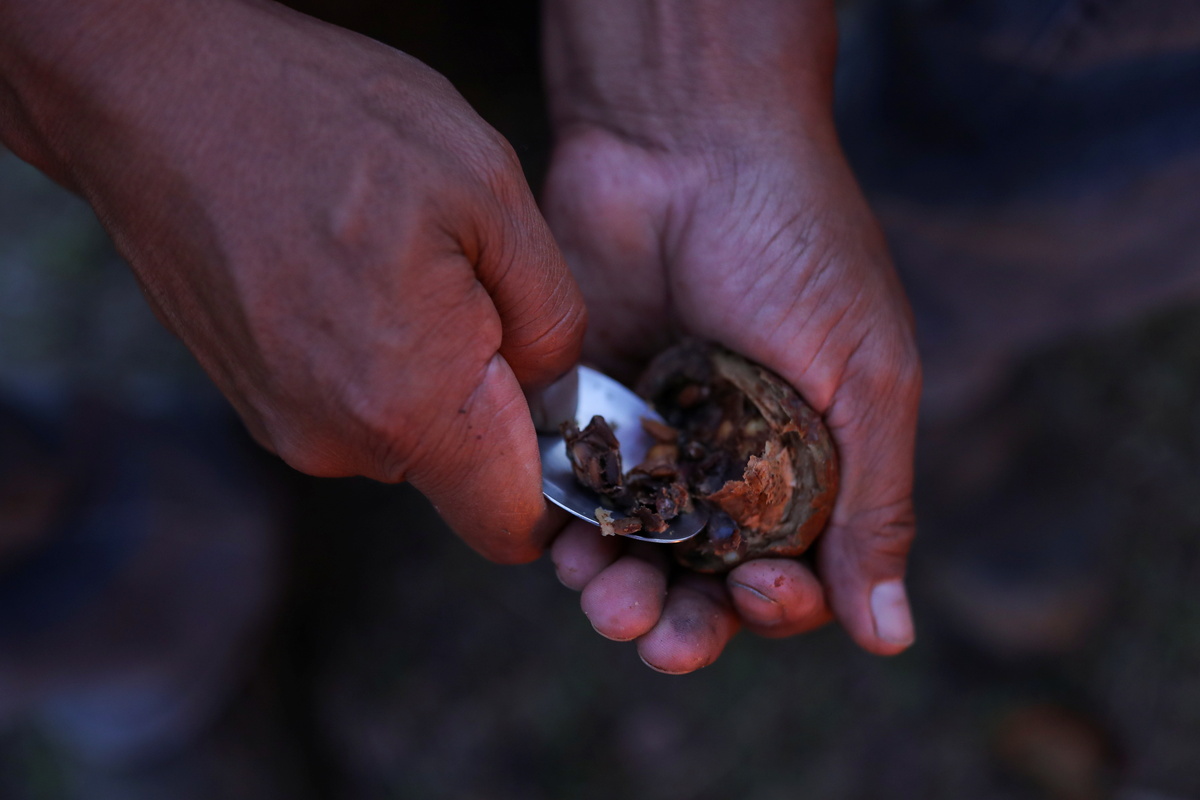
Sidnei Vanhecu Ya-io, 47, removes jenipapo pulp to prepare paint in Xokleng Laklano Indigenous Land, Jose Boiteux, Santa Catarina state, Brazil, August 17, 2021. Determined to keep their traditions alive, the Xokleng gather around bonfires at night to tell stories in their own language and keep up their rituals of dance and prayer, sometimes painting the faces of their young ones. REUTERS/Amanda Perobelli
At one point, the state rewarded the killing of indigenous people and mercenaries collected the ears of dead natives, a painful history documented by anthropologists and passed between generations.
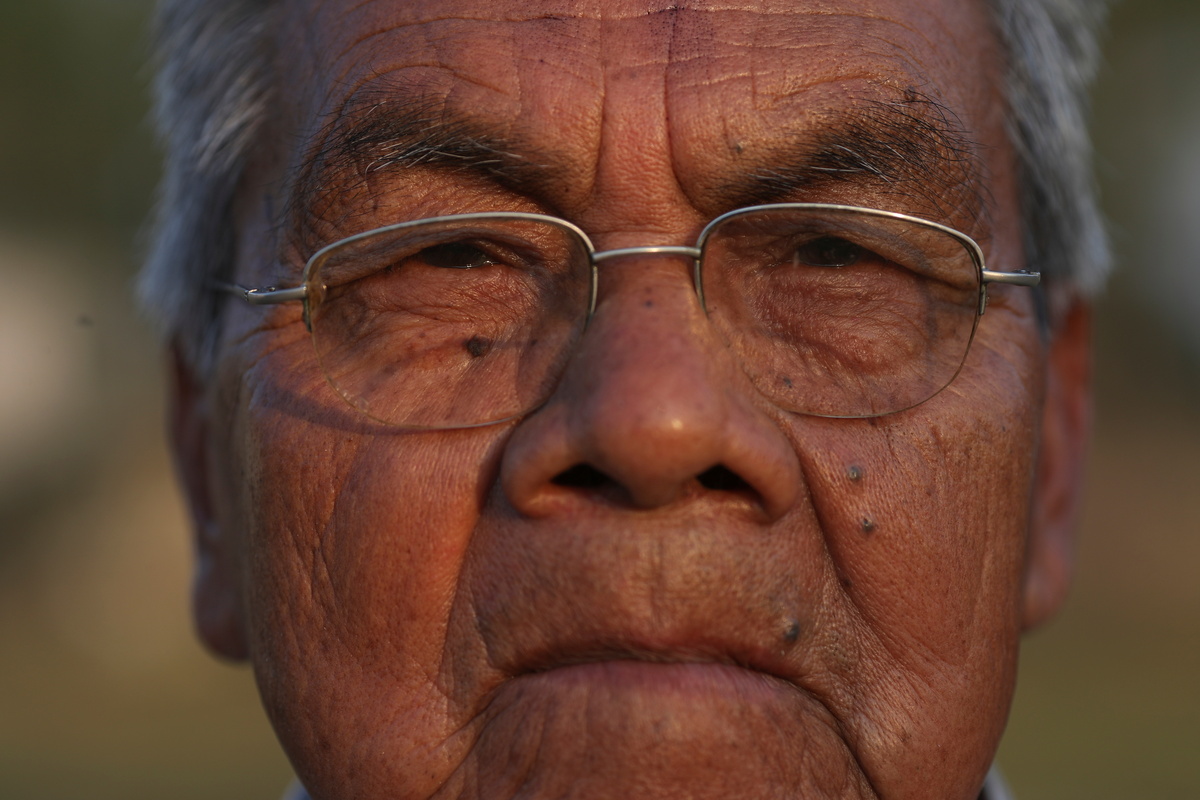
"Before they killed us with guns, now they kill us with the stroke of a pen," said João Paté, a former 'cacique' or chief.
DANCE AND PRAYER
Lazaro Kamlem, 47, cacique of Palmeira village, hugs his daughter Ludmila, 10, at their house in Xokleng Laklano indigenous land, Jose Boiteux, Santa Catarina state, Brazil, August 19, 2021. Kamlem is a descendent of Shaman Kamlem, the Xokleng medicine man who said on his deathbed in 1925 that they would lose their land to "white men," but would one day gain it back. "We are here and we will resist to the end. This struggle will not be over," said Kamlem. REUTERS/Amanda Perobelli
Determined to keep their traditions alive, the Xokleng gather around bonfires at night to tell stories in their own language and keep up their rituals of dance and prayer, sometimes painting the faces of their young ones.
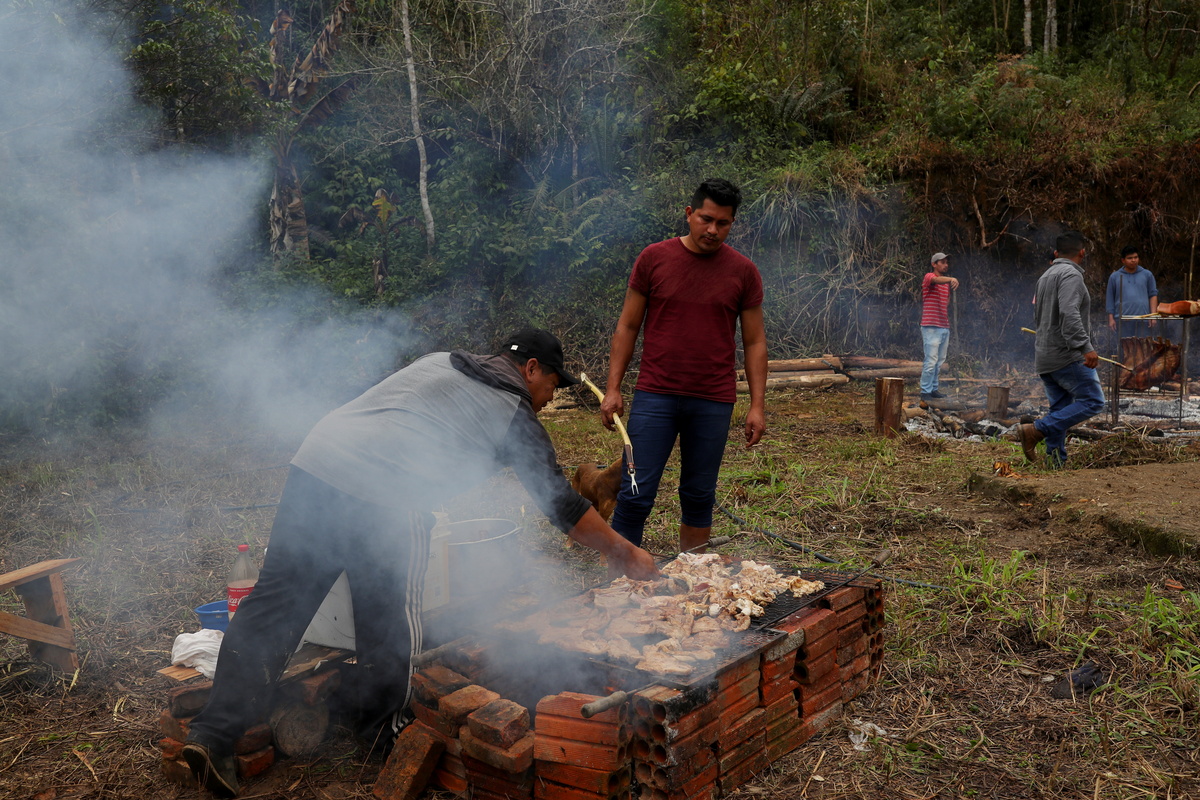
They still share their food in communal meals but the beef they roast is bought off the reservation, as they lack enough land to hunt or to raise cattle.
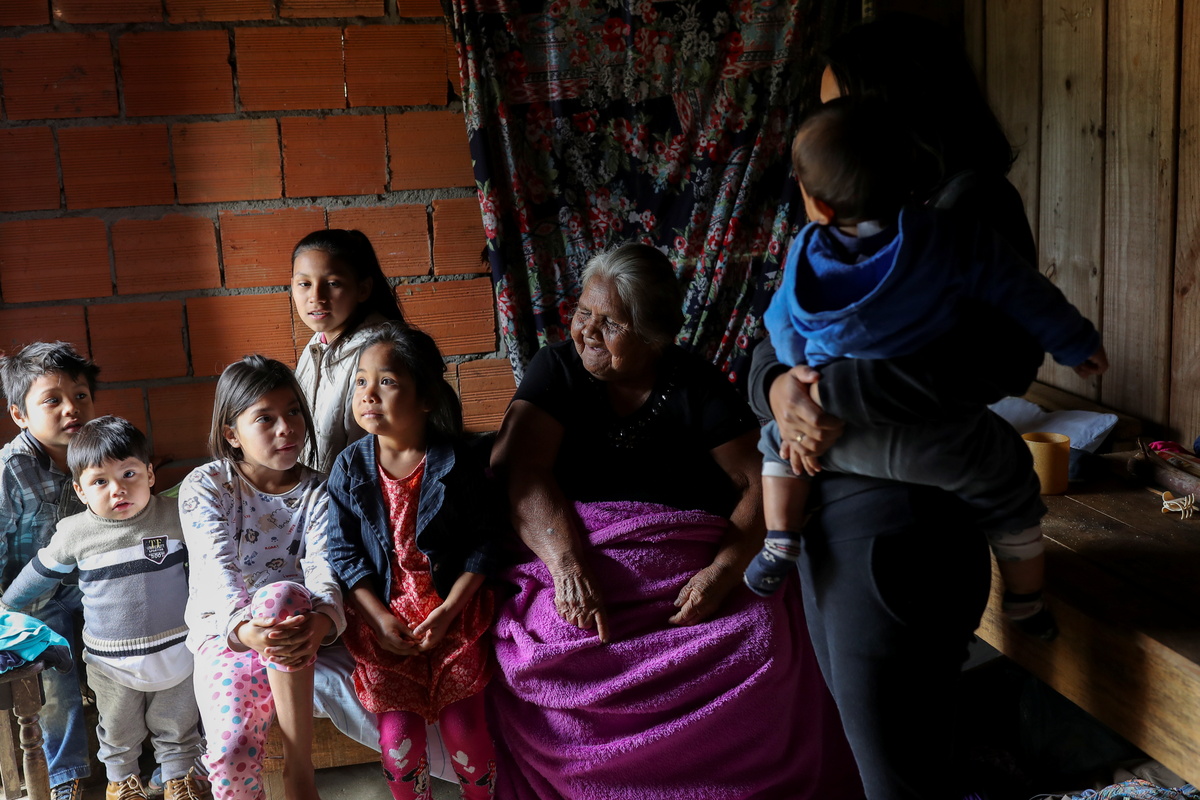
"We cannot plant food living in this hole. They want to get rid of us. They don't like us," said Vanda Kamlem, 87, surrounded by her six grandchildren. Vanda remembers the days when she gathered pine nuts from the abundant Araucaria pines, known as monkey-puzzle trees.
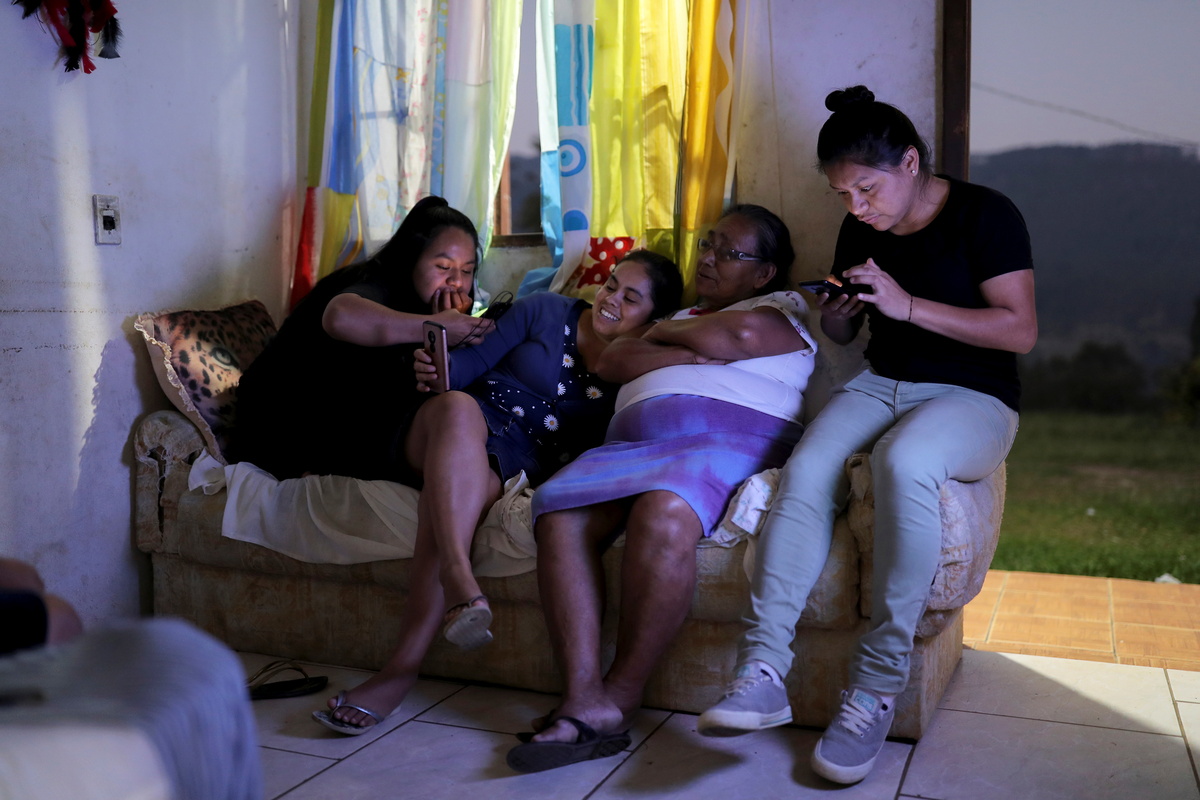
The recently widowed Vanda Pripra, 63, watches a video on her granddaughter's phone as others keep them company in Xokleng Laklano indigenous land, Jose Boiteux, Santa Catarina state, Brazil, August 19, 2021. REUTERS/Amanda Perobelli
Now, the forests have been cut down and fish have become scarce as the rivers turned cloudy, she said.
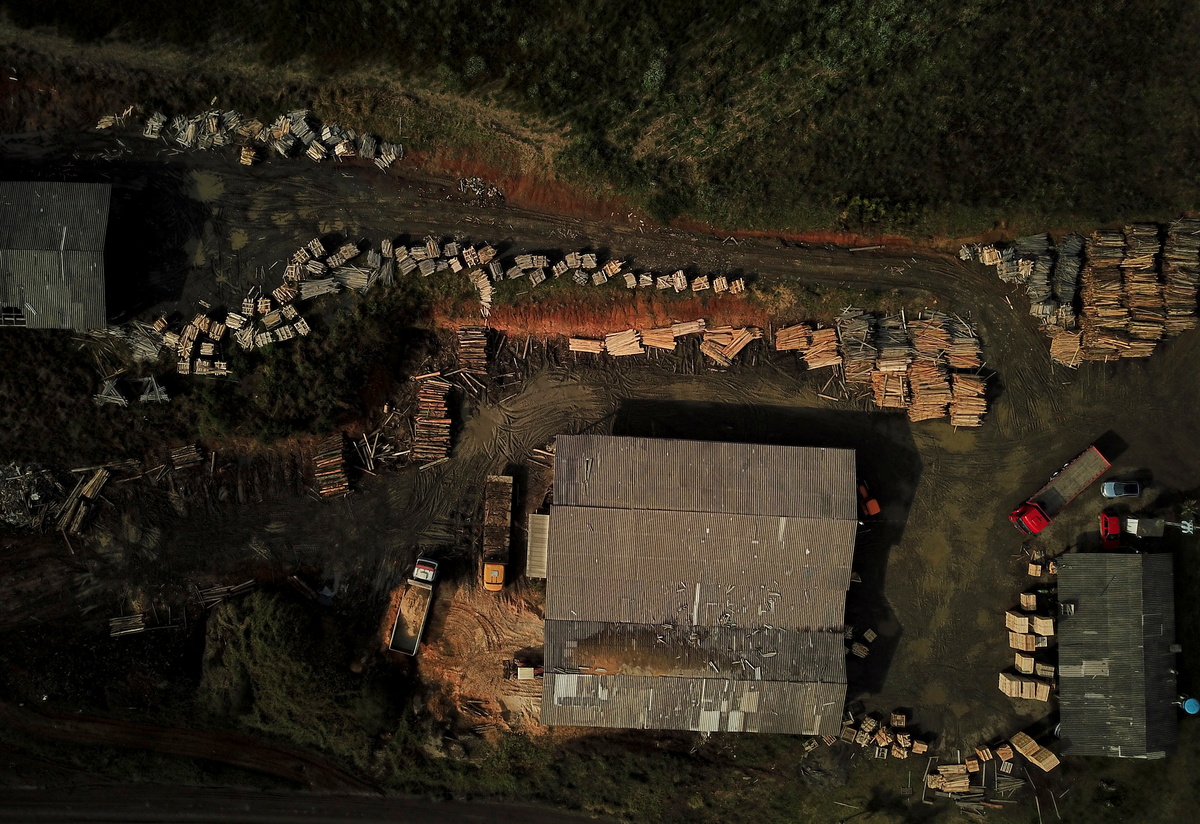
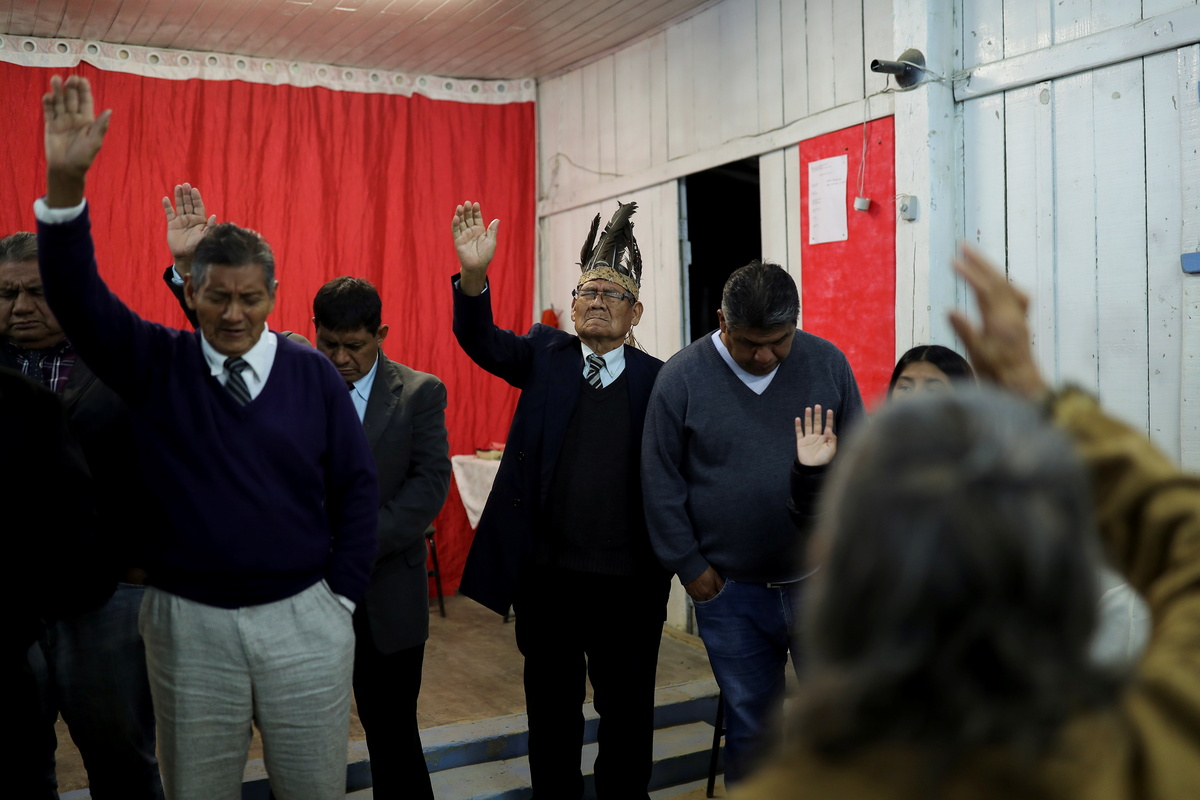
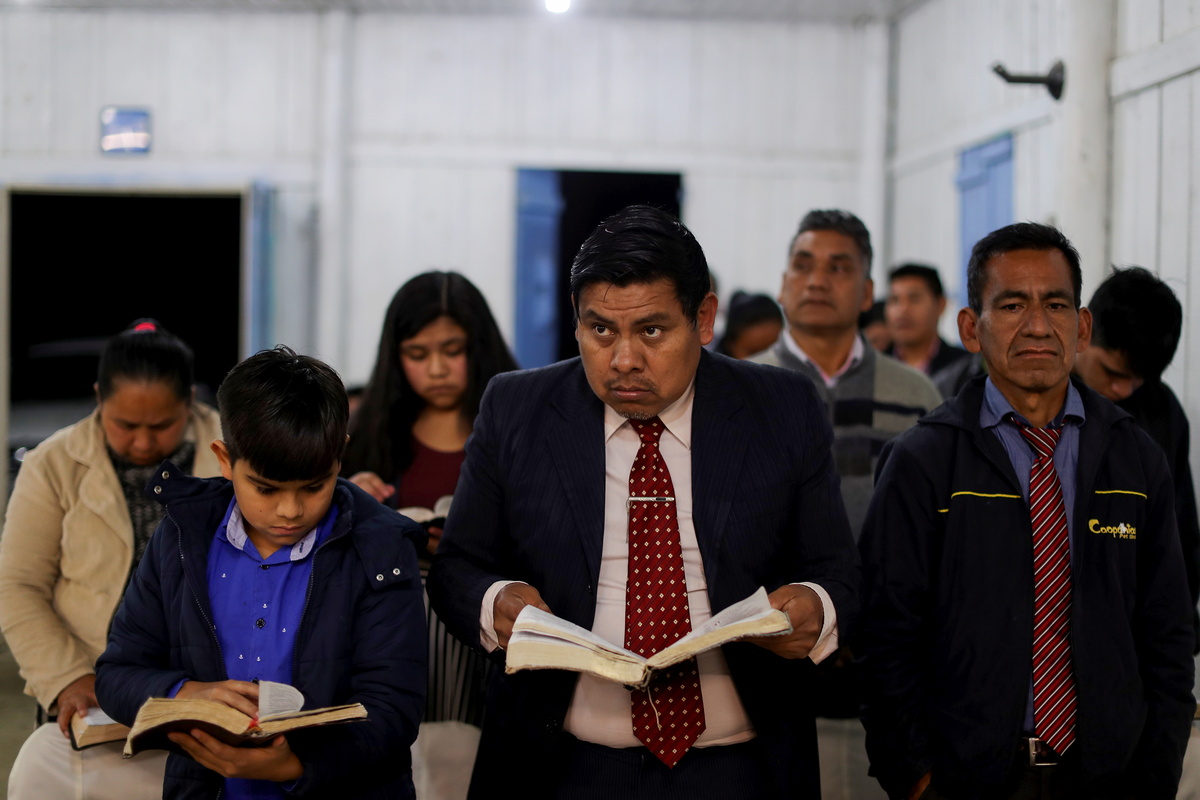
"The settlers moved in slowly, taking over. They built two sawmills and devastated the place," said Paté, a bespectacled evangelical pastor who leads services in the community church. He says the word of God saved the Xokleng from alcoholism that became widespread in the 1950s.
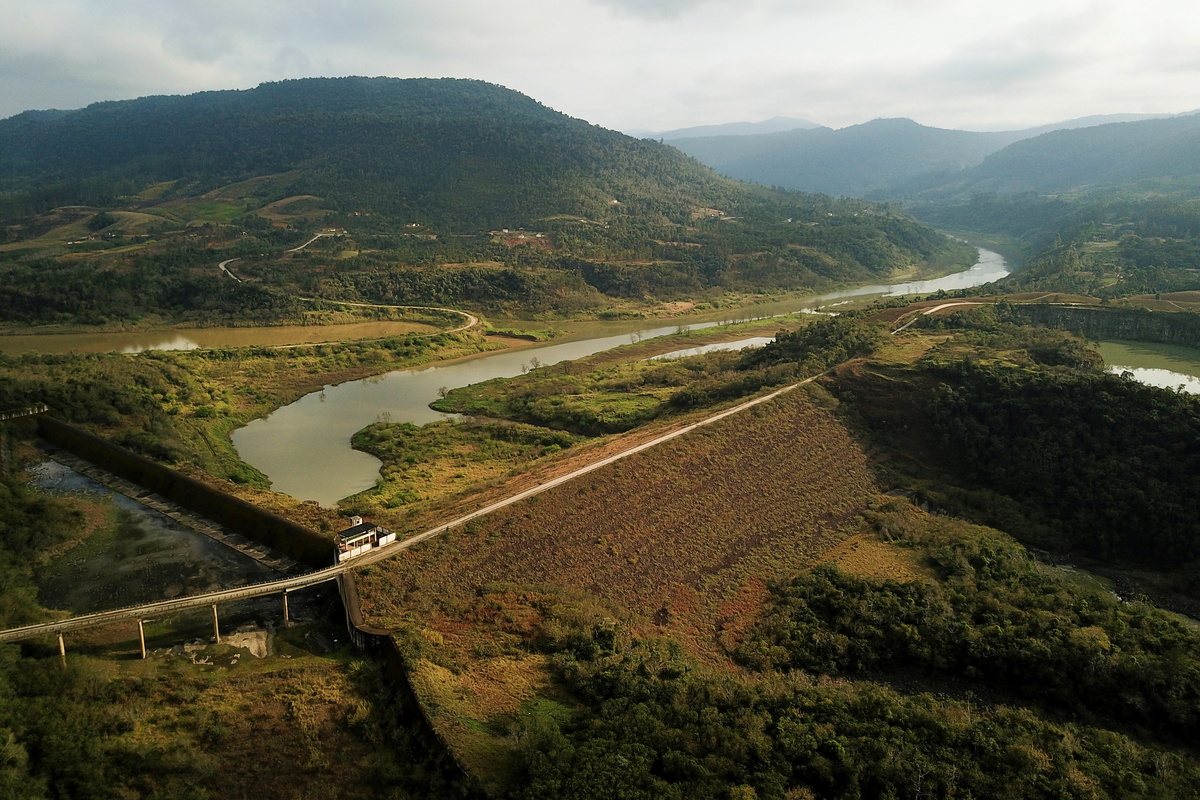
The Xokleng number some 3,000 people today, crowding into their 14,156 hectares of hilly territory, where landslides threaten homes and most land is too steep for agriculture.
People sit around a bonfire in Xokleng Laklano indigenous land in Jose Boiteux, Santa Catarina state, Brazil, August 20, 2021. The Xokleng number some 3,000 people today, crowding into their 14,156 hectares of hilly territory, where landslides threaten homes and most land is too steep for agriculture. REUTERS/Amanda Perobelli
They claim a further 24,000 hectares (9,300 square miles) of rich tobacco country that they say belonged to them for centuries before settlers moved in.
If the decision on Wednesday finds in favor of the Xokleng, over 800 families of smallholdings face "chaos" and "no future" said Tarcisio Boeing, 65, who farms 50 hectares that has been in his family of German descent for over a century.
"This land was bought and we have titles to it," said Chico Jeremias, 61, who says his German grandfather arrived a century ago and left him 27 hectares that he farms with his four sons.
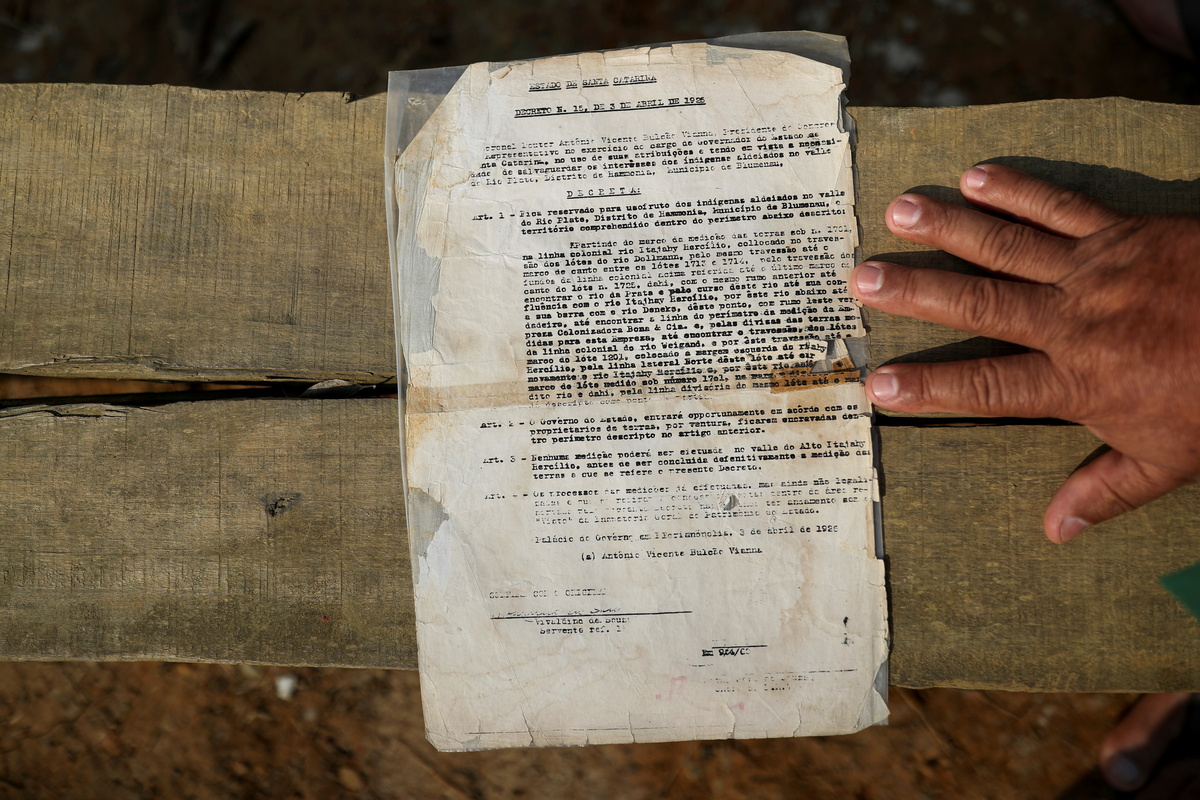
Community leader Brasilio Pripra, 63, touches the document issued by Santa Catarina state office about indigenous land in the region in Xokleng Laklano indigenous land, Jose Boiteux, Santa Catarina state, Brazil August 21, 2021. Xokleng people of southern Brazil await a Supreme Court ruling that could restore territory they lost decades ago. The bulk of their fertile lands were sold by the state to tobacco farmers in the 1950s. Now the Xokleng pray that Brazilian courts will fulfill a dying shaman's prophecy that they would one day win their lands back. On Wednesday, the top court in Brasilia will decide whether the Santa Catarina state government has applied an overly narrow interpretation of indigenous rights by only recognizing tribal lands occupied by native communities at the time Brazil's constitution was ratified in 1988. REUTERS/Amanda Perobelli
"If the court decides to extend the indigenous land, where will these family farmers go? ...This will become a lawless land," he said.
Across Brazil, the Supreme Court ruling will affect hundreds of indigenous land claims, many of which offer a bulwark against deforestation in the Amazon rainforest.
A defeat in court for the Xokleng could set a precedent for the dramatic rollback of native rights which far-right President Jair Bolsonaro advocates. He says too few indigenous people live on too much land in Brazil, blocking agricultural expansion.
Elder Vile Ndille, 78, says goodbye to a friend as his wife Maria Ndille, 75, sits at their house in Xokleng Laklano indigenous land, Jose Boiteux, Santa Catarina state, Brazil, August 20, 2021. REUTERS/Amanda Perobelli
Powerful farming interests would have firmer legal ground to challenge indigenous land claims and Congress would have the green light to write a restrictive definition of indigenous lands into federal law.
If they lose their case, the younger Xokleng say they will continue the fight. "We are here and we will resist to the end. This struggle will not be over," said Lázaro Kamlem, 47.
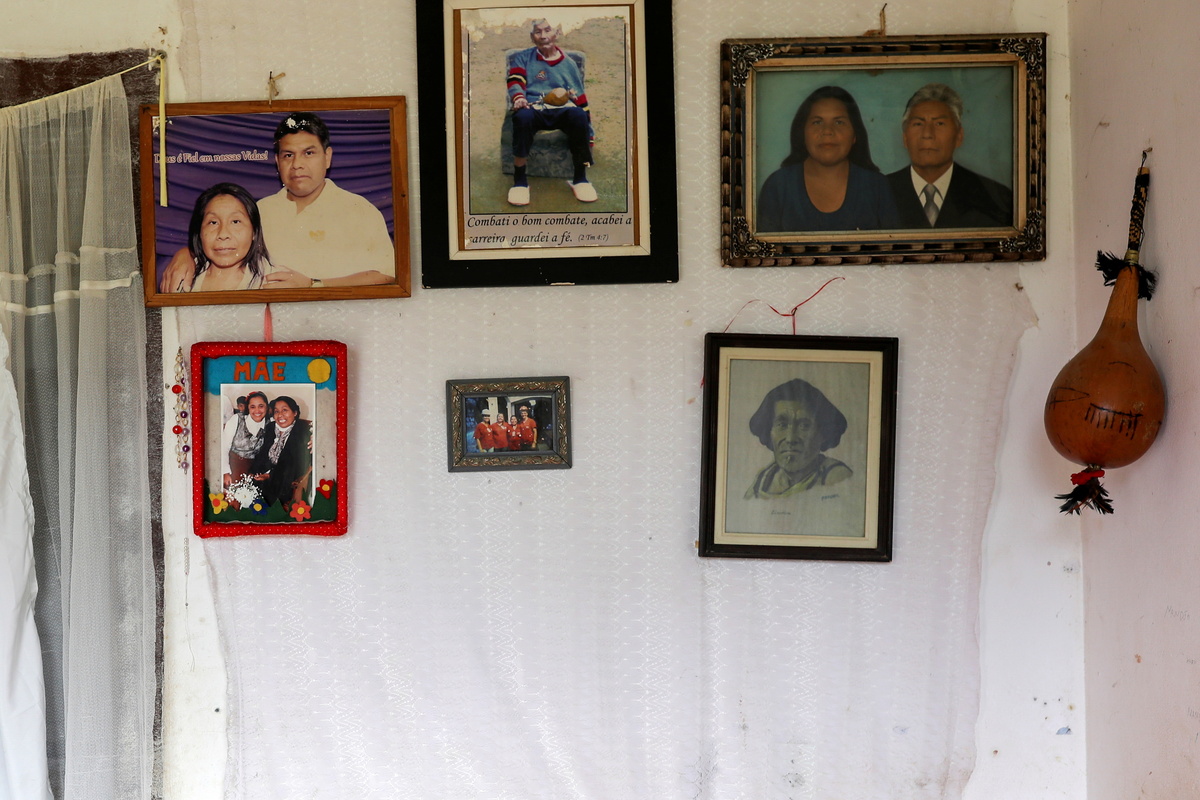
He is a descendent of Shaman Kamlem, the Xokleng medicine man who said on his deathbed in 1925 that they would lose their land to "white men", but would one day gain it back.
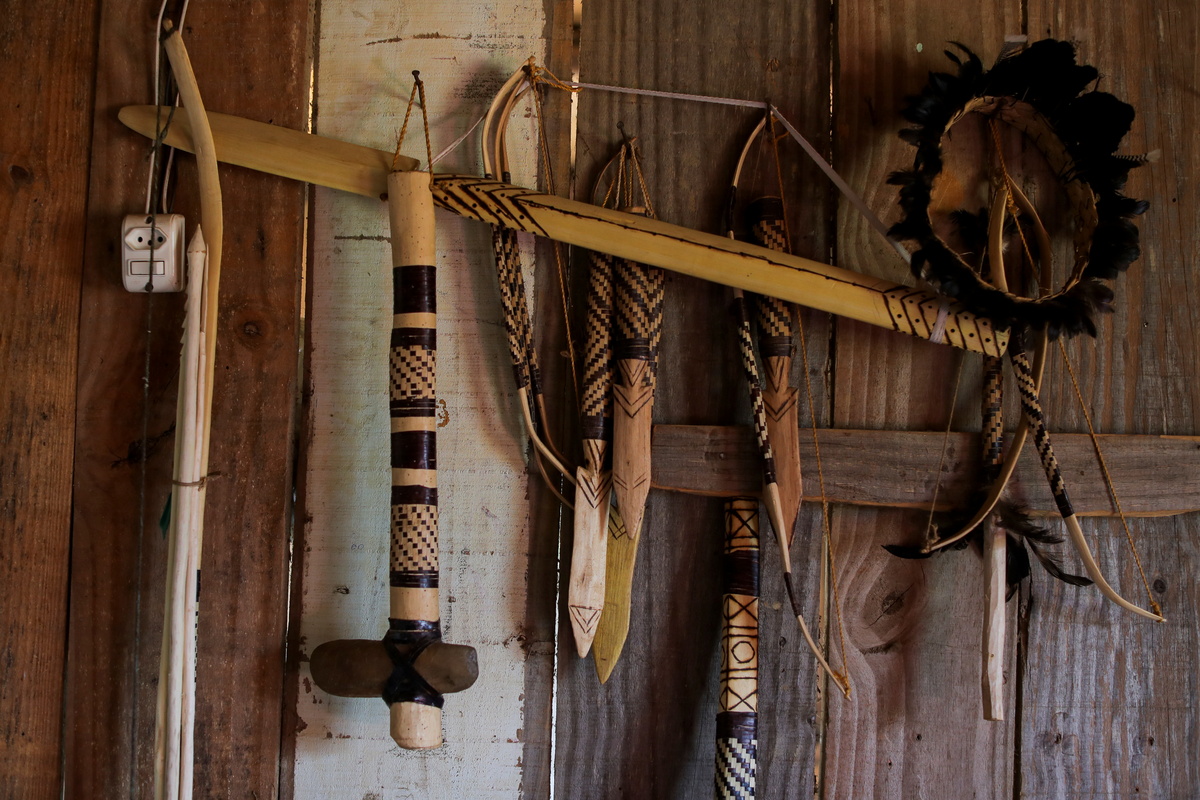
Handmade spears are displayed at Vile Ndille's house in Xokleng Laklano indigenous land, Jose Boiteux, Santa Catarina state, Brazil, August 20, 2021. The Xokleng number some 3,000 people today, crowding into their 14,156 hectares of hilly territory, where landslides threaten homes and most land is too steep for agriculture. REUTERS/Amanda Perobelli
(Reporting by Amanda Perobelli,; Writing by Anthony Boadle; Editing by Rosalba O'Brien)
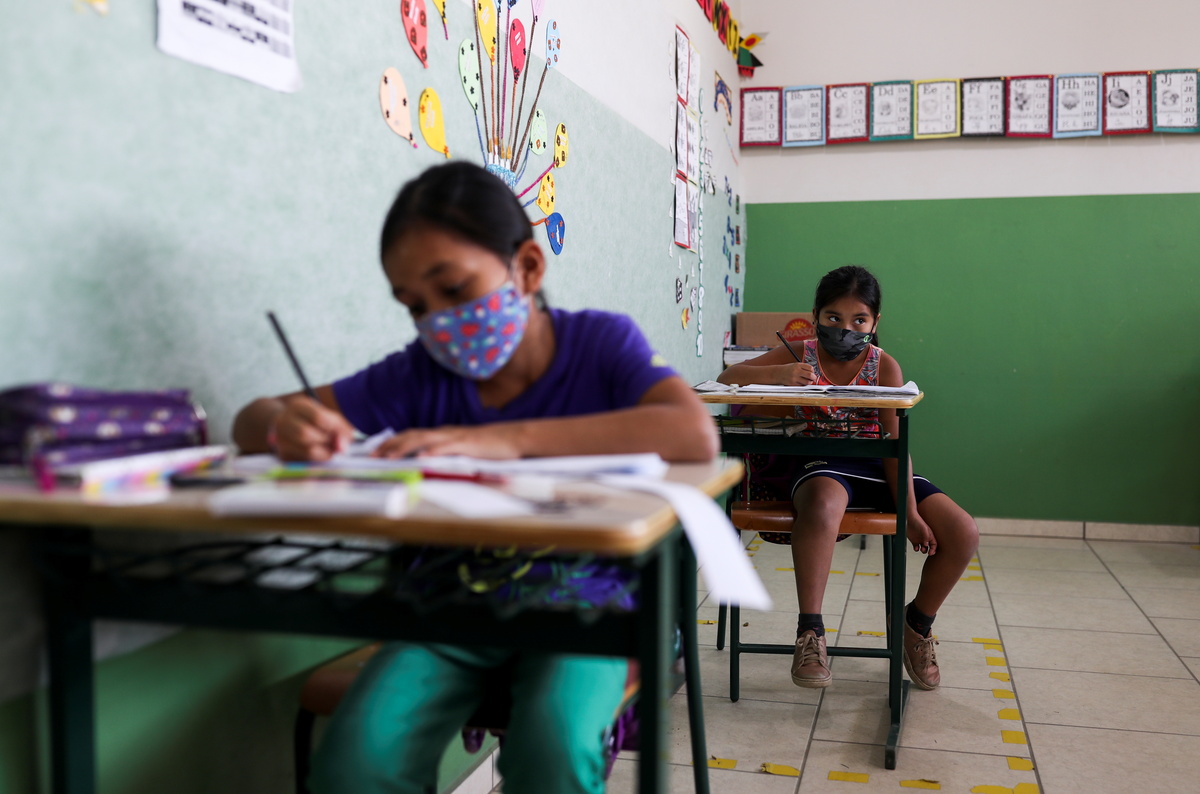
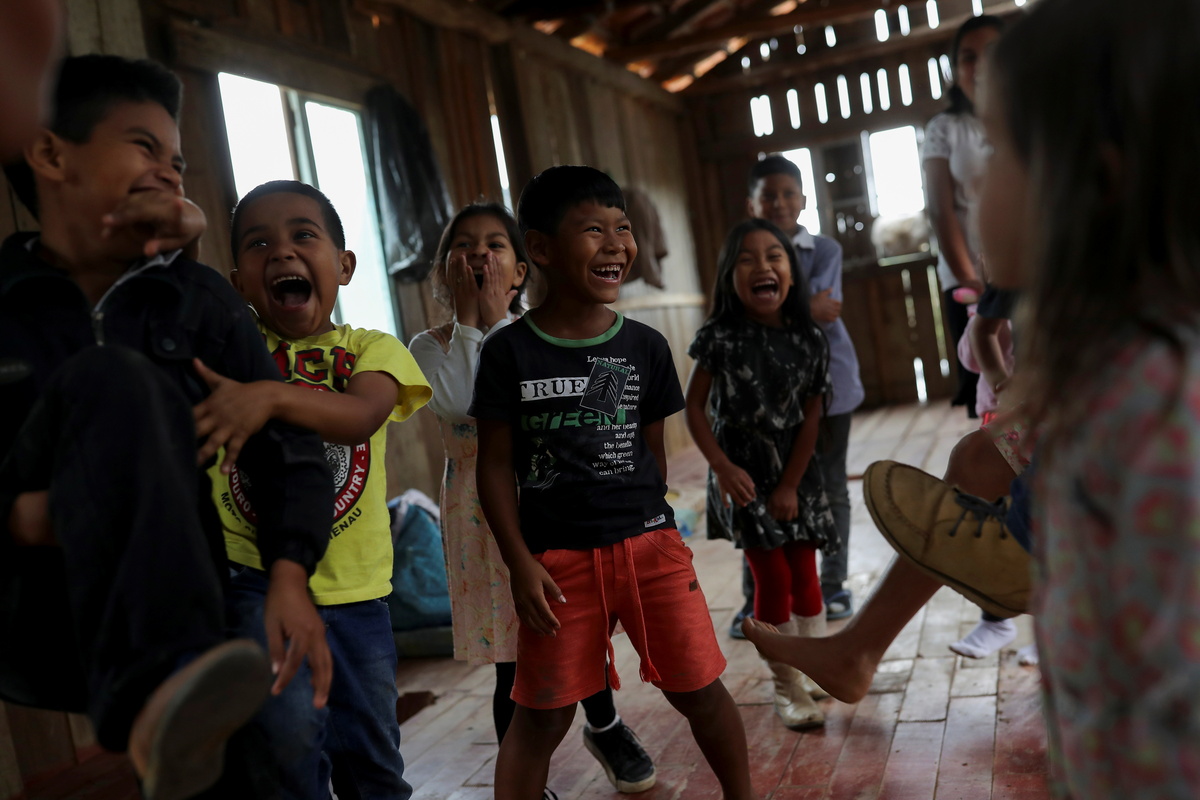
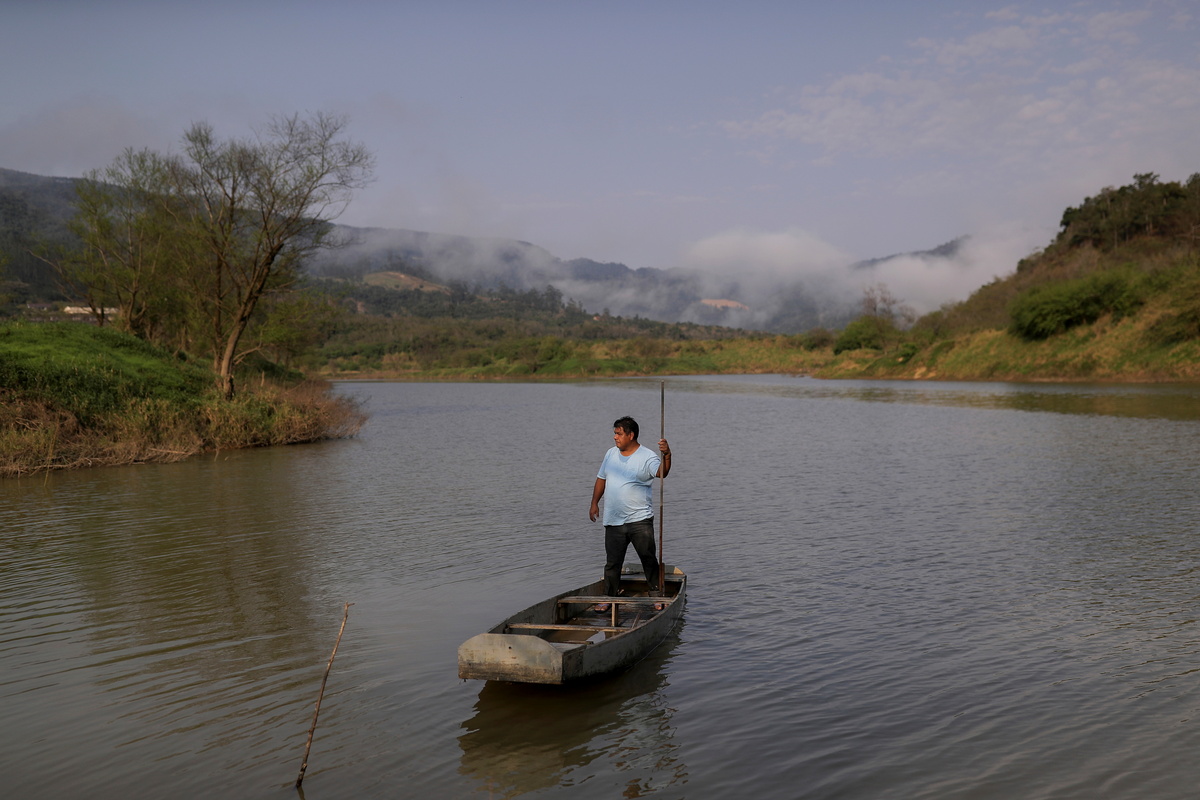
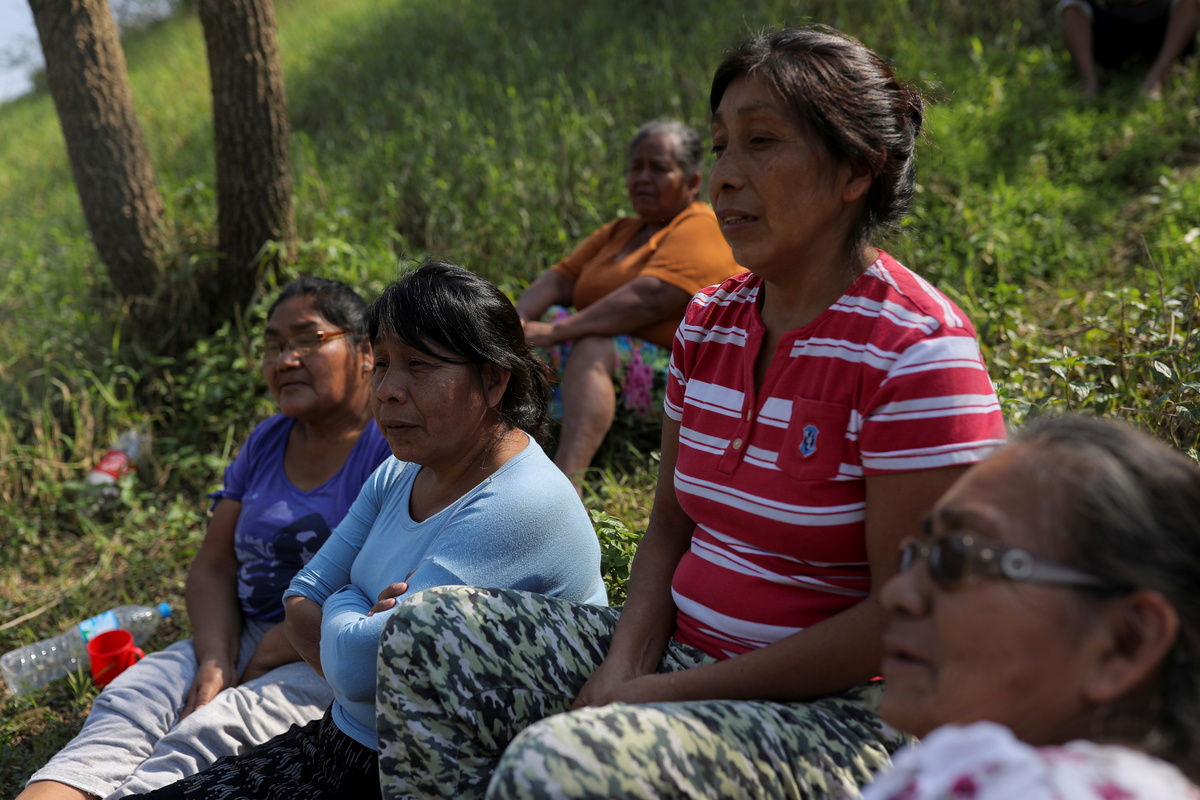
Vanda Kamlem, 87, sits surrounded by her grandchildren at her house in Xokleng Laklano Indigenous Land in Jose Boiteux, Santa Catarina state, Brazil, August 15, 2021. "We cannot plant food living in this hole. They want to get rid of us. They don't like us," said Vanda. A former midwife, Vanda remembers the days when she gathered pine nuts from the abundant Araucaria pines, known as monkey-puzzle trees. Now, the forests have been cut down and fish have become scarce as the rivers turned cloudy, she said. REUTERS/Amanda Perobelli The portrait of Shaman Kamlem, the Xokleng medicine man who said on his deathbed in 1925 that they would lose their land to "white men," but would one day gain it back, hangs on a wall at his descendant Lazaro Kamlem's house in Xokleng Laklano Indigenous Land in Jose Boiteux, Santa Catarina state, Brazil, August 15, 2021. REUTERS/Amanda Perobelli Joao Pate, 78, a former 'cacique' or chief, poses for a photograph in Xokleng Laklano indigenous land, Jose Boiteux, Santa Catarina state, Brazil, August 20, 2021. The Xokleng were cleared off their traditional hunting grounds over a century ago to make room for European settlers, mostly Germans fleeing economic and political turmoil. "Before they killed us with guns, now they kill us with the stroke of a pen," said Pate. REUTERS/Amanda Perobelli Pupils take notes during a class at school in Xokleng Laklano Indigenous Land, Jose Boiteux, Santa Catarina state, Brazil, August 17, 2021. REUTERS/Amanda Perobelli Children play as their parents participate in a prayer in Xokleng Laklano indigenous land, Jose Boiteux, Santa Catarina state, Brazil, August 14, 2021. REUTERS/Amanda Perobelli Men roast beef and chicken for a lunch with members of the community after the evangelical church service in Xokleng Laklano indigenous land, Jose Boiteux, Santa Catarina state, Brazil August 14, 2021. The Xokleng still share their food in communal meals but the beef they roast is bought off the reservation, as they lack enough land to hunt or to raise cattle. REUTERS/Amanda Perobelli Fisherman Luiz Cabral, 52, throws a net as he fishes in a wood canoe at the Itajai river near the north dam, in Xokleng Laklano indigenous land, Jose Boiteux, Santa Catarina state, Brazil, August 18, 2021. Xokleng elders recall the days when plentiful fish and game fed their families, before the bulk of their fertile lands were sold by the state to tobacco farmers in the 1950s. REUTERS/Amanda Perobelli Fisherman Luiz Cabral, 52, throws a fish in a wooden canoe on the Itajai river near the north dam, in Xokleng Laklano indigenous land, Jose Boiteux, Santa Catarina state, Brazil, August 17, 2021. Xokleng elders recall the days when plentiful fish and game fed their families, before the bulk of their fertile lands were sold by the state to tobacco farmers in the 1950s. REUTERS/Amanda Perobelli Lazaro Kamlem, 47, cacique of Palmeira village stands in a wood canoe in Itajai river in Xokleng Laklano indigenous land, Jose Boiteux, Santa Catarina state, Brazil, August 21, 2021. Kamlem is a descendent of Shaman Kamlem, the Xokleng medicine man who said on his deathbed in 1925 that they would lose their land to "white men," but would one day gain it back. "We are here and we will resist to the end. This struggle will not be over," said Kamlem. REUTERS/Amanda Perobelli A general view shows a sawmill on land which the Xokleng indigenous people claim as their territory in Vitor Meireles, Santa Catarina state, Brazil, August 16, 2021. Picture taken with a drone. The Xokleng number some 3,000 people today, crowding into their 14,156 hectares of hilly territory, where landslides threaten homes and most land is too steep for agriculture. They claim a further 24,000 hectares (9,300 square miles) of rich tobacco country that they say belonged to them for centuries before settlers moved in. REUTERS/Amanda Perobelli A general view shows the north dam on the Itajai river and Xokleng indigenous villages in Jose Boiteux, Santa Catarina state, Brazil, August 17, 2021. Picture taken with a drone. The Xokleng number some 3,000 people today, crowding into their 14,156 hectares of hilly territory, where landslides threaten homes and most land is too steep for agriculture. They claim a further 24,000 hectares (9,300 square miles) of rich tobacco country that they say belonged to them for centuries before settlers moved in. REUTERS/Amanda Perobelli Loreni Ngavem Pripra, 44, sits with Xokleng indigenous women as they chat after lunch in Xokleng Laklano indigenous land, Jose Boiteux, Santa Catarina state, Brazil, August 17, 2021. The Xokleng still share their food in communal meals but the beef they roast is bought off the reservation, as they lack enough land to hunt or to raise cattle. REUTERS/Amanda Perobelli Indigenous Xokleng people pray for victory of their cause at a Supreme Court, during an evangelical church service in a church in Xokleng Laklano indigenous land, Jose Boiteux, Santa Catarina state, Brazil, August 15, 2021. Xokleng people of southern Brazil await a Supreme Court ruling that could restore territory they lost decades ago. The bulk of their fertile lands were sold by the state to tobacco farmers in the 1950s. Now the Xokleng pray that Brazilian courts will fulfill a dying shaman's prophecy that they would one day win their lands back. On Wednesday, the top court in Brasilia will decide whether the Santa Catarina state government has applied an overly narrow interpretation of indigenous rights by only recognizing tribal lands occupied by native communities at the time Brazil's constitution was ratified in 1988. REUTERS/Amanda Perobelli Indigenous Xokleng people take part in an evangelical church service in a church at Xokleng Laklano indigenous land, Jose Boiteux, Santa Catarina state, Brazil, August 15, 2021. The Xokleng number some 3,000 people today, crowding into their 14,156 hectares of hilly territory, where landslides threaten homes and most land is too steep for agriculture. REUTERS/Amanda Perobelli
Sign up to read this article
Read news from 100’s of titles, curated specifically for you.