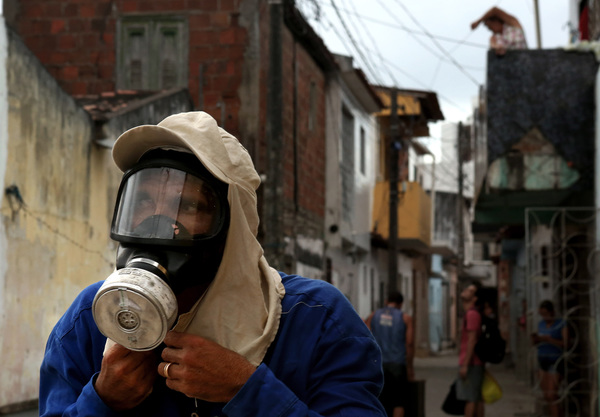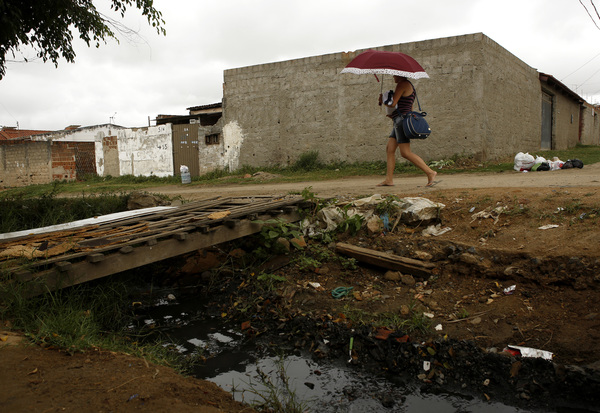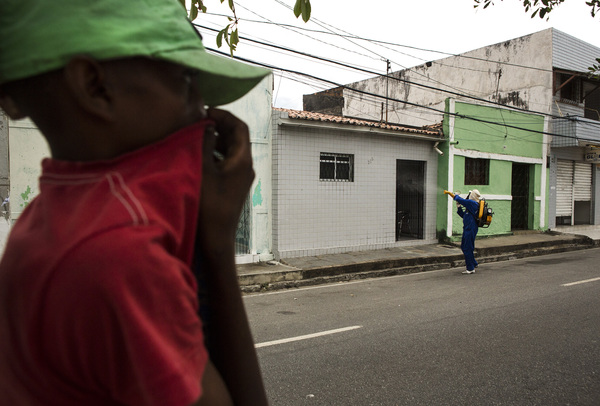
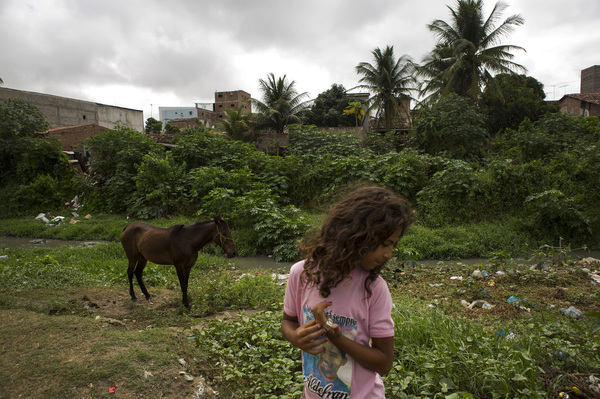
CAMPINA GRANDE, Brazil _ The temperature was already soaring when mosquito control agents fanned out one morning amid a maze of crumbling brick homes on the edge of this lakeside city. Garbage clogged a drainage canal. Makeshift sewers lined the dirt streets.
It was, in short, ideal habitat for the mosquito that spreads the Zika virus.
Behind one house, an agent found water being stored in a broken washing machine. She drew a sample into a pipette and held it up to the sun. It was full of writhing mosquito larvae.
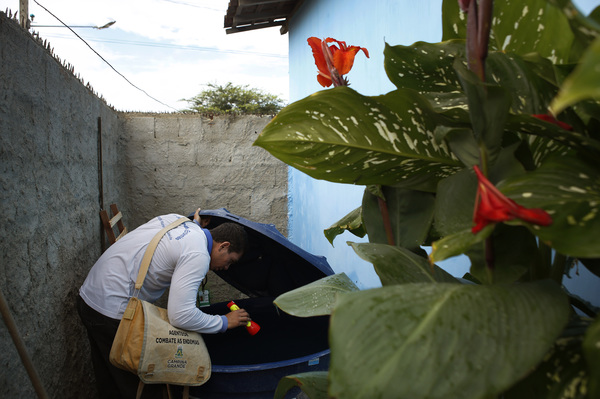
All around were places where water could pool and the enemy could lay its eggs: old cinder blocks, the dog's water dish, even a discarded bottle cap.
Everything would have to be drained or treated with larvicide, they told the family living there.
There are thousands of homes like this one in the sprawling Three Sisters neighborhood of Campina Grande, and thousands of neighborhoods like this one across a country of 200 million.
With no vaccine or treatment for Zika, Brazil's government has few options besides sending teams to every infested region to hunt down and kill the insects that carry the virus, Aedes aegypti.
Can the mosquito be defeated?
It has been done before in Brazil, and much of Latin America. But that was more than half a century ago.
The battlefield looks very different now, and experts fear that this time it is an unwinnable fight. The epidemic might wane, but as long as the mosquito remains, the virus can strike again.
The agents inspecting the home with the washing machine were especially concerned because an 18-year-old living there was pregnant.
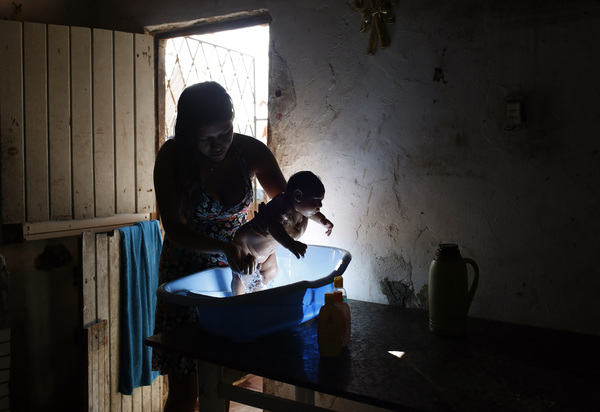
If she were to be infected with Zika, the consequences could be devastating. The virus has already caused more than 1,600 birth defects in Brazilian infants.
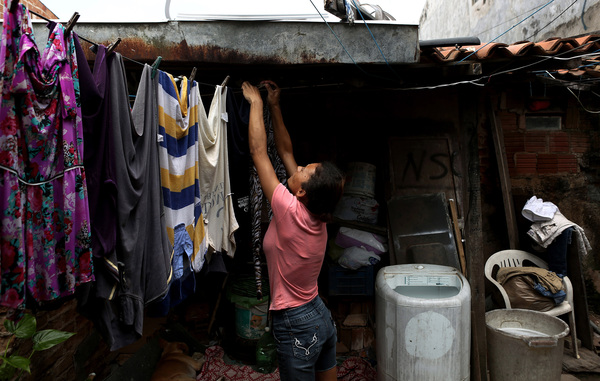
The young woman, Carla Andreia de Sousa, asked what symptoms she should watch for. "We see on the news that there are many people getting sick," she said.
But most people with Zika don't experience any symptoms. An agent urged her to get an ultrasound, to check that her fetus is developing normally.