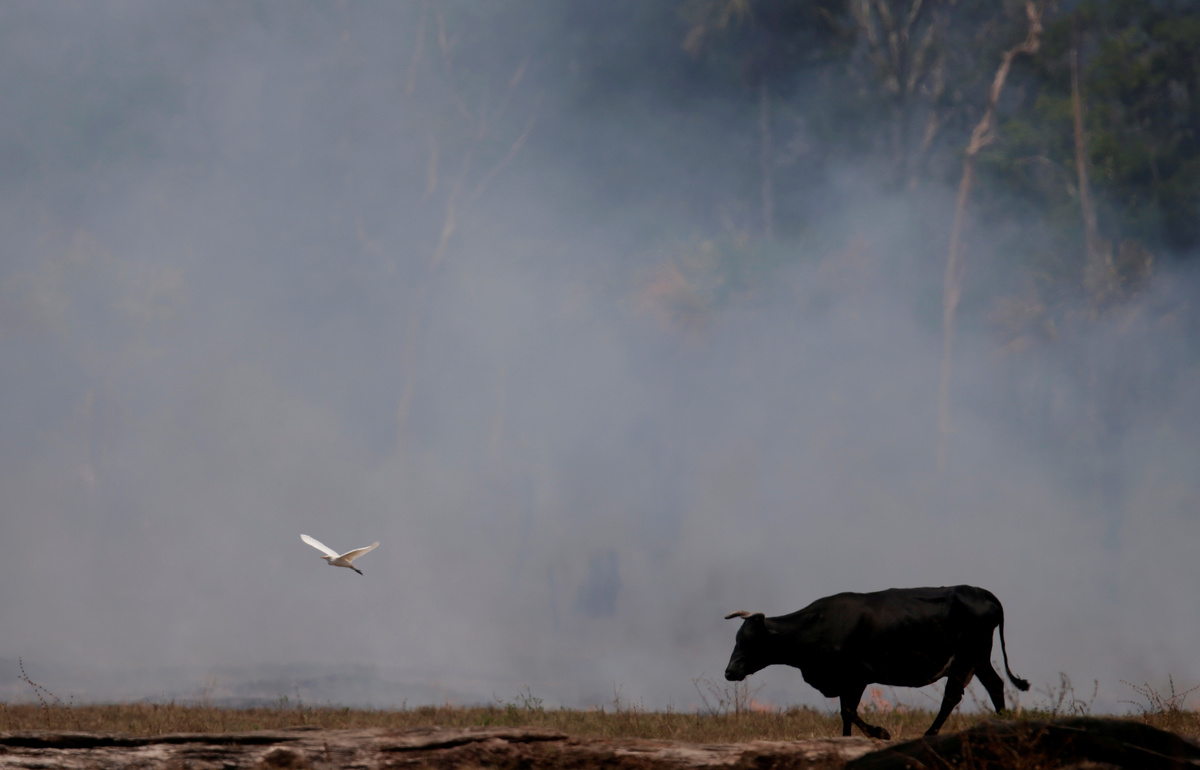
SAO PAULO (Reuters) - Brazil's carbon emissions have remained stable despite an increase in deforestation because they were offset by a larger use of clean energy sources such as ethanol and wind power, a report said on Tuesday.
Brazilian emissions of gases blamed for global warming reached 1.939 billion tonnes of carbon dioxide equivalent (CO2e) in 2018, 0.3% more than seen in 2017, according to SEEG, the most comprehensive study on the topic in the country.
Emissions from the energy sector fell 5% last year when compared to the previous year to 407 million tonnes of CO2e as renewable power continues to increase its share in the energy mix.
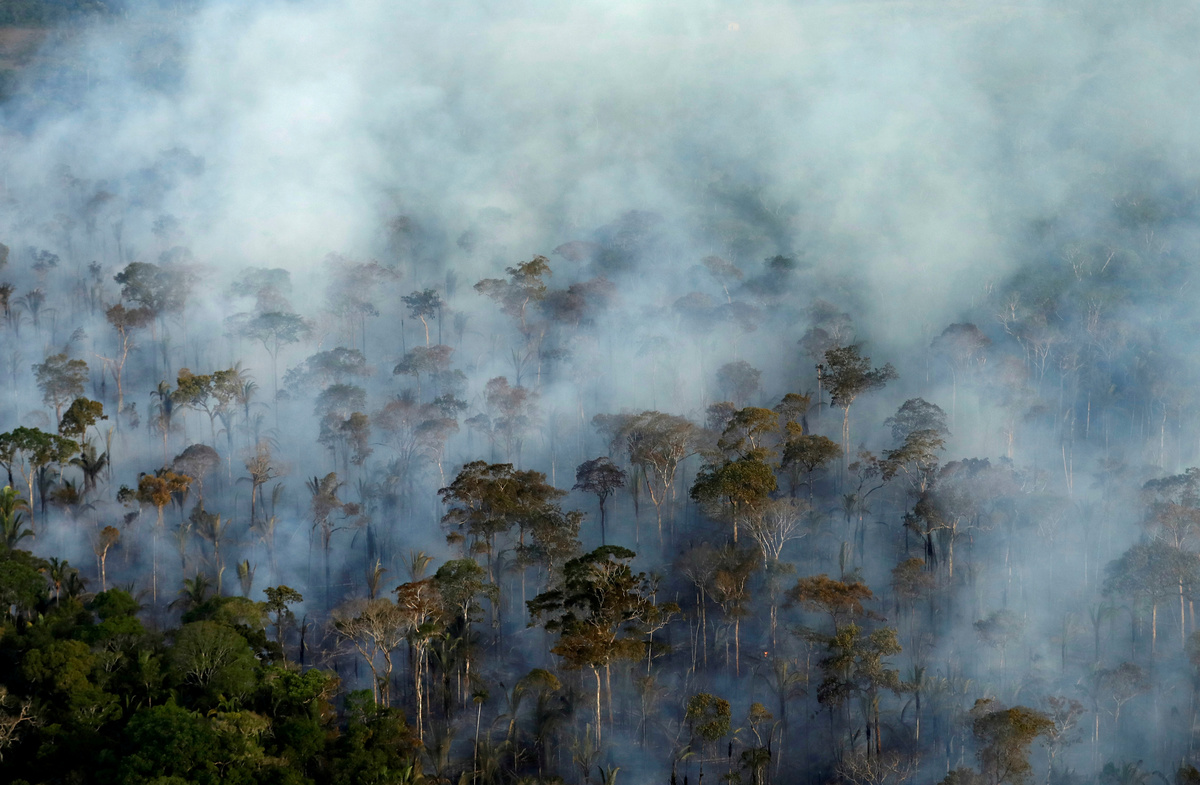
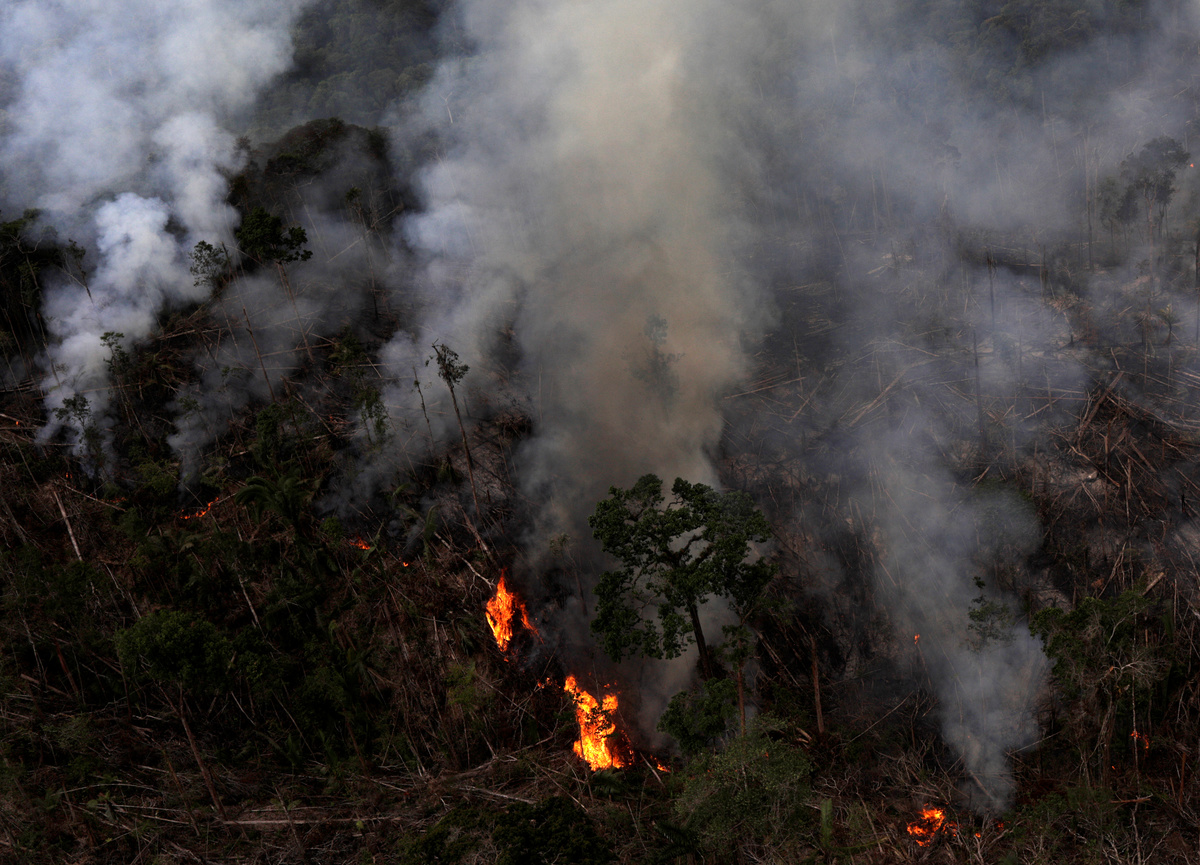
In contrast, emissions from the destruction of forests rose 3.6% to 845 million tonnes of CO2e, leading that source to increase its share in total Brazilian emissions to 44%, more than the combined participation of the industrial and energy sectors.
Clean energy contribution, however, is unlikely to avoid a larger carbon dioxide increase for 2019, as deforestation sharply increased this year to the highest level in a decade. And while emissions were stable, there is no compensation for the losses to wildlife as hundreds of species are extinguished as fires rage.
The data places Brazil as number 7 in the ranking of the world's largest emitters of heat-trapping gases, which is led by China followed by the United States and the European Union.
"Brazil should be in a much better position. Its energy matrix is getting even cleaner than it was. If it stopped deforestation, its emissions would be a third of that," said Tasso Azevedo, the study's coordinator.
"There will be a significant increase," said Ane Alencar, science director at Ipam, the organization collaborating with data on land use changes for the SEEG study.
Deforestation leads to some curious findings. Unlikely other countries where states with higher concentration of industries lead emissions numbers, in Brazil that ranking is led by Pará and Mato Grosso states, for example, countries partly located in the Amazon, with industrialized Sao Paulo state in a distant fourth place.
Livestock activity contributed to those states' increase in emissions numbers, besides deforestation.
"There is a large difference in the origin of emissions in Brazil when compared to most countries," said Ricardo Abramovay, an economist at the University of Sao Paulo.
"While in countries such as United States and Japan a change to a society with less emissions will require large investments to modify production models and consumption habits, in Brazil we only need to cut deforestation, a very small investment," he said.
(Reporting by Marcelo Teixeira; Editing by Sandra Maler)