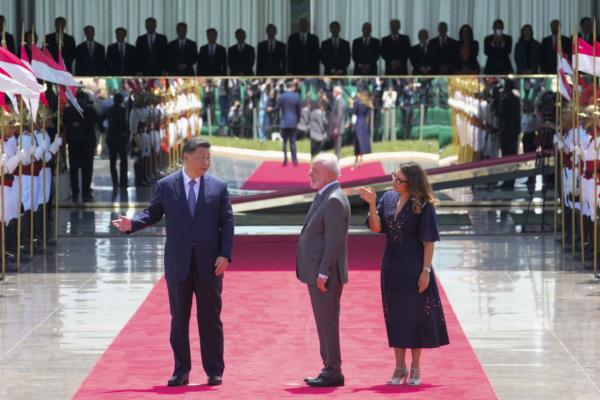
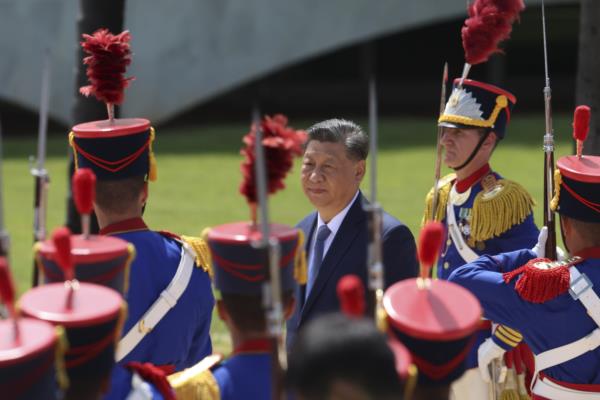
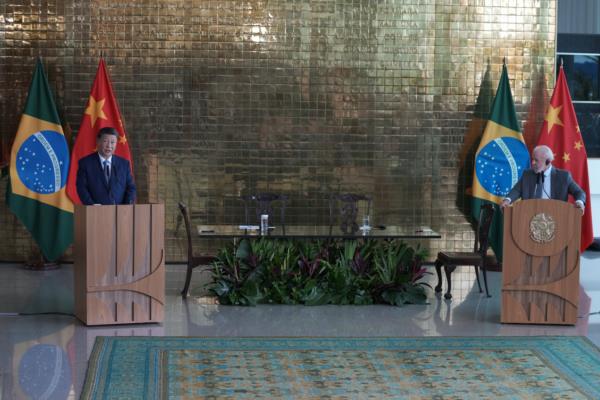
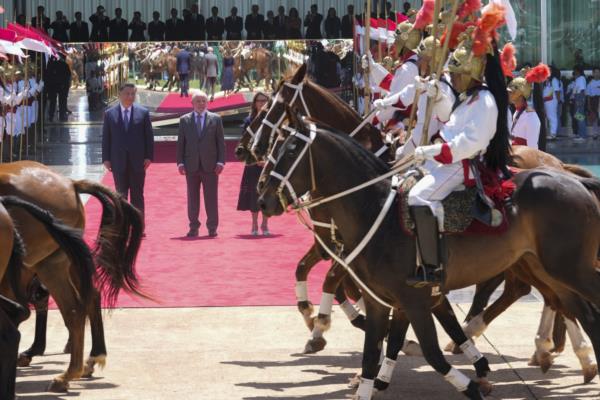
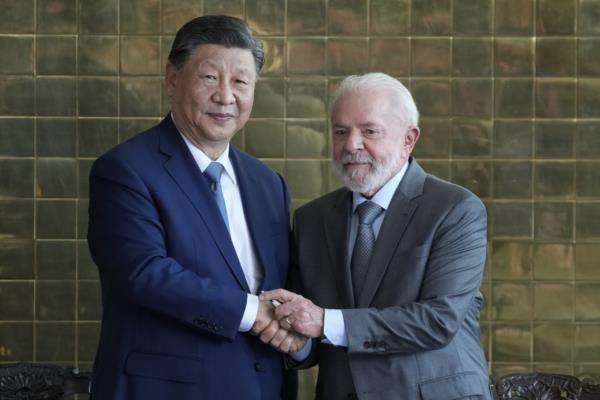
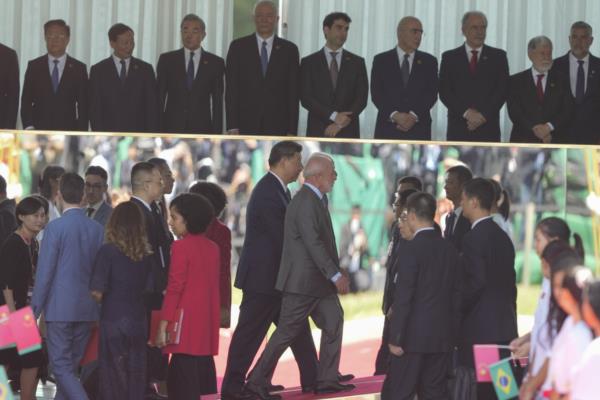
RIO DE JANEIRO (AP) — Brazilian President Luiz Inácio Lula da Silva welcomed China’s President Xi Jinping for a state visit at the Alvorada Palace in Brasilia, showcasing the deepening ties between the two nations. This visit signifies the growing relationship between Brazil and China, which has been evolving since China surpassed the U.S. as Brazil’s largest export market in 2009.
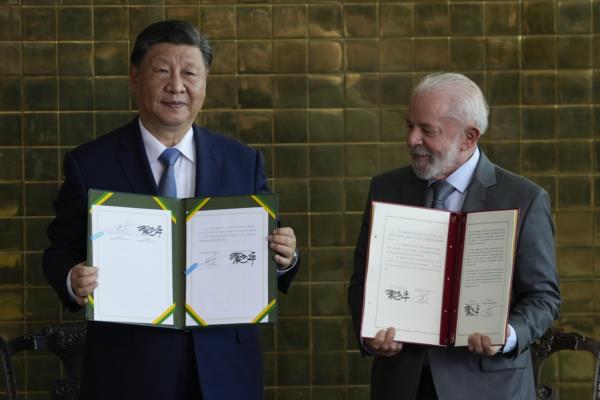
The state visit resulted in the signing of 37 agreements covering various sectors such as trade, tourism, agriculture, industry, science and technology, health, energy, culture, and education. This comprehensive collaboration reflects the strengthening bond between the two countries.
Experts point out that Latin America is increasingly turning towards China, as demonstrated by Xi Jinping's recent inauguration of a $1.3 billion megaport in Peru. The region's pivot towards China is seen as a response to perceived neglect from traditional partners like the U.S. and the European Union.
President Lula's efforts to enhance ties with China come in contrast to the strained relations during the tenure of his predecessor, Jair Bolsonaro. Bolsonaro's anti-China rhetoric, including blaming the COVID-19 pandemic on the Chinese Communist Party, had created tensions between the two nations.
China and Brazil have significantly boosted their trade relationship, with bilateral trade reaching $136.3 billion from January to October 2024. The growth in trade since President Lula's first visit to China in 2004 has been remarkable, surpassing exports to the U.S. and the EU combined.
While China has been urging Brazil to join its Belt and Road Initiative, Brazil has been cautious in its approach. Despite considering the idea, Brazil has managed to secure beneficial agreements with China without formal participation in the initiative.
As the world anticipates Donald Trump's potential return to the White House in 2025, the dynamics of global partnerships are expected to shift. Brazil's balancing act between strengthening ties with China and maintaining relationships with the U.S. and European nations will be crucial in navigating the evolving geopolitical landscape.