The family of a man said to be in a state of “low awareness” after sustaining a brain injury have launched a legal fight to prevent a health trust from halting treatment that is keeping him alive. The patient, in his 40s, is being treated in a hospital intensive care unit. Specialist doctors say it is very unlikely that he will regain any level of consciousness.
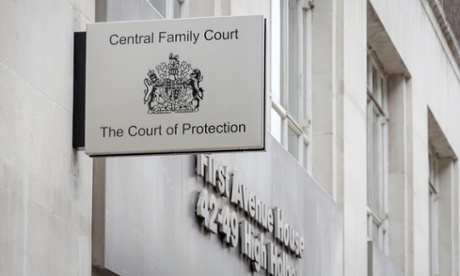
The NHS trust is seeking permission to stop providing treatment. Such a change, the court of protection has been told, will inevitably result in his death. The man, referred to in court only as P, cannot be identified. The case could set a precedent. Courts have never before permitted treatment to be withdrawn from a patient in a minimally conscious state.
Vikram Sachdeva QC, for the man’s wife, told the judge, Mr Justice Newton: “The family strongly disagree that a reliable diagnosis of vegetative state can properly be made; and the prognosis is therefore also uncertain. Their consistent evidence is that [P] would want all possible treatment, and they consider that it would be in his best interests to receive both renal replacement therapy and cardio-pulmonary resuscitation.
“[P’s wife] considers that the clinical evidence currently available, which suggests a diagnosis of vegetative state, is inconsistent with the family’s experiences of [him], which is of a perception that he is indeed making purposeful responses to various stimuli.”
Parishil Patel, the barrister for the NHS trust, told the judge that the man is in a “low awareness state” and requires renal replacement therapy. Doctors have said the therapy is “futile and overly burdensome”. The NHS trust is seeking permission to withdraw it. One specialist explained that medical staff wanted to do “the best thing” for the man, but said: “We are actually torturing this man.”
Four years ago a judge ruled that a brain-damaged, minimally conscious woman should not be allowed to die. The 2011 ruling by Mr Justice Baker was hailed as a landmark decision which clarified the law relating to the care of the severely disabled. Baker said there was dignity in the life of the 52-year-old former hairdresser, who was “well cared for and kept comfortable”. His ruling came nearly two decades after leading judges ruled that Liverpool football fan Tony Bland, left in a permanent vegetative state after being crushed at the 1989 Hillsborough stadium disaster, could be allowed to die.
Anne-Marie Irwin, from law firm Irwin Mitchell, representing the family of P, said: “The law responds to the most sensitive of cases, and it is important that all the expert medical evidence is analysed so that [his] best interests can be protected. The courts have never before allowed treatment to be withdrawn when a patient is in a minimally conscious state, so this case could set a precedent for future patients in a similar situation.
“There is a difference between patients who are in a persistent vegetative state and those who are in a minimally conscious state, which means that they are aware of their surroundings to a certain extent. P’s family believe that he would have wanted to remain alive and that he is able to derive quality of life from the time he spends with his family and friends. They therefore strongly believe that treatment should not be withdrawn in the current situation.”
The hearing continues.