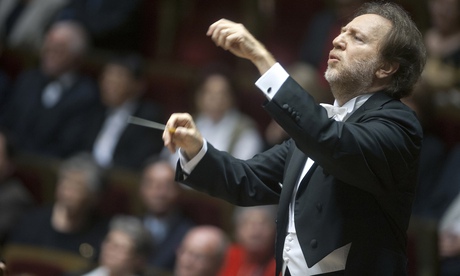
After outstanding recordings of Brahms’s symphonies and concertos, arguably the best in many years, Riccardo Chailly and his superb Leipzig Gewandhaus Orchestra turn their attention to a pair of much less familiar works. The first of the Serenade in D, Op 11, was Brahms’s earliest orchestral work. Like the A major work Op 16, it was composed during the late 1850s when he was working at the court in Detmold as a teacher, pianist and choral conductor. Both are substantial pieces – the six movements of the First Serenade last over 39 minutes in Chailly’s performance; the five-movement Second lasts 26 – and their extrovert character is in marked contrast to most of Brahms’s other orchestral scores, and certainly to the First Piano Concerto, on which he was working at the same time.
But as the buoyant Gewandhaus performances show, these works reveal Brahms invoking the classicism of Haydn, Mozart and early Beethoven – particularly that of Haydn, whose final symphony No 104 in D, especially, hovers over the First Serenade. There’s more to both of them than straightforward classical pastiche, of course, and anticipations of the later Brahms aren’t hard to find in the way in which themes are allotted between instruments and rhythms are displaced or superimposed. There’s the sense, too, of his testing out ideas and orchestral colours to see if they might have symphonic mileage in them; the wind writing in the second serenade, especially the duet for oboe and clarinet in the central Adagio, is wonderfully deft.
All this is realised with a mixture of ease and exuberance in Chailly’s light-fingered performances. He never imposes symphonic weight on music that simply wasn’t designed for it, nor does he ever drive it too intensely: he allows it to follow its own course. That course can sometimes be very swift indeed – the Allegro molto movement with which the D major work opens hardly pauses for breath – but it never seems forced, and the phrasing of the Leipzig wind, and the suaveness of the strings, are constant delights. These might not be among Brahms’ greatest works, but it is hard to imagine how they could be performed more authoritatively.




.jpg?w=600)