BEIJING ��Confronted by the challenge of Donald Trump's presidency, China is signaling that it's ready to work with the new administration and has already taken a few policy steps that may help fend off criticism over access to its markets.
The official Xinhua News Agency congratulated Trump on his inauguration and said it hoped for "win-win" cooperation with the U.S.. An editorial run by state-backed newspaper China Daily took a similar tone, saying the world's two largest economies should work together toward "an updated, more desirable version of globalization."
Last week, China revealed a plan to relax restrictions on foreign investment in long-closed areas of the economy such as banking, securities, futures, mutual funds and insurance. A senior official last week said China is prepared to enhance cooperation with other countries to protect intellectual property rights, a major issue for U.S. and European companies that complain about their technologies being copied and their brands faked.
Ning Jizhe, China's statistics chief and deputy head of the top economic planning body, used his Friday briefing on 2016 economic data to congratulate Trump and say he hoped the new president keeps moving China-U.S. cooperation forward. The Ministry of Commerce last week said it's willing to work with the new U.S. administration to help promote healthy trade development and economic ties, echoing President Xi Jinping's speech to the World Economic Forum in Davos that warned against trade wars and protectionism.
But Xinhua's article congratulating Trump also laid out the areas China regards as off limits: "China's resolve to safeguard its defining core interests in Taiwan and the South China Sea islands has always been strong," it said.
Xi has a strong domestic imperative not to appear weak before a Communist Party congress late this year, at which several top leaders are due to be replaced. Policymakers also have pledged more focus on ensuring financial stability.
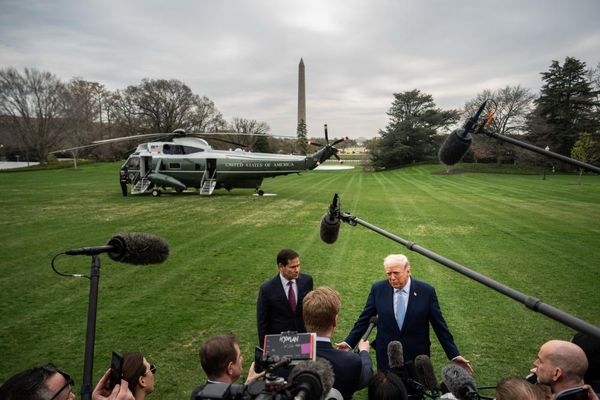
Trump opened his presidency with an "America first" appeal, saying the U.S. will "bring back our jobs. We will bring back our borders. We will bring back our wealth."
"For many decades, we've enriched foreign industry at the expense of American industry; subsidized the armies of other countries, while allowing for the very sad depletion of our military," he said.
He didn't mention China by name in his inaugural address, in contrast to his campaign rhetoric in which he accused it of raping America and cheating on trade.
Trump so far hasn't followed up on his pledge to label China a currency manipulator. His choice for treasury secretary, Steven Mnuchin, agreed at his a Senate confirmation hearing that China has shifted recently from efforts to weaken the yuan. He did say, however, that he is willing to apply the manipulator label if warranted.