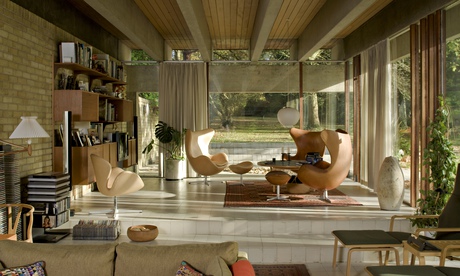
When I was flat hunting two years ago, one website shone like a beacon through the terraced fog of Zoopla and Rightmove: the Modern House. An estate agency designed like a high-concept lifestyle magazine, it had clean fonts on white space, art-standard photography and a refreshing lack of jargon.
And the properties! David Adjaye-designed extensions. Modernist masterpieces. Apartments that would serve as the set for stylish 60s thrillers, pornography to anyone who has admired a piece of Danish furniture. All light years out of my price range, but it was nice to dream.
Clearly I wasn’t the only one. After 10 years, the Modern House is releasing a coffee-table book of its greatest hits. If you like that sort of thing, it’ll make you drool. If you don’t, you’ll probably hurl the book across the room at the first mention of a cantilever or curtain wall.
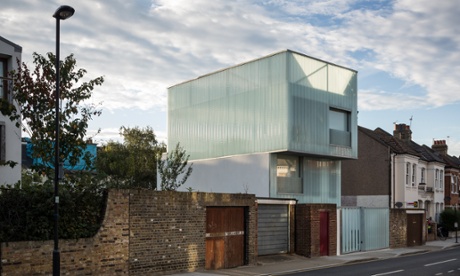
“When we started out I had never bought or sold a house. We had no idea about estate agency,” says Albert Hill, who founded the company in 2005 with his schoolfriend Matt Gibberd. The site’s magaziney feel is no accident: they both had journalistic backgrounds. Hill was the design editor of Wallpaper* and Gibberd was senior editor at World of Interiors, although both had grown up steeped in art and architecture. Gibberd’s grandfather was Sir Frederick Gibberd, one of the leading British modernists.
They started in 2005, inspired by a trip Hill made to Florida and a house in Dulwich, southeast London, designed by Berthold Lubetkin’s Tecton practice, which was proving difficult to sell. Hill had his first client. Using their press contacts they got coverage for the property and were up and running.
Since then they have sold around 700 homes, from some of the earliest modernist properties in the country to Lubetkin’s Le Corbusier-inspired Highpoint flats and a house in Wimbledon that Richard Rogers designed for his parents. Their clients include fashion stars and “17 Turner prize-nominated artists”, and nearly a member of Take That. Current listings include a Rogers Stirk Harbour penthouse on the Thames, a Norman Foster mews house in Hampstead and Tom Dixon’s studio in Greenwich. They say that although demand has improved, the British public is still suspicious about modern architecture, hence their canny hand on the marketing.
“It’s all well and good telling people not to knock something down because it’s lovely,” Hill says. “But if you can show them that it shouldn’t be knocked down because it’s lovely but it could also be worth a fortune, then you are really getting somewhere.”
Get the look