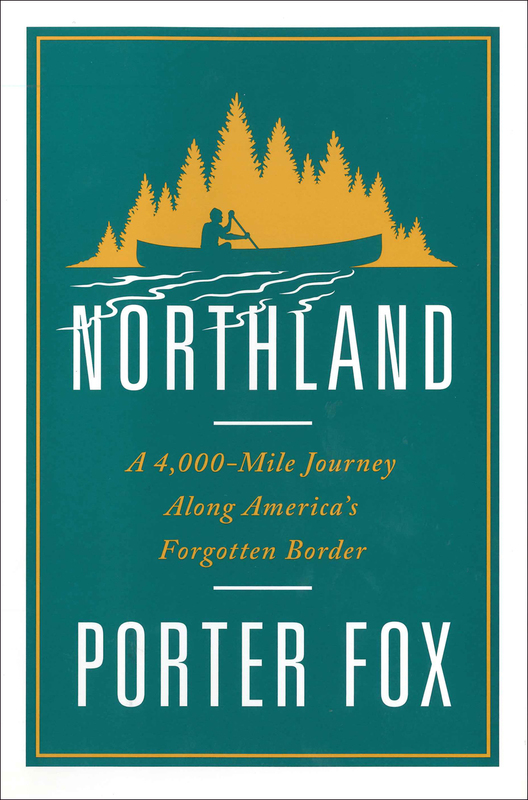
Northland: A 4,000-Mile Journey Along America's Forgotten Border
By Porter Fox
W.W. Norton, 247pp
When American travel writer Porter Fox decided to explore the approximately 6,400-kilometer length of the border between Canada and the continental United States, he started at the eastern end, aboard a sea-urchin fishing boat in waters near the mouth of the St. Croix River, which divides Maine from New Brunswick. But the story of the border begins further east than that -- in Paris.
In the 1783 Treaty of Paris, which concluded the American Revolution, the U.S. and British sides agreed that the St. Croix would form the first segment of the border. However, the negotiators were using incomplete maps, and the two sides had different ideas about just which of the rivers in the region was the one that went by the name of St. Croix. Fox writes that it took more than a decade to settle that question, in one of "a dozen subsequent treaties that attempted to clarify" the Treaty of Paris.
The most conspicuous remnant of that process is the northernmost point of the continental United States, a little knob of Minnesota called the Northwest Angle, which pokes up into Canada and is mostly surrounded by the Lake of the Woods. The Treaty of Paris called for the border to run west from the lake to the source of the Mississippi River. But later exploration showed the river's source to be south of the lake, forcing the border to take a sharp turn.
Saying goodbye to the fishermen, Fox heads up the (definitively identified) St. Croix alone in a canoe. Due to "a lapse of judgment" on a cold and windy day, he finds himself side-on to waves that he can't see over the top of in his little boat. He's lucky that his story didn't end right there.
Later, he crosses the Great Lakes as a passenger aboard a freighter, whose captain tells him about surviving a similar experience -- only this story involves a 180-meter ship tossed about by much bigger waves in a Great Lakes storm.
A less lucky craft was the French ship Le Griffon, built on the shore of Lake Erie in 1679. The first ship ever to cross that lake -- and Lake Huron, too -- it vanished on the return leg of its maiden voyage, laden with more than 5,000 kilograms of fur pelts. No one knows what became of it, although Fox subtly hints at possible sabotage by canoe-using fur traders who saw it as a threat to their business.
Although Fox sticks mostly to the U.S. side of the line, his journey takes him through several different regions, each with its own geography and history. Consequently, the book has no particular theme; it is literally all over the map. Nonetheless, its varied parts are worth reading on their own, particularly his long account of visiting a North Dakota encampment of Native Americans and others protesting construction of the Dakota Access Pipeline, which frequently appeared in the news not long ago.
Also, it's pleasing to learn what became of the sea urchins he helped to catch in Maine: "That night they would be flown to Japan, and the following day the roe would appear on kaiten-zushi conveyor belts at restaurants throughout the country."
-- By Tom Baker
Japan News Staff Writer
Maruzen price: 4,588 yen plus tax
Read more from The Japan News at https://japannews.yomiuri.co.jp/