Allergan, the company that makes Botox, has agreed to be bought by the pharmaceutical group Actavis in a $66bn (£42bn) tie-up that is one of the biggest deals of the year.
The companies have agreed terms that value Allergan at $219 a share, a 10% premium on their Friday closing price of $198.65.
If it goes through, the deal will allow Allergan to see off a hostile takeover from Canada’s Valeant Pharmaceuticals, which has teamed up with the activist investor Bill Ackman and his hedge fund, Pershing Square Capital Management.
Allergan has spent months fending off advances from the Valeant team, because it believes the Canadian firm will slash its research budget and destroy its ability to create new products.
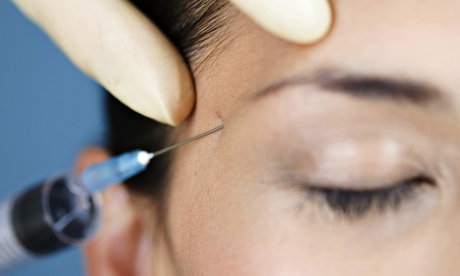
Allergan was founded in Los Angeles in 1948 with an anti-allergy nose drop, but its bestseller is the face-freezing filler Botox, which it is seeking to develop for new purposes such as osteoporosis treatments. It acquired the rights to distribute botulinum toxin in 1988, and soon renamed it.
Actavis, which makes a range of over-the-counter and prescription drugs, emerged as a white-knight bidder after an acrimonious public battle between Allergan and Valeant. The deal comfortably exceeds Valeant’s latest bid, which came in at $53bn, up from an opening offer of $47bn.
Allergan has rebuffed its Canadian suitor, arguing that it has a “diametrically opposed strategy”, but the company has been under significant pressure and was racing to complete the deal with Actavis before a critical shareholder meeting in December that could have pushed it into Valeant’s arms. Ackman’s Pershing Square has a 10% stake in Allergan and has been aiming to unseat the majority of the firm’s board.
The deal comes as the consumer goods giant Reckitt Benckiser confirmed that it would spin off its US-based pharmaceutical business. The company, re-named Indivior, will concentrate on drug addiction treatments and will publish a prospectus for investors on Monday before a planned flotation on the London Stock Exchange on 23 December.
Indivior’s chief executive, Shaun Thaxter, who has led the division within Reckitt Benckiser since 2009, said the standalone company had “the best pipeline in the world” of new forms of treatment for heroin and cocaine addiction.
The company, however, must persuade investors it can thrive as a standalone business as revenues shrinkfor its main product, the heroin addiction treatment Suboxone, which lost US patent protection in 2009.
About 80% of Indivior’s revenues come from the US, though Thaxter said the market for treatments such as Suboxone was growing as more countries treat addiction as a medical problem rather than a criminal justice issue.
Indivior estimates that 1.2 million people in China are addicted to opiods and sees an opportunity for growth as Beijing seeks to offer new treatments.
The Indivior spin-off will be put to a vote of Reckitt Benckiser shareholders on 11 December. The consumer goods giant, which makes Dettol, Nurofen and Finish dishwasher tablets, has said it wants to concentrate on its household brands.