Get all your news in one place.
100’s of premium titles.
One app.
Start reading
The Guardian - UK
The Guardian - UK
Environment

Botanic Gardens, Modern-Day Arks

Botanic Gardens: Modern Days Ark
A staggering one-third of all flowering plant species are threatened with extinction. Sara Oldfield's book documents the role that botanic gardens around the world are playing in the fight to save plant species.
Photograph: Artwork 4
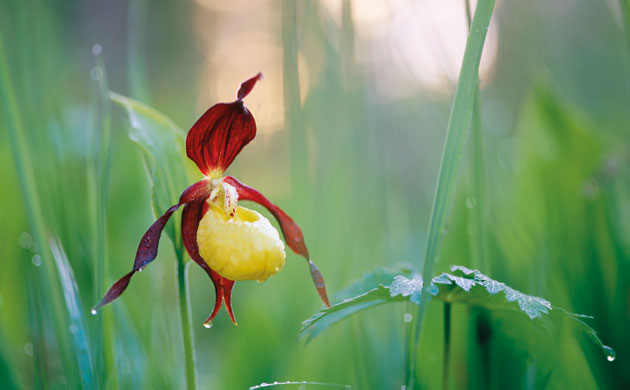
Botanic Gardens 2: The lady's slipper orchid, Kew Gardens
The beauty of the lady's slipper orchid (Cypripedium calceolus) nearly led to its downfall in many countries but the Royal Gardens, Kew, is helping to ensure this species survives. Kew began documenting endangered plants in the 1970s and, sadly, this workload has grown ever since.
Photograph: Peter Lilja/photolibrary.com/NH
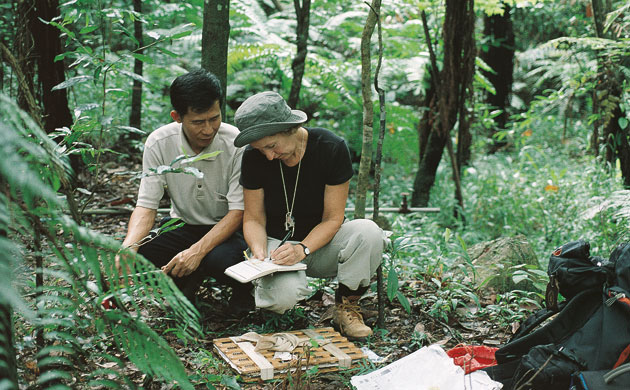
Botanic Gardens 2: Chris Leon with Chinese collegue record medicinal plant species in China
Chris Leon from Kew Gardens works with Chinese collegue to record medicinal plant species. Field notes, photographs and herbarium specimens increase knowledge of the distribution and abundance of species.
Photograph: HN
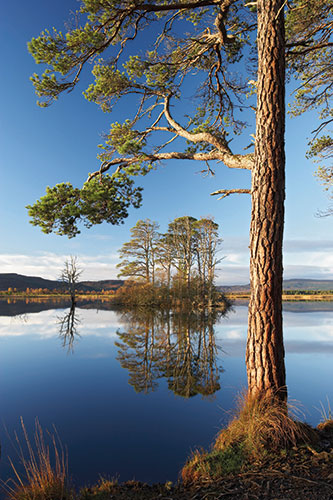
Botanic Gardens: Scot's pines in Cairngorms National Park, Scotland
Although Scots pines now grow around the world, the growing numbers of deer grazing upon its seedlings in the scottish highlands mean that the plant is under threat in its native habitat. Photograph: Mark Hamblin/photolibrary.com/guardian.co.uk
Botanic Gardens: Centaurea tchihatchewii, one of Turkey's Critically Endangered plants
Centaurea tchihatchewii is one of Turkey's critically endangered plants. Staff at the Nezahat Gökyigit Botanic garden are now cultivating the plant with the intention of restorating its wild populations.
Photograph: Adil Guner/NH
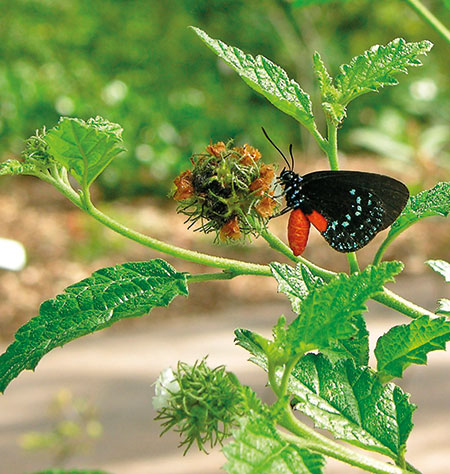
Botanic Gardens: The florida atala butterfly (Eumaus atala)
The atala butterfly (Eumaus atala) became endangered through loss of habitat. It lives in pine rocklands and areas of tropical hardwoods in Florida, Cuba and the Bahamas. Staff at the Fairchild Tropical Botanic Garden in Florida have worked hard to restore and preserve these habitats.
Photograph: Sam Wright/NH
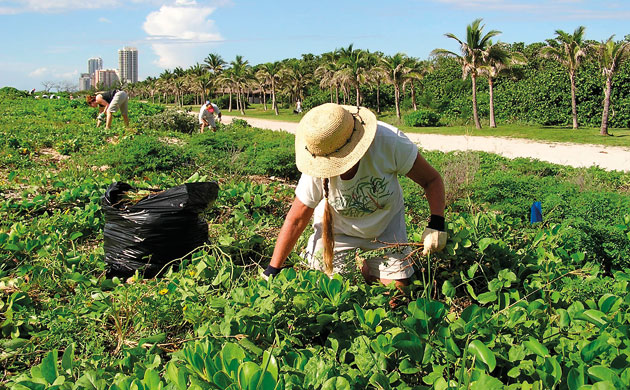
Botanic Gardens: Florida's most threatened plants
Volunteers assist in the propagation and recovery of some of Florida's most threatened plants.
Photograph: NH
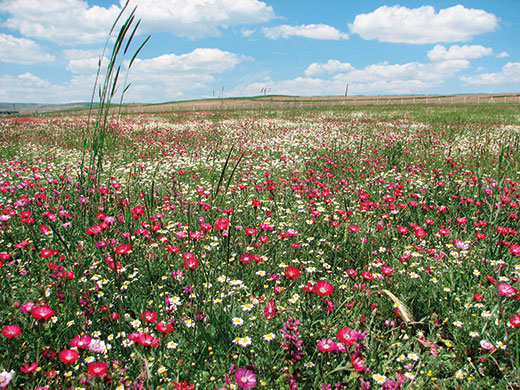
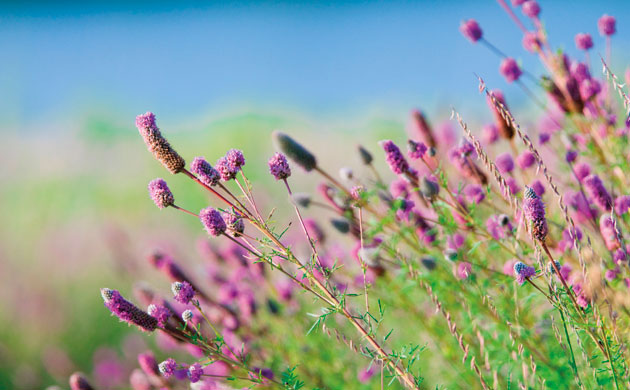
Botanic Gardens: Dalea purpurea, the purple prairie clover
Dalea purpurea, the purple prairie clover, is one of many attractive native plants that visitors can see on the prairie trails at Chicago Botanic Garden
Photograph: Robin Carlson/CBG/NH
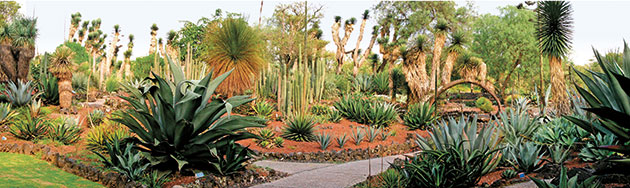
Botanic Gardens 2: The UNAM Botanic Garden, Mexico
The UNAM Botanic Garden, Mexico, has a wonderful collection of cacti and other succulents. Many of the 381 species in the collection are endangered despite international collaboration to prevent cactus smuggling.
Photograph: NH
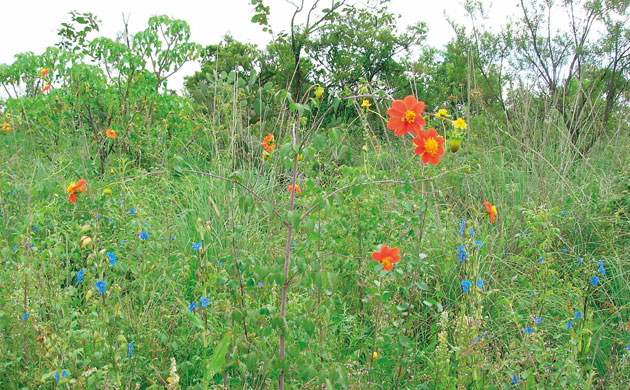
Botanic Gardens 2: Dahlia - a national treasure, Mexico
Dahlias in their native Mexican habitat. In the past dahlias have been used medicinally and their tubers were eaten as a vegetable. Today they are hugely popular as garden plants around the world. The UNAM Botanic Garden has an important collection of dahlias including the species, Dahlia Brevis, which is now extinct in the wild.
Photograph: NH
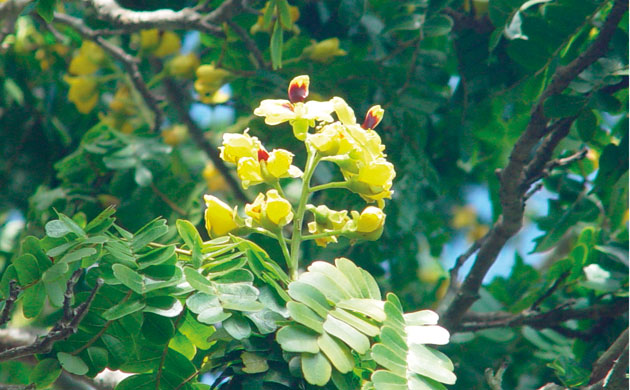
Botanic Gardens 2: Pau brasil, the national tree of Brazil
Pau brasil, the national tree of Brazil has been heavily logged for centuries for international trade. It is now an endangered species and it was added to Appendix II of CITES in 2007.
Photograph: Tania Sampaio Pereira/NH
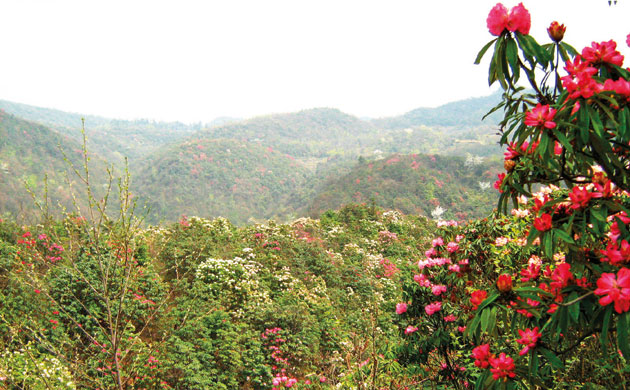
Botanic Gardens 2: China has a rich diversity of native rhododendrons
China has a rich diversity of native rhododendrons with over 550 species. In some forest habitats, rhododendrons are the dominant trees and shrubs, as in this forest in Guizhou.
Photograph: Zhang Lehua/NH
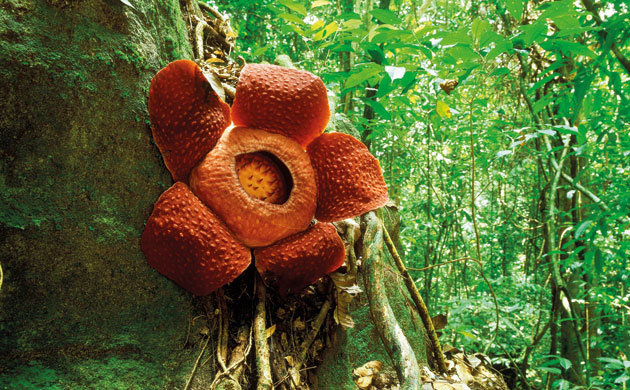
Botanic Gardens: The flower of Rafflesia, Indonesia
The flower of Rafflesia, a parasitic plant, smells of rotting flesh, Indonesia. All species occur in the Indonesian rainforests, and their future is dependent on habitat conservation.
Photograph: David Kirkland/NH
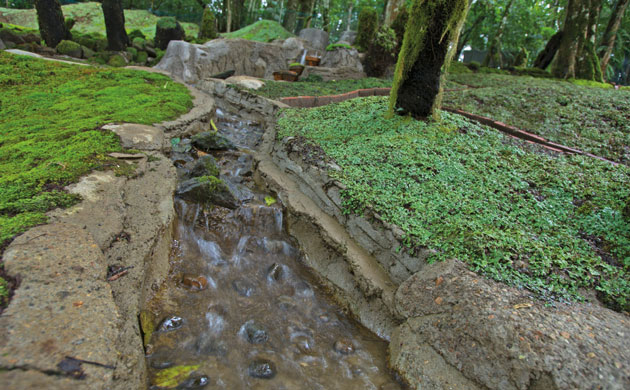
Botanic Gardens: The bryophyte garden at Cibodas, Indonesia
The bryophyte garden at Cibodas, Indonesia, is a small area devoted to cultivation and display of different type of moss and liverwort.
Photograph: NH
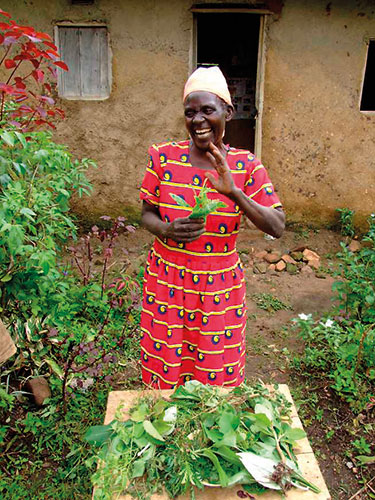
Botanic Gardens 2: A traditional healer prsents plants in Bushenyi district, Uganda
A traditional healer presents plants in Bushenyi district, Uganda. Medicinal plants are of huge importance in Uganda where they are used alongside Western medicine. Some introduced species are gathered from former farmland where they grow as weeds but many are harvested from natural populations in the wild which are declining.
Photograph: NH
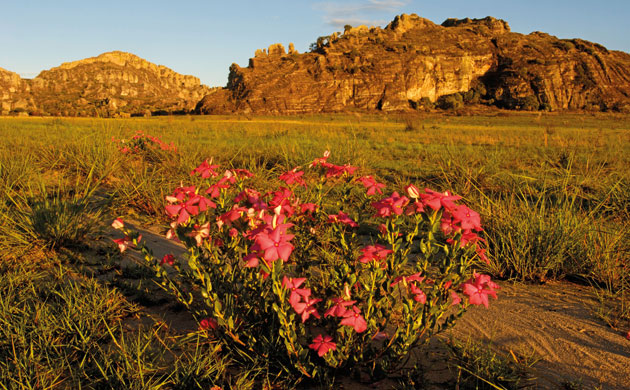
Botanic Gardens 2: Isalo National Park in Madagascar with Rosy periwinkle
Isalo National Park in Madagascar with Rosy periwinkle (Catharanthus roseus) in bloom. The Sandstone Massif in this arid aera also support many succulent plant species.
Photograph: Pete Oxford/NaturePL/NH
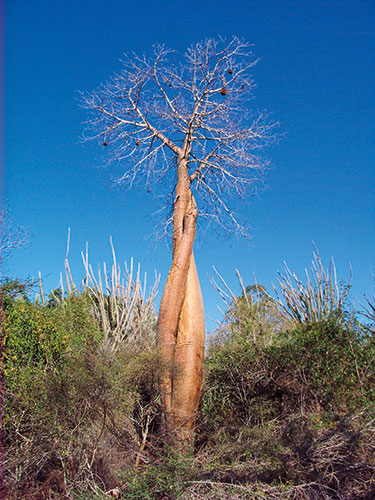
Botanic Gardens 2:  baobab growing in Madagascar
Adansonia rubrostipa, one of the six endemic species of baobab growing in Madagascar.
Photograph: NH
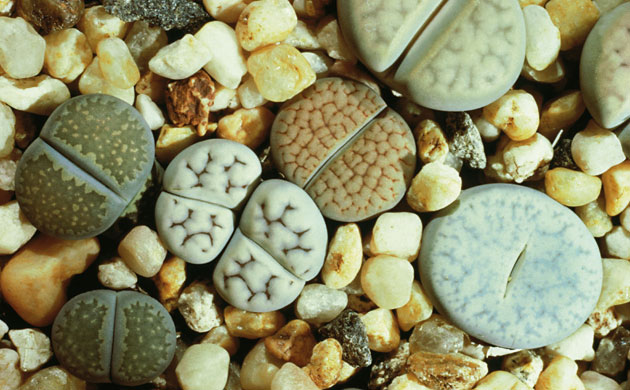
Botanic Gardens 2: Stone plants, Cape province  South Africa
Stone plants, Lithops spp., are well-camouflaged in the rocky, and habitats of Southern Africa, Cape province South Africa. The Kirstenbosch National Botanical Garden, in Cape Town, was the first of its kind to be included in a natural world heritage site.
Photograph: Kjell Sandved/NH
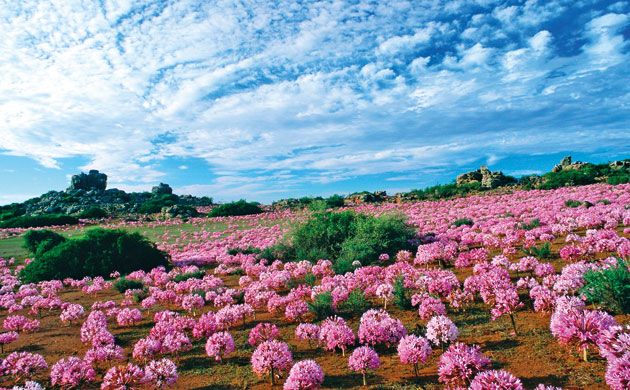
Botanic Gardens 2: Brunsvigia bosmaniae at Hantam National Botanic Garden, South Africa.
A carpet of Brunsvigia bosmaniae at Hantam National Botanic Garden, South Africa. This spectacular autumn display occurs after late summer rain.
Photograph: Sanbi/NH
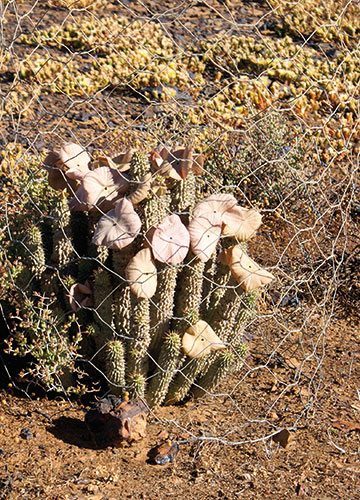
Botanic Gardens 2: Hoodia gordonii growing in the Tanqua Karoo, South Africa
Hoodia gordonii growing in the Tanqua Karoo, South Africa. This rare flowering plant, which looks like a mushroom and smells of rotten flesh - has been touted as a wonder cure for obesity as it suppresses the appetite. The demand from would-be slimmers almost led to its extinction, but today its cultivation is a source of income for farmers in South Africa. They have to net the plants carefully though - as goats love them.
Photograph: NH
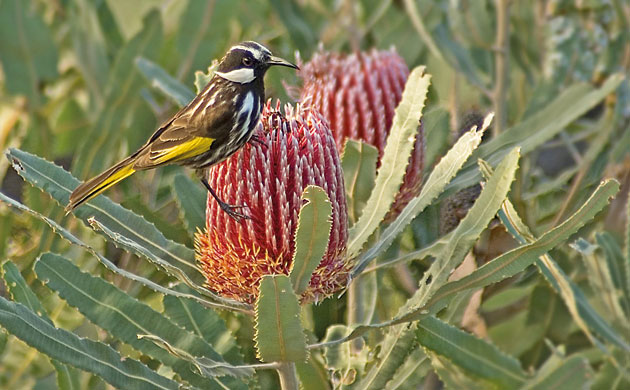
Botanic Gardens: White-cheeked honeyeater on banksia menziesii, Western Australia
Conserving the plants of Western Australia is important to support indigenous birdlife such as this white-cheeked honeyeater. Here it sits on a banksia menziesii.
Photograph: BGCI
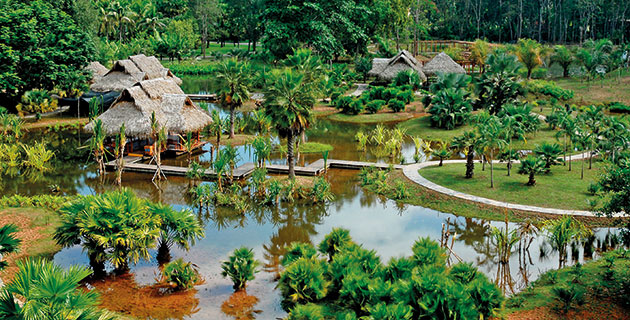
Botanic Gardens 2: Xishuangbanna Tropical Botanical Garden
The Xishuangbanna Tropical Botanical Garden in Yunnan China was developed 50 years ago as a research centre to develop the production of rubber. Now rubber is grown extensively in the area and is displacing the biodiverse rainforests. The scientists at Xishuangbanna are concerned about how forest clearance is affecting the regional climate and water supplies and they are working to create buffer zones of national nature reserves.
Photograph: NH
Sign up to read this article
Read news from 100’s of titles, curated specifically for you.
Already a member? Sign in here
Related Stories
Top stories on inkl right now
One subscription that gives you access to news from hundreds of sites
Already a member? Sign in here
Our Picks
Fourteen days free
Download the app
One app. One membership.
100+ trusted global sources.