Without firm government guidance, employers are finding it difficult to navigate vaccine policies in the workplace as they weigh up the health and safety risk of unvaccinated staff against their freedom to not get vaccinated
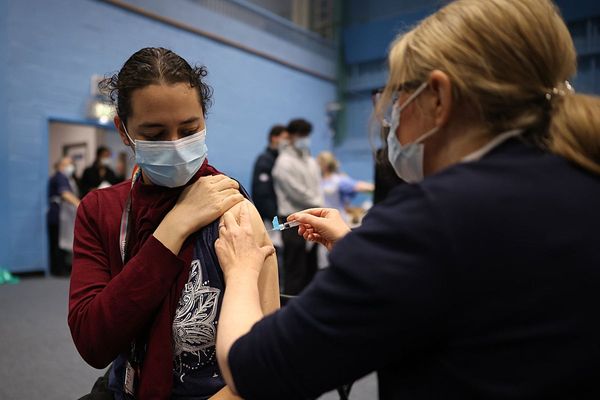
A third of Steel and Tube’s workforce has been vaccinated since the company introduced its vaccination incentives last month.
The country’s largest steel building products provider offered vaccinated workers $150 cash, KiwiSaver contributions or company shares if they were fully vaccinated by November 15.
Steel and Tube people and culture general manager Anna Morris said the incentive had been a successful tool in encouraging uptake as the company worked towards vaccinating 90 percent of its workforce of 850 by the end of the year.
Though the scheme was smooth sailing so far, Morris said the company was working through addressing the risk of workers refusing vaccinations due to religious reasons or other ideologies.

However, without guidance from the Government, businesses were struggling to implement vaccine policies in the workplace.
“The Government’s saying vaccinate, vaccinate, vaccinate but at the same time on the MBIE [Ministry of Business Innovation and Employment] website, information there would lead employers to be very cautious.
“As an employer we know there are people who will, for religious reasons and other reasons important to them ... be opposed to getting vaccinated. And while we would love to accommodate all those preferences, we are very realistic about the fact that we may still have a risk from a health and safety perspective at the end of this if we can't get a sufficient level vaccinated.
"I don't think we will be in that situation, but there is still definitely a risk.”
Morris said the health and safety of Steel and Tube’s workforce and customers was paramount.
“Redeployment options will be relatively minimal for many of our employees. You'd have to see whatever you could do, but the reality is, if you still have a health and safety risk, just moving them to a different part of the business is unlikely to address that."
Dundas Street Employment law partner Rosamund Webby said under the Bill of Rights, anyone could manifest one's religion and refuse medical treatment. As a result, employers could not force workers to get vaccinated on those grounds.
But employers globally are seeing people using their religious views as a human right to not get vaccinated and Webby said as the rollout continues, this was likely to happen in New Zealand too.

She said an important question employers would need to consider was establishing the genuine grounds or reasons of religious belief.
"Is this an established religion? Or is it one that came up a year ago? The Human Rights Tribunal wouldn't trample over actual religious belief but it has to be something propagated as opposed to an interpretation."
And under the Human Rights Act 1993, people can not be discriminated against for their religious belief.
The Human Rights Commission said while there were several legal protections under human rights law regarding vaccines that involved a balance between public health and the protection of individual rights, the former may constitute a legitimate purpose to limit the exercise of some rights.
However, those restrictions of rights must be "legal, proportionate and necessary".
The Human Rights Act is represented to some extent in the Employment Relations Act because it makes discrimination a potential personal grievance ground.
But employers have some exceptions under the Employment Relations Act: "Where a religious or ethical belief requires its adherents to follow a particular practice, an employer must accommodate the practice so long as any adjustment of the employer’s activities required to accommodate the practice does not unreasonably disrupt the employer’s activities."
“Most employers don’t know there is a lot to think about. There is a lot of concern among employers wanting to keep their employees safe, but not wanting to be that test case in court." – Rosamund Webby, Dundas Street Employment Lawyers
For example, a business could argue it is not discriminatory to not accommodate somebody who is refusing to be vaccinated based on religious beliefs because it was disrupting business activity, Webby said.
“Ordinarily, prior to Covid, it would be fairly onerous for an employer to prove this because we'd like to see ourselves as a very egalitarian society. And employers generally have to work bloody hard to prove that one of those exceptions exists.
“So you might find where Covid is concerned, as long as employers can show they’ve jumped through the right hoops, undertaken health and safety assessments that determined a particular role was dangerous if the worker wasn’t vaccinated, then the court may agree.”
As Covid vaccination policies in the workplace is new territory for employment law, employers and lawyers were looking at the courts to determine what was pushing the boundaries too far and what wasn’t.
Webby said a recent appeal by a customs’ worker who was sacked for not getting vaccinated under the health order that was quashed by the High Court, suggested judicial support was leaning toward the Government’s measures.
However, Webby warned this was still unknown territory, and employers who may unreasonably deem roles in their business as requiring vaccination without making effort to redeploy or make them work from home could expose themselves to employment disputes.
“Employers are caught between an unknown rock and an even more unknown hard place. We just don’t know how far is too far.” – Rosamund Webby
“Most employers don’t know there is a lot to think about. There is a lot of concern among employers wanting to keep their employees safe, but not wanting to be that test case in court,” Webby said.
There were currently a number of employment disputes in the pipelines waiting before the Employment Relations Authority over vaccination policies and these were likely to increase over coming months, Webby said.
Employers have also been concerned about how far they can go with incentivising.
Webby said if an employee has genuine grounds for not getting vaccinated due to religious reasons or for disability, then that worker could argue they are being discriminated against if they don't receive a bonus.
“So you can’t go too far. But there is the potential for someone to be offended because they are missing out because of genuine reasons stopping them from vaccination.
“Employers are caught between an unknown rock and an even more unknown hard place. We just don’t know how far is too far.”
Webby said the Government could make amendments to the employment legislation to carve out clear guidance for employers, but it was highly unlikely it would.