
We like to consider our product reviews helpful not only for readers looking to make their next consumer electronics purchase, but also for the manufacturers of the products themselves; identifying a flaw, for example, gives them something to work on so that they can make an even better product next time around, and that’s a win-win outcome for everyone.
In our five-star review of the original Bose QuietComfort Ultra Headphones, we highlighted a few imperfections in their design. You couldn’t listen to them wired over USB-C, their battery life fell short of that delivered by their closest rival, and their spatial audio was unconvincing. Well, guess what? Bose has addressed all three with its Ultra sequel.
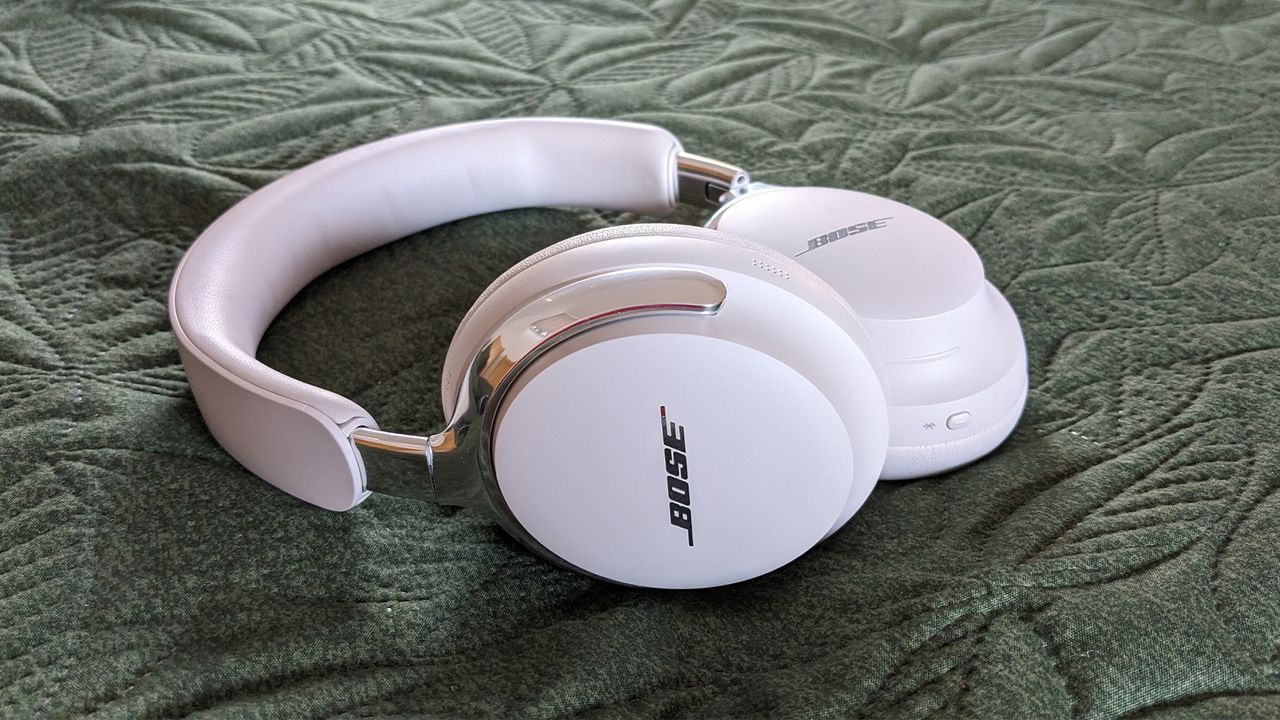
The Bose QuietComfort Ultra Headphones (2nd Gen) are, as a result, among the world’s most comprehensively featured noise-cancelling headphones. Recognising that performance cannot stand still for a moment in this cut-throat market, Bose has also dutifully elevated the Ultra’s already strong audio and ANC quality too. So has it done enough to keep its flagships in the conversation?
Price
The original Ultra Headphones launched in October 2023 for £450 / $429 / AU$649, so it wasn’t surprising that the sequels appeared exactly two years later, priced the same in the UK, albeit slightly higher in the US ($449) and Australia (AU$700).
Those figures put them in the ballpark of their closest noise-cancelling headphone rivals, the Sony WH-1000XM6 (£400 / $450 / AU$699), Sennheiser HDB 630 (£399 / $499 / AU$999) and Bowers & Wilkins Px7 S3 (£399 / $449 / AU$699).
While an even pricier tier of wireless headphones has emerged in recent years, the Ultra 2 represent Bose’s peak efforts and sit above the brand’s QuietComfort over-ears (£249 / $199 / AU$330), which forego some of the Ultra’s flagship features (such as spatial audio) and their performance heights.
Design & build

Where Bose could have gotten away with standing still in the evolution from its first-gen to second-gen Ultra Headphones is the design, and indeed the brand has more or less kept its feet planted here.
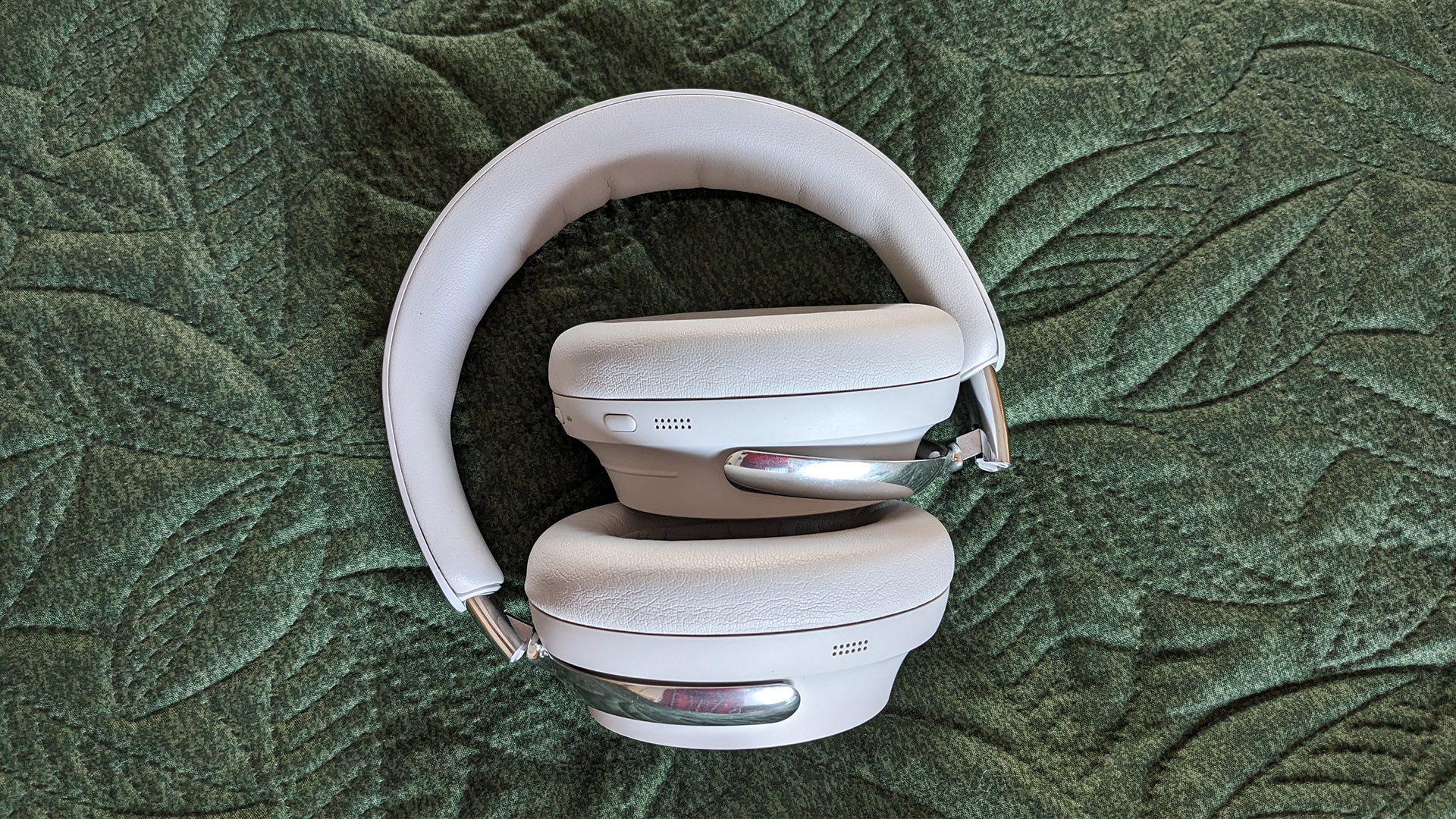
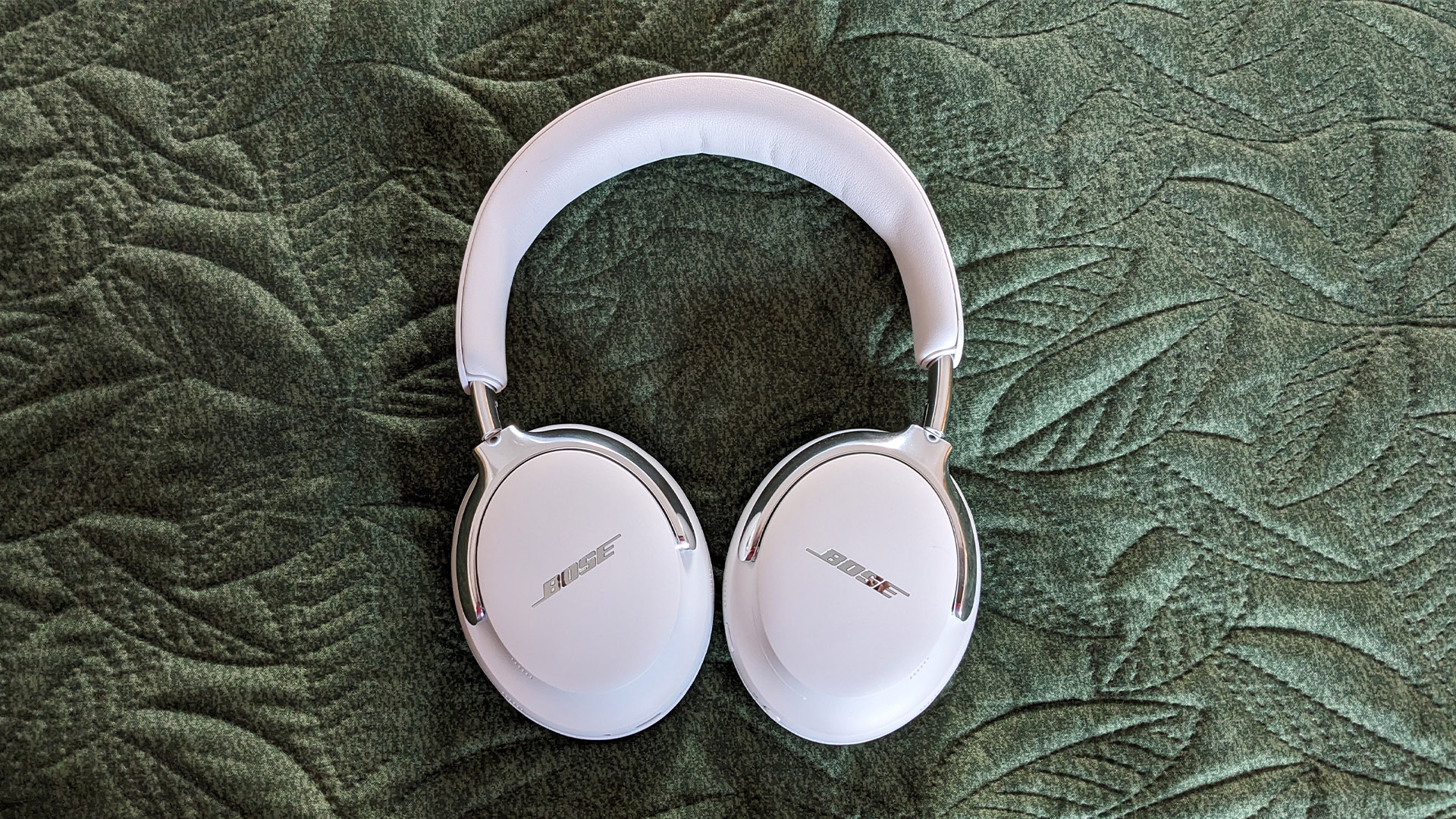
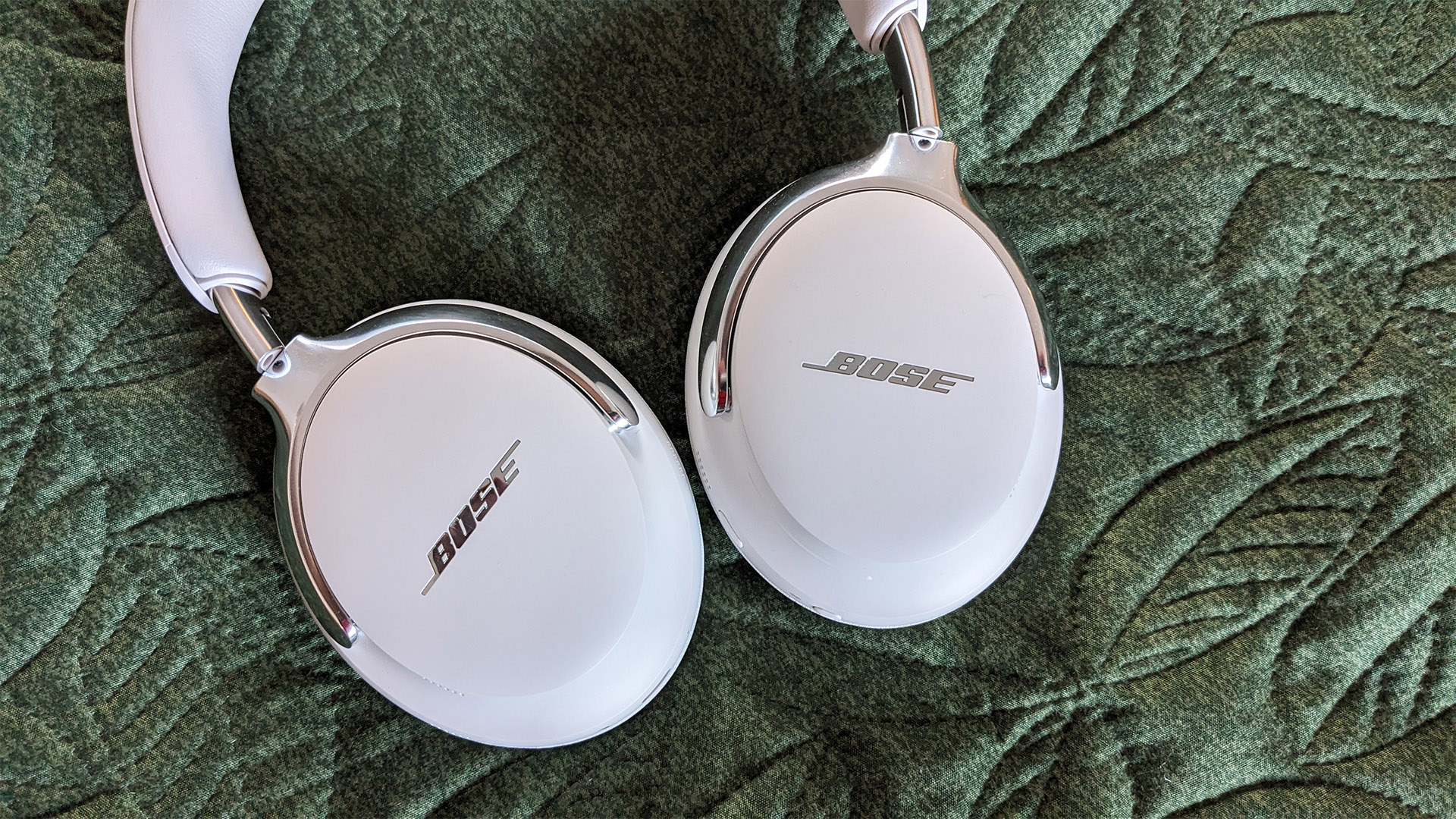
The QC Ultra 2 look pretty much identical to their predecessors, with their slimline frame and nicely chamfered, logo-brandishing ovular earcups. Their metal yokes are simply now a more striking polished mirror (rather than matte) finish, and the five available finishes now include a bold Midnight Violet (purple) and Desert Gold (black with gold accents).
Bluetooth SBC, AAC, aptX Adaptive
Bluetooth Multipoint? Yes
Battery life 30 hours
Charging USB-C
Built-in mic and controls? Yes
Transparency mode? Yes
Finishes x 5 (Black, White Smoke, Midnight Violet, Driftwood Sand, Desert Gold)
Weight 250g
No, they don’t have the Apple AirPods Max’s metal-heavy luxuriousness or the B&W Px7 S3’s attention to detail, but their sleek minimalism qualifies as ‘business smart’. And while that doesn’t necessarily score highly on the perceived value spectrum for a pair this pricey, their style does offer an alternative to the largely indistinct, blocky look adopted by the Sony XM6 and Sennheiser HDB 630.
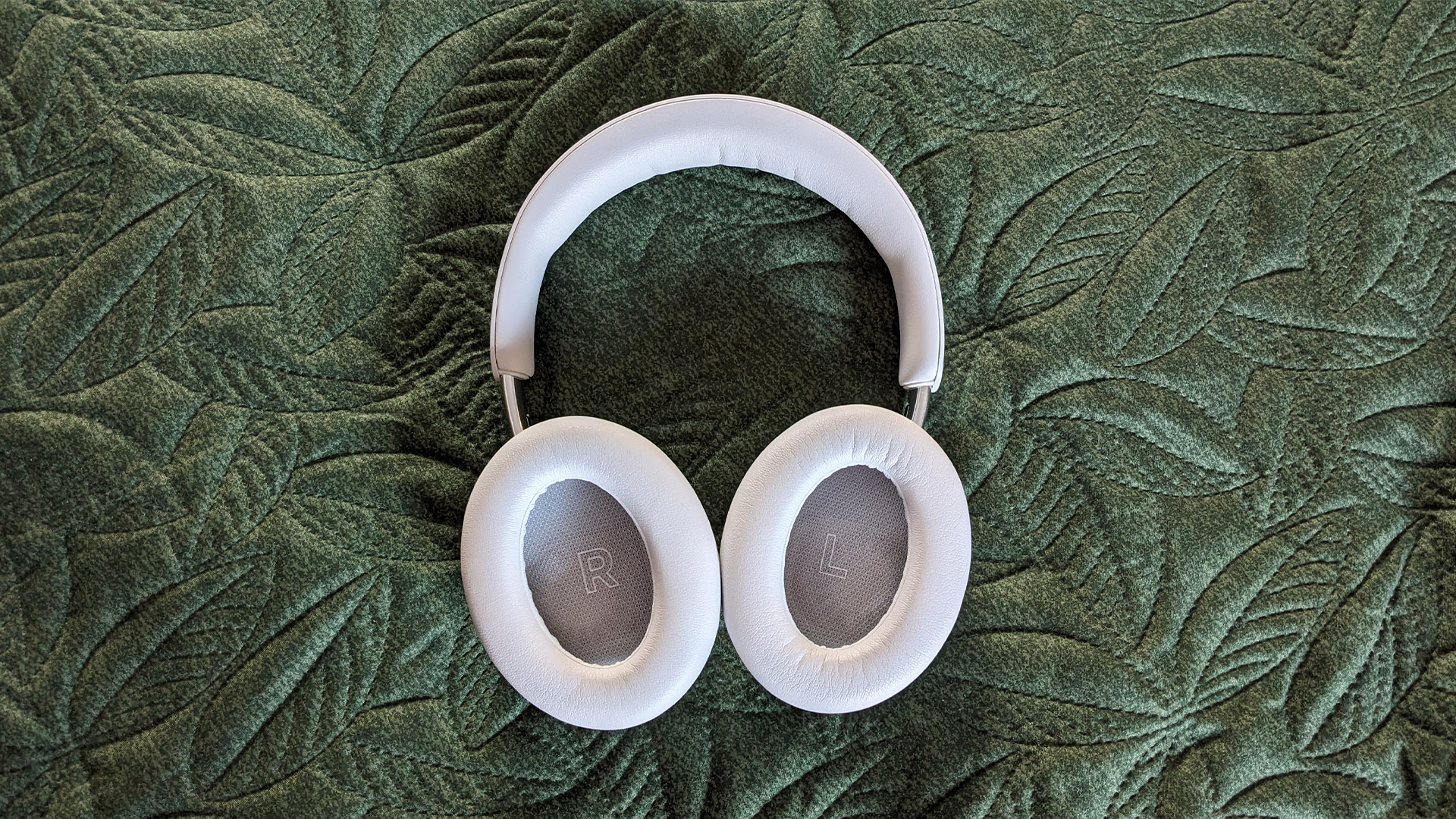
Once again, the Ultra fit extremely well, the all-round pleather cushioning on the earpads and headband offering a good seal and level of isolation while easily managing the headphones’ unburdensome 250g weight. Add to that a well-judged grip that survives the head-shake test, and you have one of the most comfortable wireless over-ear pairs for longer periods of wear that we’ve come across.
We wouldn’t be surprised if the words ‘long haul travel’ featured on the Bose’s designers mood board when creating the Ultra Headphones – bolded, underlined and capitalised. The earcups still fold inwards, allowing them to scrunch up in a generous-sized coat pocket or in the compact hard-shell carry case. And despite looking flimsier than some of their rivals, their build quality appears to stand the test of time; our sample of the original Ultra still look relatively new despite having been frequently used by our reviews team for two years.
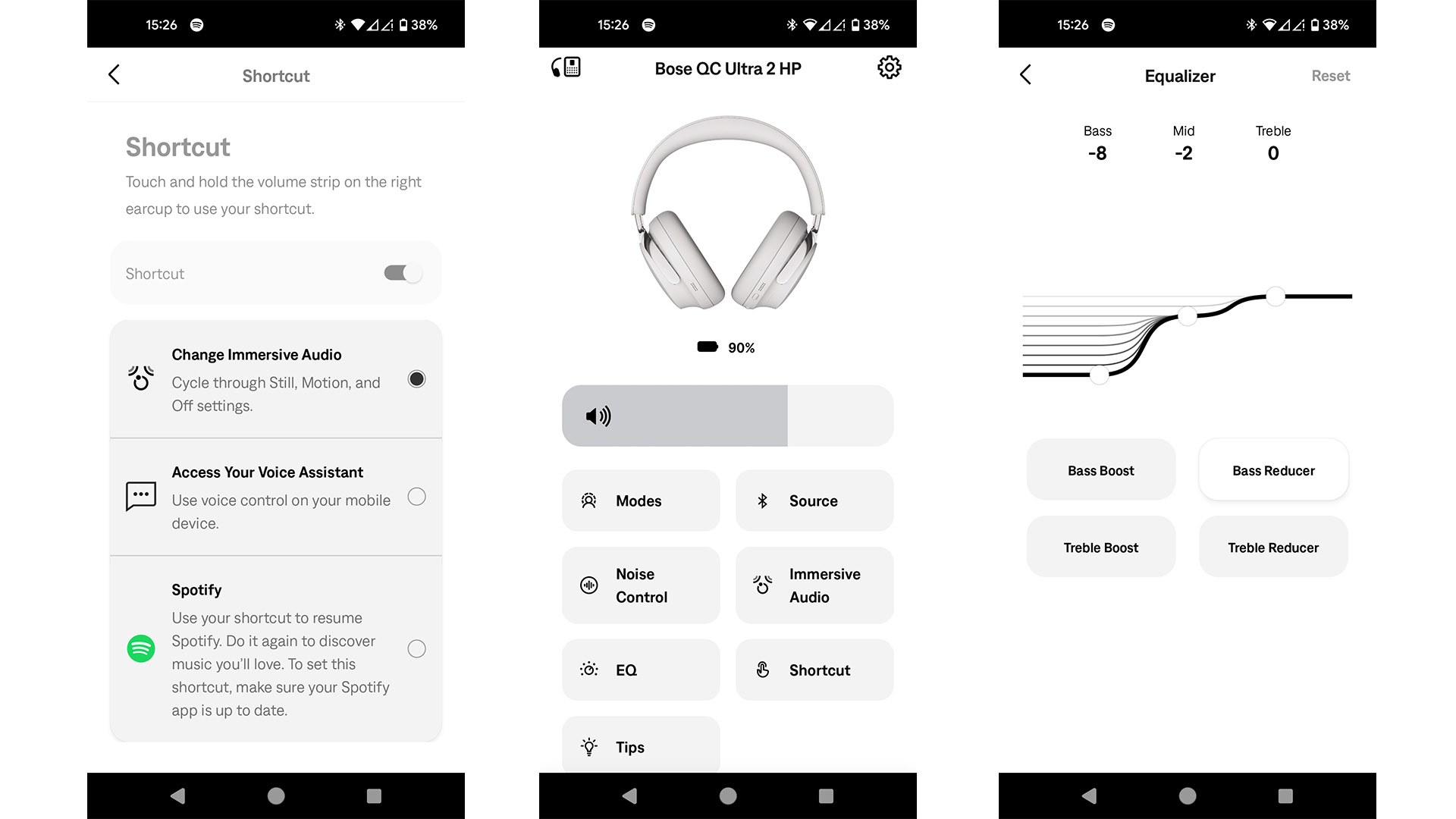
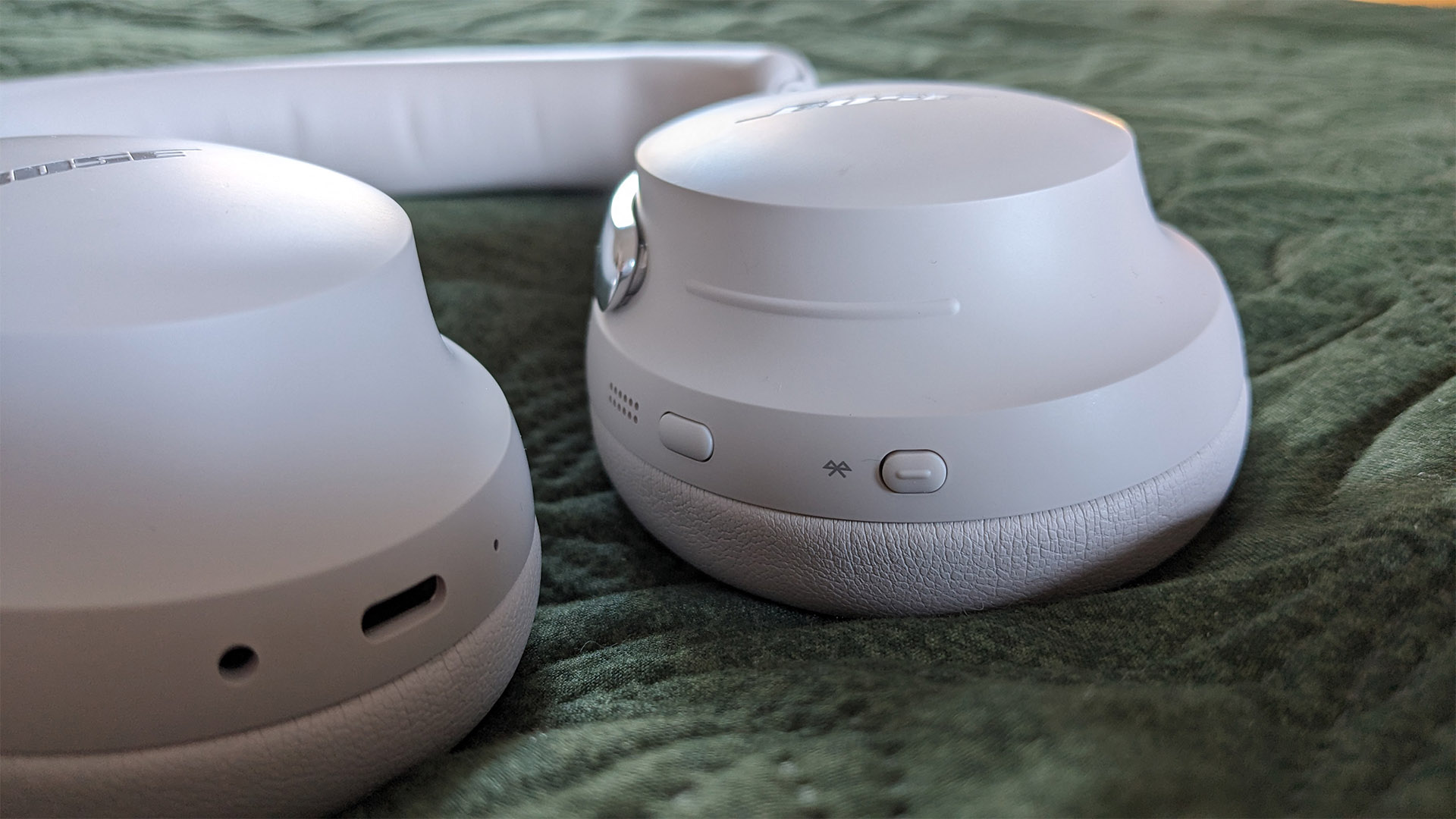
The controls haven’t changed, either. The right earcup simply sports a power/Bluetooth pairing button; a multifunctional button that can be used to control playback and calls and switch between listening modes; and a nicely responsive capacitive touch strip on the ridge for adjusting volume and accessing shortcuts (assignable in the Bose companion app).
The left earcup, meanwhile, houses 2.5mm and USB-C ports, and this time you can use the latter for wired listening as well as charging, meaning you only need to carry one cable. The USB-C connection supports ‘lossless’ CD-quality audio, too, which isn’t possible over the aptX Adaptive Bluetooth codec supported by the Bose, despite it being one of the most proficient codecs out there. Just be aware that both cabled listening methods require the headphones to have battery life.
Spatial audio
Speaking of which, battery life receives a much needed boost here, from 24 hours to 30 hours with ANC activated, or 45 hours with it off. Those figures hold up in testing and more or less match the Sony XM6, though the juicepack does take a hit when the power-hungry Immersive Audio mode is used, dropping to 23 hours.
Immersive Audio is Bose vernacular for spatial audio technology, which the brand introduced with the original Ultra. We weren’t hugely convinced by the ‘spatial’ effect with all types of music, and in the QC Ultra 2’s ‘Motion’ mode (which tracks the sound to your head movements), being able to sense the processing at play still proves a little distracting. But ‘Still’ is more satisfying, opening up the soundstage and delivering a more dimensional (if a little less focused) presentation that some will undoubtedly enjoy – particularly if they use ANC headphones while watching movies.
Bose has now bundled its ‘Still’ Immersive Audio and most intense noise-cancelling settings into a new ‘Cinema’ mode, designed for – you guessed it – TV and movie watching, and this is where the technology proves most valuable. Dialogue and mid/upper sound effects are pulled into greater focus within the wider soundfield, though dynamics are quashed as a result, limiting its appeal with music.
Noise cancelling
Whether you’re listening to music or movie soundtracks, you can do so in peace. Bose has consistently set the benchmark for noise cancellation efficacy in wireless over-ears, and despite Sony having boldly closed the gap here with its WH-1000XM6, the Ultra Headphones (2nd Gen) still just about prevail for outright sound-blocking intensity in their ‘Quiet’ mode.
Whether you’re riding public transport or walking past roadworks or construction, they provide a blanket of silence so that your music (or podcasts) can bask in the spotlight, eliminating the deepest rumbles and the majority of mid-band hubbub we encounter on our daily travels. On a plane, only the shrill, high-frequency sound of a baby’s cry penetrates that formidable shield.
If you don’t like the QC Ultra 2’s somewhat heavy-handed approach to sound blocking, you can select the ‘Immersion’ mode and dial down the effect more specifically to your liking in the app. Alternatively, consider the Sony rival, which blocks sound pretty much as effectively, albeit in a subtler manner that doesn’t feel as though they’re trying as hard.
As before, the ‘Aware’ mode effectively lets external sounds in so that you can remain aware of your surroundings without having to remove the headphones. Bose has tinkered away to upgrade the proprietary algorithm that impacts how the Ultra 2 respond to sudden loud noises when in this mode, allowing ANC to automatically kick in so that sharp spikes of noise don’t drown out your music. It seems to work; I turn on the hoover and each time I up the intensity settings (and decibels!), the headphones react quickly to soften the impact on playback.
Sound
While we have previously encountered Bose noise-cancellers that haven’t moved sound quality on from one generation to the next, the QC Ultra Headphones (2nd Gen) aren’t one of them. Compared to the originals, the newcomers make small but meaningful gains when it comes to clarity and detail, while sounding that bit more solid and musically tighter and shedding a layer of excess richness. There’s a sliver more space between instruments, too. Considering we peppered our original Ultra review with words like ‘punchy’, ‘entertaining’ and ‘defined’, those improvements make an already entertaining pair of headphones even more so.
Play Charli xcx’s Von dutch, and the Bose rev their engines, launching themselves into the upbeat track with their best foot forward. The synths surge with low-end texture and impetus, the beat pulsates with snap and crispness. It’s the same pleasingly smooth, bass-rich character Bose has long favoured, simply more insightful and precise than ever before. So far, so good.
However, a conversation around whether these sequels are worth upgrading to for owners of the first-gen model should encompass the wider competition. When we tested the original Ultra, their natural rivals were the Sony WH-1000XM5, which sounded different to the Bose – leaner, more natural and capable of slightly greater insight, albeit not as rich or full. Ultimately, for many, personal preference will play a large role in deciding between the two.
The problem for the QC Ultra 2 is that they come up against Sony’s Award-winning WH-1000XM6, which aren’t just different sounding but categorically better sounding, and by a fair margin. Indeed, Sony’s latest generational sonic evolution has convincingly out-leapt Bose’s, the XM6’s delivering not only more natural, even-handed tonality than the Ultra 2 but also greater clarity, texture, drive and dynamic subtlety. Musically, they’re what we can confidently call ‘next level’.
Considering the similarly priced Bowers & Wilkins Px7 S3 and Sennheiser HDB 630 are at least of the Sony XM6’s quality, the Bose, while entertaining in their own right, now feel a little left behind in this increasingly competitive, progressive market.
Verdict
Bose has arguably approached the QC Ultra Headphones 2 as it should have, by plugging feature gaps and incrementally improving on the original’s strengths. Reasonable across-the-board refinements were expected and have indeed been delivered, making for a complete pair of headphones that justify ‘2nd Gen’ status.
But the barrier to that fifth star somewhat lies outside of Bose’s camp. Quite simply, the competition has progressed further sonically than Bose has in the past two years, so the pressure for the noise-cancelling kings to make more significant gains next time around is on.
Review published: 26th November 2025
SCORES
- Sound 4
- Build 4
- Features 5
MORE:
Read our review of the Sony WH-1000XM6
Also consider the Bowers & Wilkins Px7 S3
Best noise-cancelling headphones tested by our in-house review experts