Boris Johnson has set out plans to allow pubs, restaurants, cinemas, museums and galleries to re-open on 4 July in a major easing of the coronavirus lockdown in England. The prime minister said “our long national hibernation is beginning to come to an end”.
Mr Johnson also announced that the two-metre social distancing rule will be relaxed – saying it would be changed to a minimum of “one metre-plus” wherever a two-metre distance was not possible.
Elsewhere, Japan has given the UK just six weeks to strike a post-Brexit deal, putting the government under pressure to agree one of the fastest trade negotiations in history. “We must complete negotiations by the end of July,” said Tokyo’s chief negotiator.
Good morning and welcome to The Independent’s live coverage of events at Westminster and beyond, ahead of Boris Johnson’s big announcement in the Commons on the next phase in lockdown easing.
PM to reveal reopening of cinemas and museums
Boris Johnson is all set to announce pubs, restaurants and hotels in England can reopen on 4 July – and cinemas, museums and galleries can resume business on the same date.
The two-metre rule in England is set to be halved to one (with some conditions), and the PM is also expected to reveal some expansion in “support bubbles” when he speaks in the Commons at 12.30pm.
The British Beer and Pub Association said ditching the two-metre rule would be “a phenomenal move”, while one government official told the Financial Times that “ministers might take the lead by heading to the pub”.
But some scientists have condemned the imminent moves as risky – with the independent SAGE group warning that the rate of infection is still “far too high” to go ahead with such widespread easing of the rules.

Gamble for Boris Johnson as he announces risky relaxation of lockdown restrictions
Cinemas, museums and galleries to join pubs and restaurants in 4 July reopening, while two-metre distancing rule expected to be reducedShielding measures in England to be lifted in August
Health secretary Matt Hancock announced that advice for clinically extremely vulnerable people in England to “shield” themselves by staying at home will be lifted from 1 August.
They will be able to visit shops and places of worship and return to their workplace if they cannot do their job at home, but will be advised to stick to social distancing rules.
There will be new freedoms for the 2.2 million people from 6 July, when they will be able to meet up outdoors with up to five others and form support bubbles with other households.
All the details here:

Shielding measures in England to be lifted at the start of August, Matt Hancock says
Greater freedoms for clinically vulnerable people to leave their homes and meet others from 6 JulySajid Javid backs VAT cut as ‘one-off fiscal hit’
Former chancellor Sajid Javid has called temporary cuts to national insurance and VAT to help the country bounce back from the economic devastation caused by Covid-19.
In a new joint report with the Centre for Policy Studies (CPS) think tank, Javid recommended a reduction in VAT as “a one-off fiscal hit to give consumers more bang for their buck”.
Javid also warned against any return to austerity, and said emergency spending measures should carry on until April 2021.

Strong and respected' Treasury needed to help UK recover from coronavirus crisis, Savid Javid warns
Javid calls for temporary cuts to national insurance and VAT to help the country bounce back from economic devastationRussia report committee ‘close to returning’
The government is close to re-establishing the Intelligence and Security Committee (ISC), according to the BBC.
No 10 still needs to approve the new members of the powerful committee, which has not met for over six months and is due to publish the long-delayed report into alleged Russian meddling in the UK.
A source “close to the process” told the broadcaster the committee members would be confirmed by Downing Street “imminently” following criticism the government was dragging its heels.
The report in alleged interference from Moscow has not been published eight months after it was completed.
Japan gives UK six weeks to strike a post-Brexit trade deal
Japan has given the UK just six weeks to strike a post-Brexit deal, putting Boris Johnson’s government under pressure to agree one of the fastest trade negotiations in history, the Financial Times has reported.
Tokyo is keen to conclude a deal the summer to give the Japanese parliament the chance to ratify it this Autumn.
“To avoid a gap in January, we must pass this in the autumn session of the Diet [the Japanese parliament],” Hiroshi Matsuura, Tokyo’s chief negotiator, told the newspaper. “That means we must complete negotiations by the end of July.”
Sturgeon and her husband among Salmond inquiry witnesses
Nicola Sturgeon and her husband will be called to give evidence before a Holyrood committee investigating the Scottish government’s handling of complaints made against Alex Salmond, it has been confirmed.
Sturgeon, the current first minister, is on the initial witness list produced by MSPs, along with the chief executive of the SNP, her husband Peter Murrell.
The Committee on the Scottish Government Handling of Harassment Complaints will also take evidence from Salmond and his former chief of staff Geoff Aberdein, as well as Sturgeon’s chief of staff Liz Lloyd.
Permanent secretary Leslie Evans will be the first witness to be questioned by the committee, while her predecessors in the job Sir John Elvidge and Sir Muir Russell are also included, along with “a number of senior civil servants” and the Lord Advocate James Wolffe QC.
Another witness will be deputy first minister John Swinney, while staff trade unions could also be called to give evidence to the Holyrood committee.

UK has ‘done well’ to bring down coronavirus cases, says WHO expert
The UK has to be careful as lockdown measures are eased, but the country has done well in bringing the number of coronavirus infections down, a World Health Organisation (WHO) expert has said.
Dr Margaret Harries told BBC Radio 4’s Today programme: “The lesson is for people to understand this is the year of living differently.
“Not, ‘okay, it’s over’. You haven’t just been let out of school.
“You have done well. You have really brought down your numbers. The UK has brought a very difficult outbreak right down.
“Very good news in the last couple of days about the limitation in cases, and far, far fewer people dying. So, now is the moment to celebrate that by being super careful.”
Pubs and other businesses will get clear ‘guidelines’ for reopening, says minister
Northern Ireland secretary Brandon Lewis has been speaking about the planned reopening of pubs. He told BBC Radio 4’s Today programme: “I appreciate many people do want to see things starting to get back to whatever that new normal will be."
Pressed on how social distancing would be enforced, Lewis said: “If we are able to say to pubs, and other establishments, that they are able to open in the near future, we will be issuing guidelines as well.
“So that they can have some confidence about what is expected of them to create a safe environment.”
He added: “One of the things we will be issuing, once we make these decisions today, and the prime minister makes his announcement, will be guidelines for all of us as individuals, and as employers, to look at how we act and practise in a safe and healthy environment as we go forward.”

Foster care in ‘state of emergency’, charity warns
Foster care is in a “state of emergency” as the number of referrals rockets while the number of people looking to take children in has halved during the pandemic, a charity has warned.
Barnardo’s, one of the UK’s largest fostering agencies, recorded a 44 per cent rise in foster referrals to its service during the crisis.
Over the same period, the number of enquiries from people looking to become foster parents for the charity fell 47 per cent – sparking fears that hundreds of children referred to Barnardo’s will not be placed with a family.
Our social affairs correspondent May Bulman has the details:

Surge during pandemic of children needing foster care, says charity
Leading agency reports 44 per cent rise in referrals as social workers warn heightened pressures during lockdownBan on indoor meet-ups involving two households likely to be lifted
Boris Johnson is set to reveal an expansion of the lockdown “support bubbles” – with a ban on people from different households meeting together indoors thought likely to be lifted.
The prime minister is expected to announce there will be no limit on the numbers who can gather indoors, in England, as long as they are members of just two households, although the details were still being agreed.
Families and friends would be able to visit each other’s homes, provided they stick to social distancing rules – with no hugging – but it is still unclear if they will be allowed to stay overnight.
Our deputy political editor Rob Merrick has the details:

Ban on people from different households meeting together indoors in England set to be lifted
Families and friends set to be able to visit each other's homes, provided there is no huggingNumber of excess deaths passes 65,000
The number of excess deaths in the UK since the coronavirus outbreak began has passed 65,000.
Tuesday’s figures from the Office for National Statistics (ONS), which show 59,252 excess deaths in England and Wales between 21 March and 12 June, follow figures last week showing the equivalent numbers for Scotland and Northern Ireland.
Together, this means the total number of excess deaths in the UK across this period now stands at 65,101. All figures are based on death registrations.
There were 1,114 deaths which mentioned “novel coronavirus” in England and Wales in the week ending 12 June - the lowest number of Covid-19 deaths for nine weeks, the ONS said.
‘If I knew then what I know now, I’d never have voted Leave’
It was exactly four years ago that the British public voted to leave the EU. Reflecting on how much has changed since then, our associate editor Sean O’Grady shares his sense of regret.
“If I knew then what I know now, I’d never have voted Leave,” he writes. “Even now, four years on, we don’t know our terms of exit. When they become knowable, they will still lack democratic legitimacy; we really should have that second referendum - the “final say” on Brexit.”
Read more here:

Four years ago, I voted for Brexit. If only I'd known then what we all know now | Sean O'Grady
More than 1,400 days later we still don't know the terms of our exit. But after all that time, I think I finally understand what went wrong in June 2016Call for ‘urgent clarity’ over air bridge confusion
Health secretary Matt Hancock said he had worked through the weekend on the plan to establish so-called “air bridges” with other countries.
But the Department for Transport (DfT) insisted that the no-quarantine concept is merely “an option under consideration, not established policy”.
Many travel industry figures took Mr Hancock’s words as an indication that a list of countries will be published later this week. But a DfT spokesperson said: “International travel corridors remain an option under consideration by the UK government, not established policy.
“Conversations take place regularly with governments around the world on a whole range of issues and we will not be providing any further details at this stage.”
A spokesman for the Quash Quarantine pressure group, said “we need urgent clarity”.
Our travel correspondent Simon Calder has more:

UK government confusion over 'air bridges' as plan said to be merely 'under consideration'
Department for Transport insists travel corridors plan is merely ‘an option under consideration, not established policy’Number of deaths involving Covid-19 passes 54,000
The number of deaths involving Covid-19 in the UK has passed 54,000, according to Press Association analysis the latest available data.
The total includes new figures published on Tuesday by the ONS, which show that 48,866 deaths involving Covid-19 had occurred in England and Wales up to 12 June.
Figures published last week by the National Records for Scotland showed that 4,070 deaths involving Covid-19 had been registered in Scotland up to 14 June. The latest figures from the Northern Ireland Statistics and Research Agency showed 802 deaths involving Covid-19 had occurred in Northern Ireland up to 12 June.
‘Brutal reminder of how little respect Britain commands’
Plenty of reaction to the news Japan is seeking to conclude a post-Brexit trade deal with the UK by the end of next month.
Hiroshi Matsuura, Tokyo’s chief negotiator, told the Financial Times the Japanese parliament needed time to ratify any deal in the autumn. “That means we must complete negotiations by the end of July.”
Guy de Jonquières, a senior fellow at the European Centre for International Economy said the demand is a “brutal reminder of how little international respect and influence post-Brexit Britain commands”.
The FT’s news editor Matthew Garrahan said the compressed timetable “highlights the risk of being bounced into bad deals before the Brexit transition expires at the end of 2020”.
Nigel Farage’s US trip under investigation
A Democratic congressman has launched an investigation into the decision to allow Nigel Farage entry to the US to attend a Donald Trump rally, at a time when travel from the UK is banned due to the coronavirus.
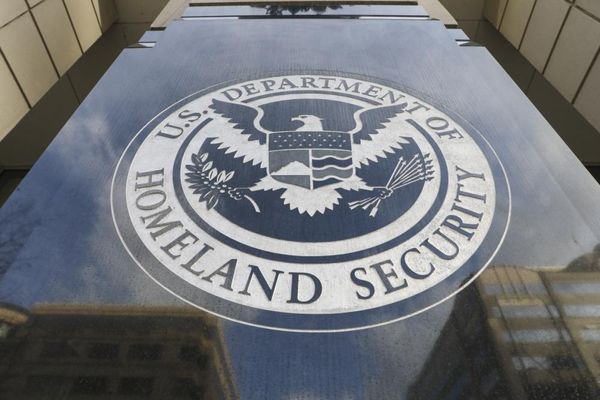
Bennie G Thompson, who chairs the committee on homeland security, said the trip raised “troubling questions” and has requested all relevant documents on the trip.
US Department of Homeland Security officials exempted Farage from the country’s travel ban under a “national interest” clause.
More details here:

Changes to licensing laws will aim to bring in ‘continental-style’ drinking
The government is expected to publish new coronavirus legislation this Thursday with a series of changes to planning and licensing laws in a bid to create “continental-style” drinking and dining culture to England as the lockdown eases.
Pub car parks and hotel grounds could be allowed to convert more easily in “temporary beer gardens” according to The Telegraph.
But the government’s Business and Planning Bill will reportedly only temporarily relax the licensing laws so firms can hold outdoor events throughout July and August.
Care home testing still ‘patchy’, says sector chief
Professor Martin Green, chief executive of Care England has said testing in care homes remains “patchy”.
He told the Commons’ health and social care committee: “What I would say is it’s patchy. The first thing to say is that if testing is going to be effective, it’s going to have to be a rolling programme of continuous testing and that needs to be for both staff and also for residents.
“I also want to see for example there is some tests, there is one programme going on in Hampshire at the moment where you can get test results within about 20 minutes. Now what we need is that testing rolled out because that will also help us not only be able to test staff and residents but also to be able to test relatives who might want to visit.
“So I think we’ve got to get testing as part of an ongoing programme, it is not a once in a lifetime activity, it’s something that needs to happen regularly, so I think also some of the testing regimes have been too complex.”
He added: “I just think you need to have a much more clear, centralised, consistent and also regular approach to testing.
Government fails to understand impact of immigration salary threshold, says care chief
Professor Martin Green, the chief executive of Care England, has also been discussing changes to immigration policy and the impact of a salary threshold at the health and social care committee.
Under the new policy, there will be a minimum salary threshold of £25,600 for skilled workers. However, MPs were told the average salary for care workers in local authority-run homes was £23,700.
Prof Green it would have a “significant effect” and said: “We do have some reliance on overseas staff but what I think the government just failed to understand is that they have not got their strategy right to make sure that we have enough people in the pipeline from in-country staff.”
He later called for a long-term strategy such as the NHS 10-year strategy to fix the “appalling” way in which care is funded.
He told MPs: “We could and we want to increase our salaries and we want to see really professional salaries with proper training and development monies and we would like to absolutely be far north of £25,000 actually.”