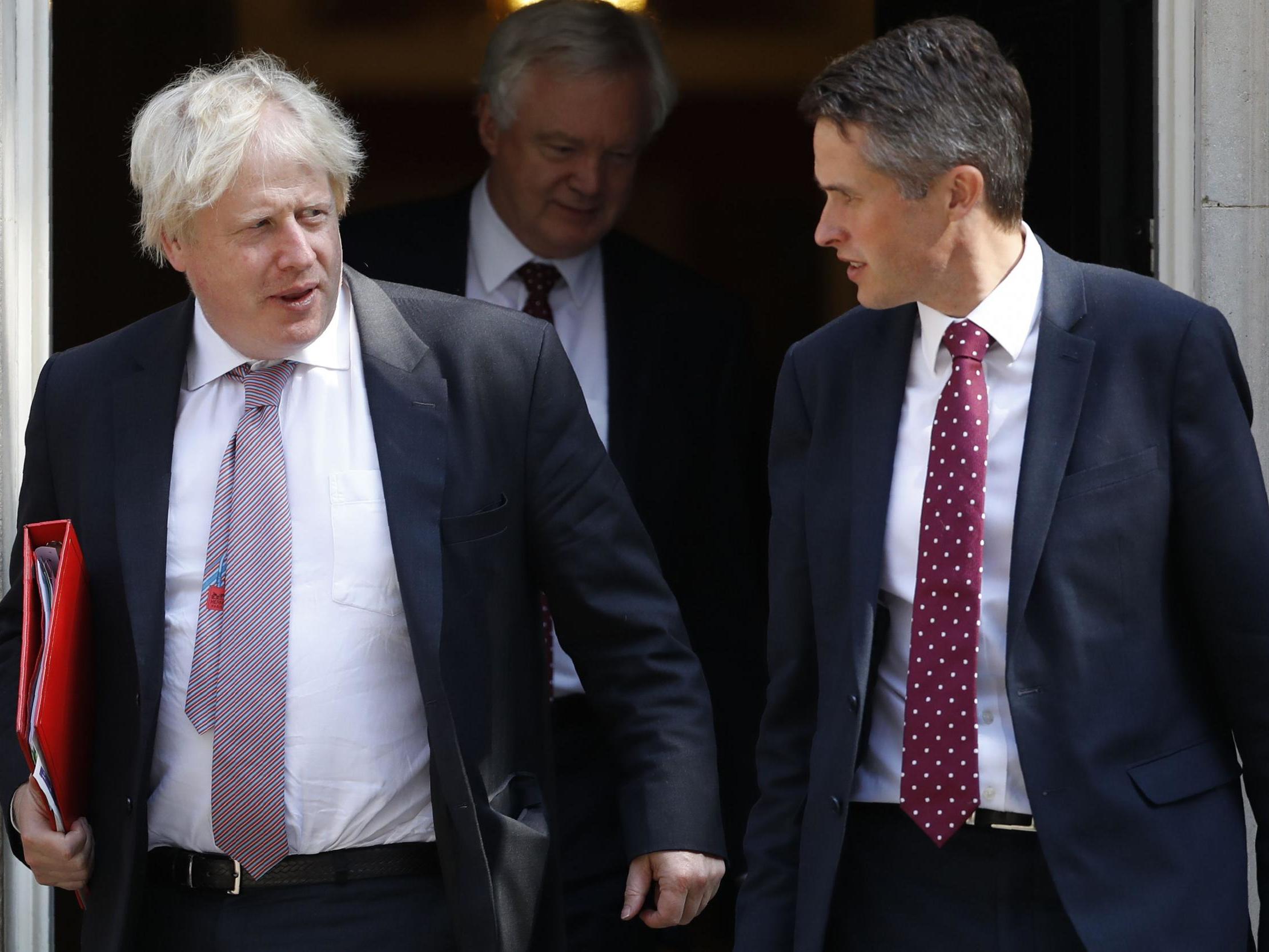
The government has u-turned on its decision to award grades to A-level and GCSE students based on an algorithm which downgraded pupils from underperforming schools - instead allowing predicted grades allocated by teachers to stand.
Education secretary Gavin Williamson apologised to students and parents affected by "significant inconsistencies" with the grading process, adding "I am sorry for the distress this has caused young people and their parents but hope this announcement will now provide the certainty and reassurance they deserve"'
Labour leader Sir Keir Starmer said the government had been caught in a "screeching u-turn", writing on Twitter: "the Tories’ handling of this situation has been a complete fiasco."
It comes after Northern Ireland’s executive said GCSE students’ grades would be decided using teachers’ assessments, while the Welsh government said both GCSE and A-level students will have grades decided by their teachers.
Ministers are being urged to consider postponing the publication of GCSE results this week as Gavin Williamson faces pressure to abandon the heavily-criticised A-level grading system.
It comes as discontent grows in Tory ranks at the exam regulator, with the chair of the education select committee Robert Halfon hitting out at the “unacceptable” decision to drop guidance for appeals – just hours after it was published at the weekend.
The fiasco over A-levels could escalate further on Thursday as millions of teenagers receive their GCSE grades. There are fears a similar algorithm that resulted in students being downgraded last week could be even worse.
“I urge the education secretary to instruct Ofqual not to release the GCSE results this Thursday as their algorithm is flawed,” said Lord Kenneth Baker, a former Tory education secretary who oversaw the launch of the qualification in the 1980s.
Both Tory MP Halfon and a leading teachers’ union also suggested such a move should be considered.

Pressure grows on Gavin Williamson to U-turn on A-level grading system
Row over A-Levels could escalate further on Thursday as millions of teenagers receive their GCSE gradesOfqual and Gavin Williamson are thought to be at odds on the best way of tidying up the almighty A-level mess.
Board members of the regulator now want to “ditch” their hated algorithm and allow teachers’ assessments to stand, but the education secretary is adamant there will be no U-turn, according to The Telegraph.
It follows a farcical weekend in which Ofqual pulled its own guidance on how pupils should appeal only hours after publishing – so it’s still unclear how mock exam results are supposed to be assessed by universities.
The Tory chair of the education committee branded the decision of the exam regulator to suspend A-level appeal criteria – just hours after it was published – as “farcical”.
Robert Halfon said: “That is a huge mess. Goodness knows what is going on at Ofqual. It sows confusion among pupils, headteachers, school teachers, and it’s the last thing we need at this time.”
The new appeal guidelines are still being drawn up by Ofqual, the Department for Education said on Sunday night.

Senior Tory blasts 'farcical' decision to suspend A-level appeal criteria hours after releasing policy
Robert Halfon brands exam regulator Ofqual's decision to pull guidance as 'unacceptable'Northern Irish GCSE students will be given grades decided by their teachers after an outcry over the use of an algorithm to award marks for A-level.
Peter Weir, the education minister for the Northern Ireland executive, announced the move to ditch algorithm just days before the publication of results on Thursday, but said the change would not cause a delay.
As in other parts of the United Kingdom, students in NI complained after more than a third of predicted A-level grades were downgraded.
“Having received advice from CCEA and listened to the concerns of school leaders, teachers, parents and young people, I have decided that all GCSE candidates will now be awarded the grades submitted by their centre,” Northern Ireland education minister Mr Weir said.

Northern Ireland scraps grade algorithm for GCSEs after A-level fiasco
But government in England still yet to make move or set out appeals processLabour leader Sir Keir Starmer called on Boris Johnson to take “personal responsibility” for fixing the deepening A-levels crisis in England – accusing him of having been “invisible” throughout the turmoil.
Mr Johnson had been expected to be in Scotland this week on a camping holiday with his fiancee, Carrie Symonds, and their baby son Wilfred.
But Labour is demanding he hold a press conference today to explain how he intends to right the “historic injustice” suffered by pupils who had had their grades marked down.
Starmer’s deputy Angela Rayner said: “We cannot have another week like this. The prime minister must now take personal responsibility for this crisis by addressing the country in the next 24 hours to explain precisely how he will end this historic injustice.
Downing Street was unable to say whether the trip to Scotland would go ahead.
Former Tory leader Sir Iain Duncan Smith said the algorithm-awarded A-level grades should be abandoned, with teacher assessments or mocks used instead.
“No algorithm is going to sort our problem out, it’s a human issue,” he told LBC Radio.
He said concerns about “grade inflation” could be dealt with by accepting that 2020 would not be used as a benchmark for future years because some of the grades would have been “overcooked” by teachers.
“I think we’re left with the very simple position we have to go pretty much with the assessments or the mocks - and/or the mocks, you could do both depending when the assessments were done - and then get it over and done with.
“The idea that you have an algorithm to figure out what they might have done in an exam is really impossible and I think that’s where the big mistakes will be made.”
Calls for a delay to the GCSE results continue to grow. Tory MP Stephen Hammond suggested that pushing back the results – due this Thursday – “probably is the right thing to do”.
“I am increasingly thinking that Lord Baker is probably correct,” he told Sky News.
“Unless Ofqual can ensure that what they’re going to put in place is transparent, certain and is likely to reflect true ability... I think one would have expected them to have had that sorted out by now, but if it’s not, taking another two weeks or another week to get that right rather than causing stress … would be something that we should certainly consider, and probably is the right thing to do.”
Asked whether he has full confidence in education secretary Gavin Williamson, Mr Hammond said: “Gavin Williamson needs to spend today working with Ofqual and get this sorted out.
The UK has refused to accept the result of the Belarus presidential election as protests continued against the rule of Alexander Lukashenko.
Foreign secretary Dominic Raab said the vote was “fraudulent” and condemned the violence from the Belarusian authorities as they attempted to crack down on the protests. Raab’s comments come three days after the European Union said it did not recognise the results.
The foreign secretary called for an independent investigation by the Organisation for Security and Co-operation in Europe (OSCE).
He said: “The world has watched with horror at the violence used by the Belarusian authorities to suppress the peaceful protests that followed this fraudulent presidential election. The UK does not accept the results.
“We urgently need an independent investigation through the OSCE into the flaws that rendered the election unfair, as well as the grisly repression that followed.”
Demonstrators have repeatedly taken to the streets since the August 9 election which saw Lukashenko claim victory but has been condemned as rigged by critics at home and abroad.

Bill Watkin, of the Sixth Form Colleges Association, said the exam regulator should immediately correct and re-run the algorithm used to award students their A-level results.
He told BBC Breakfast that, according to a study by the organisation, the “algorithm has failed”.
He said: “We’ve just done a study and we looked at 65,000 entries, which is almost half of all the A-level entries in sixth-form colleges, across 41 A-level subjects - every single A-level subject.
“In every single one of those 65,000 entries in 41 A-level subjects, they came out lower than the previous three-year average. So the algorithm has failed.”
Asked how this could be put right, Watkin said: “What we should be doing now is immediately recalibrating the algorithm, rerunning it immediately, and not through a process of tens of thousands, hundreds of thousands, of appeals. We need to do a national, institution level, automated rerun as a single appeal.”
The seventh round of UK-EU future relationship talks get under way in Brussels today. But it looks like the possible trade deal with the US is on ministers’ minds.
Trade secretary Liz Truss pledged to fight US on Scotch whisky, calling them “unacceptable” and unfair. “I will fight to consign these unfair tariffs to the bin of history”, she said – while accusing the EU of failing to protect British and Scottish interests.
The US government said last week it would maintain 15 per cent tariffs on Airbus aircraft and 25 per cent tariffs on other European goods as part of a long-running trade dispute, although it held off adding some extra tariffs as it had threatened.
Truss said she would step up demands for the US to drop tariffs on goods such as single malt Scotch whisky after the industry warned a decision by Washington to retain the levy was putting its future at risk.
“US tariffs on Scotch whisky are unacceptable and unfair. I cannot be clearer about that,” she wrote in The Telegraph. “Whisky-making is one of our great industries and a jewel in our national crown.”

Truss vows to fight ‘unfair’ tariffs on Scotch whisky ahead of next round of US talks
Liz Truss pledges to consign US tariffs on beverage ‘to the dustbin of history’Former PM Tony Blair added that he does not see how international travel can resume again without “regular testing” – and that individuals should have bio-IDs to present the coronavirus tests they have had.
He told BBC Radio 4’s Today programme: “If you’re not able to test significantly when you’re trying to get large numbers of people back into a normal routine, then I think you’re going to be enormously inhibited at how you handle the disease. And it’s not so difficult to do.”
The former Labour prime minister added: “We suggest how you might boost and accelerate the development of these on-the-spot antigen tests and then we say at a certain stage you want to move to a ... every person has, as it were, a record of what tests they’ve had, if you like a kind of bio-ID which allows them then to present, for example, when you’re travelling - I just don’t see how you get international travel going again unless you’ve got regular testing.”
He called on the government to roll out mass testing before the end of 2020. “If 70% of the cases are asymptomatic, you are not testing those people, they are all false negatives at the moment. The people out there who have got the disease but have got no symptoms yet can still spread the disease are in effect a false negative.
“So, yes, it is true that you will miss some people ... In every single aspect of this, once you realise you’re not going to eradicate the disease, you’re going to have to contain it and live with it at least until a vaccine comes, then you’ve just got to have a sensible risk calculus in every area.”
Reports over the weekend indicate health secretary Matt Hancock is ready to scrap Public Health England, and set up a new replacement body as soon as September.
The Independent SAGE group of scientists – highly critical of the government’s handling of the pandemic – has said it’s a bad idea.
The group said this morning that it “does not agree with the course the government appears to be taking”, adding that the move could “destroy the confidence of public health staff”.
Professor Gabriel Scally said: “The government needs to be aware of the risks involved in undertaking major organisational restructuring in the midst of this public health crisis.”
Next year’s Holyrood election will be the most important in Scotland’s history, according to first minister Nicola Sturgeon.
With the SNP fighting to win a record fourth term in power, she said voters will be presented with a “stark choice” between her party and the “utterly regressive” Conservatives in the May 2021 ballot.
She also made clear the SNP manifesto for the election will include a commitment to hold a second Scottish independence referendum and insisted it will be “utterly untenable and unsustainable” for the Tory government at Westminster to deny such a vote in the event of an SNP victory.
Her comments come after opinion polls suggested the SNP could be on course for an overall majority in the Scottish Parliament - and that a majority of Scots now favour independence.
Writing in Holyrood Magazine’s 2020 annual review, the first minister said she will “relish the chance to return to politics as normal once circumstances allow, especially as we look ahead to next year’s election”.

Britain’s ferry firms say they have not been told of a government ruling that UK-bound travellers lose quarantine exemption if they sail back from France or the Netherlands.
Both countries were removed from the list of exempt nations on Saturday.
British holidaymakers driving back from countries such as Germany, Switzerland and Italy can avoid the need to self-isolate for 14 days if they drive straight through a “high-risk” country such as France, Belgium or the Netherlands.
Some motorists had hoped that driving straight through from Germany and boarding a ferry at a French or Dutch port immediately would save them having to self-isolate on return to the UK.
But the Department for Transport (DfT) has told The Independent that because the occupants of a car must leave the vehicle before sailing – for safety reasons – they are deemed to have mixed with others while the ship is tied up in a French or Dutch port.
Our travel correspondent Simon Calder has the details:

Ferry firms furious as passengers who drive straight through France must still quarantine
Exclusive: ‘The government has not made the ferry industry aware of this’ – Abby Penlington of Discover FerriesMore than 100,000 people have volunteered for future coronavirus vaccine trials in the UK.
Researchers have urged people to keep signing up – especially if they are over the age of 65, or from a black, Asian and minority ethnic (BAME) background.
The government has said it aims to get as many people as possible signed up to the NHS Covid-19 Vaccine Research Registry by October, so large-scale vaccine trials can begin.
Kate Bingham, the chair of the government’s vaccine taskforce, said it was a “great start”.
“We need many more people from many different backgrounds that we can call on for future studies if we are to find a vaccine quickly to protect those who need it against coronavirus,” she said.

More than 100,000 people sign up for UK coronavirus vaccine trials
Figure ‘shows selflessness of public’, Professor Chris Whitty saysSir Robert Syms, Poole MP, said he would be “happy” for the algorithm that moderates teachers grades to be scrapped – and GCSE grades to be awarded on teachers’ assessments alone. “I just think the government haven’t looked at the whole picture here,” he told Times Radio earlier.
He also said: “People voted for Boris to run the country, not an algorithm … In Scotland they got themselves in a hole then got out. We seem to have gone headfirst in and are still digging.”
Former Tory leader Sir Iain Duncan Smith said the algorithm-awarded A-level grades should be abandoned, with teacher assessments or mocks used instead.
“No algorithm is going to sort our problem out, it’s a human issue,” he told LBC Radio.
Former Scottish Tory leader Ruth Davidson also said: “This is not just one of these bubble issues. This is something that cuts through everything. MPs should be telling the chief whip, including conservative MPs, that this will absolutely be one of the things that, even people who don’t even pay attention to politics, will be all over because this is their child’s future.”
Tory MP Stephen Hammond, meanwhile, echoed former education secretary Lord Baker and suggested that pushing back the GSCE results – due this Thursday – “probably is the right thing to do”.
Sir Michael Wilshaw said the government should now accept teacher-predicted grades to end confusion over A-level results. The former head of Ofsted told the BBC: “Well, I think it is inevitable, absolutely inevitable.”
He added: “Of course we’re all worried about standardisation, of course we’re all worried that there shouldn’t be rampant grade inflation, but, look, our poor children, the great majority of children have suffered hugely over the last six months, particularly poor youngsters, and if we err on the side of generosity now, no-one will blame the government for that and no-one will blame Ofqual for that.
“This is an exceptional year. So we should follow the Northern Ireland example and the Scottish example and say that we will accept the estimated grades.”
The backlash keeps on building. At least 18 Tory MPs have raised concerns about the A-levels moderated grading (including four influential select committee chairs), according to The Times.
MP Oliver Heald said: “It seems that the Ofqual algorithm is a blunt instrument and has adversely affected schools and colleges with large 6th forms. I am pressing the government to urgently make changes to the system.”
Reports suggest the government is planning to make an announcement on the exam results mess later today at 4pm.
And another Tory MP joins the chorus of criticism. Former minister Jake Berry said on Facebook he “would have liked to have seen more weight given to the predicted grades made by teachers”.
He said he had written a letter to Gavin Williamson highlighting the case of a school in his Rossendale and Darwen constituency, noting “some students will have been incredibly disappointed with their results and the way they have been awarded”.
The letter told Williamson: “All of the indicators that the school are providing me with suggest that there is something fundamentally wrong with the standardisation model at the centre level.”
Berry added: “From a personal point of view, I would have liked to have seen more weight given to the predicted grades made by teachers … I believe this would be a more than acceptable predictor of how well a student could have performed in an exam setting.”