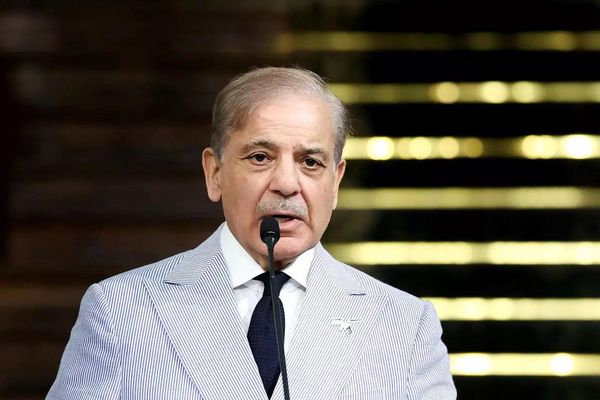
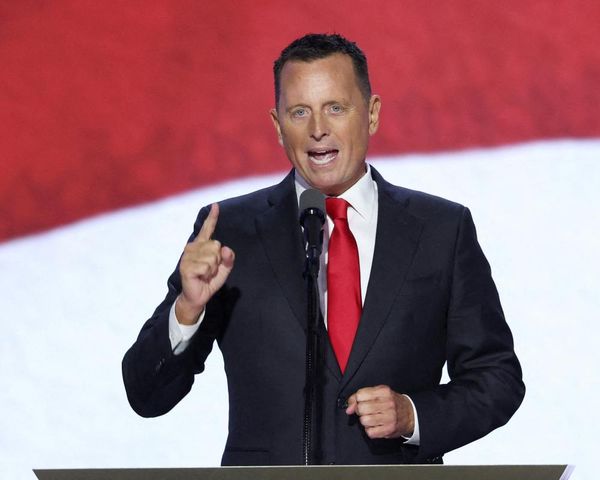
Photograph: Jessica Taylor/UK Parliament/AFP via Getty Images
The Tories have been in power for almost a decade, but elements of this government believe themselves to be a revolutionary new regime. This may not be true of the prime minister himself, but it certainly is the case among the Vote Leave gang that he imported to Number 10. It is most definitely true of Dominic Cummings, the regime’s hoodie-wearing Robespierre.
For these revolutionaries, their mission is to challenge the established institutions of Britain wherever they are to be found and however well they have generally served the country in the past. The BBC will be “whacked”, to use the mafiosi lingo of one anonymous briefer. The judiciary is also on their list. So, big time, is the civil service.
The case of Priti Patel and the mounting volume of allegations about the home secretary’s treatment of officials is just one face of the larger struggle between Whitehall and Downing Street. The conventional view is that Mr Cummings hates the civil service because he believes it to be infested with opponents of Brexit, but the pathology is more profound than that. He is opposed to the very concept of a permanent civil service impartially serving the government of the day whatever its political complexion. His ambition is to replace it with a more American-like set-up in which senior roles are filled with ideologically aligned political appointees. That is the primary source of the conspicuously destabilised and mutually paranoid relationship that is developing between the elected and permanent wings of government.
There are those who shrug: what’s new? We’ve always seen flare-ups when governments that want to shake things up collide with an instinctively cautious civil service. Labour ministers often arrive in office wary that Whitehall is packed with establishment types intent on smothering their radical ideas. Tory governments arrive suspicious that the civil service is stuffed with closet pinkos. What politicians and their aides think of as radical, urgent and necessary, civil servants often interpret as reckless, impetuous and unrealistic.
Politicians complain that they get the boot from government when something goes wrong even when it is not always their fault, while for unaccountable civil servants a slide sideways or even a promotion is often the reward for failure. This partly explains the combustion between Ms Patel and Sir Philip Rutnam, who quit as permanent secretary in a spectacularly unprecedented public fashion via a televised statement accusing her of intimidating staff and orchestrating a vicious briefing campaign against him. She is under enormous pressure from Number 10 to deliver on a new immigration system, border controls and a settlement scheme for more than 3 million EU nationals, and all by the end of the year. Her officials are sceptical that this can be done so quickly without it turning into a fiasco.
In his account of his time at Number 10, Tony Blair commends the dedication of the civil service, but laments that he found it populated with people who “faced with big challenges… thought small thoughts”. In Margaret Thatcher’s memoirs, she was complimentary about the professionalism of civil servants, but despaired that they were most animated by “a desire for no change”. She describes a dinner with all the permanent secretaries as “one of the most dismal of my time in government”.
Mr Cummings would lustily agree with them both. There is, though, a critical difference. Unlike the disruptor-in-chief, who can’t see an institution without wanting to take a sledgehammer to it, neither Mrs Thatcher nor Mr Blair tried to smash the civil service. They made progress on their agendas not by shouting, swearing and trashing officials but by promoting those who were in tune with their style and grasped their goals. The elected government and the permanent one adapted to each other without violating the essential principles that hold together the constitution. There are excellent reasons why the ministerial code states that the bullying of civil servants “will not be tolerated” – and not just because it is ugly behaviour. One of the jobs of senior officials is to “speak truth to power”, especially if ministers are thinking about doing dangerous or unlawful things. This won’t happen if civil servants are terrorised by their political masters.
I doubt that Number 10 wanted its first high-profile struggle to be over the conduct of the home secretary. His own aides will acknowledge that Boris Johnson knows that Ms Patel isn’t the most competent of ministers, but she clings on for now because they don’t want to hand a scalp to the civil service and make the prime minister look stupid for appointing her to such an important job in the first place. Despite the choreographed shows of support, Tory MPs I’ve spoken to, including ones with some sympathy with Ms Patel, believe she is “in real trouble”. Mr Rutnam is suing for constructive dismissal and his day in court will allow him to lay out the allegations against the home secretary in all their gory detail. His resignation has triggered a cascade of further accusations about her behaviour at three different departments – she denies them all – and an investigation by the Cabinet Office.
This is the most ominous development for her. To many, this will smell of an inside job, but similar investigations have often been the instrument that has terminated ministerial careers. “She is now in the hands of officials. They will dredge around Whitehall for allegations against her,” says one former cabinet minister. “They might not be too bad individually, but it may be there are so many of them that she can’t survive.” Some senior Tories familiar with the process think that the investigation will be designed to “put something in front of the prime minister saying she has to go”. It is thought highly significant that Sue Gray, the former head of the propriety and ethics team at the Cabinet Office, will be giving evidence. Ms Gray is sometimes known by the soubriquet “the assassin” among politicians compelled to resign in the past for breaches of the ministerial code.
The ultimate decider is the prime minister. “My instinct is very much to stick with Prit,” he has said, not the most bankable guarantee of job security. Her fate will hinge on the gravity of the case against her and what best suits him at the time of decision. “You know Boris, he’s not really loyal to anyone,” says one Tory MP. “If it’s easy, he’ll keep her. If he’s tired of the row, she’ll be gone.”
There will also be an intensified focus on Ms Patel’s performance at the Home Office, a frontline department in the event of a coronavirus epidemic. The department has always had a high ministerial casualty rate; so much so that an earlier home secretary remarked that its “corridors are paved with dynamite”. If officials are well disposed to the boss, they can help her or him try to navigate a minefield of explosive issues. If they are not – and Ms Patel does seem to have crossed an awful lot of people – they can sit on their hands while the minister lurches towards doom.
What is true of Ms Patel’s particular case applies more widely to Number 10’s war on what Mr Cummings likes to disdain as “the blob”. A government that treats all of its officials as enemies will rapidly turn them into actual enemies. Someone has been telling the media that the permanent secretaries at the Treasury and the Foreign Office are on a “shit list” of senior officials who will be purged. Whether this is a serious threat or an unedifying device to try to intimidate them, such a declaration of hostile intent is alarming not just to the civil service but also to quite a lot of Tories. One Conservative who used to hold a very elevated position in cabinet observes: “You say that about permanent secretaries and they will say, ‘fuck you, then’, and mess up your government.”
Mr Johnson has made some large promises, among them to make a success of Brexit and to dramatically improve life in the less privileged parts of Britain. On top of which, he has to do a decent job of taking us through the coronavirus crisis. Successful prime ministers know that you need to pick your battles. This was generally true of both Mr Blair and Mrs Thatcher; and both those premierships started to come unstuck when they forgot it.
One senior Tory remarks: “Boris has been given this glorious opportunity to do important stuff. He will fail if all he achieves is war with the civil service, war with the BBC and war with the judiciary. The problem with Dom is that he wants to fight wars with everyone on every front.” For someone who supposedly devours books about military strategy, this doesn’t look like a terrifically clever one.
• Andrew Rawnsley is Chief Political Commentator of the Observer