One year has passed since the first Cambodian rocket landed in Kantharalak district, Si Sa Ket province. It remains one of the hardest-hit areas by the armed conflict along the Thailand-Cambodian border, which has forced nearly 200,000 people across seven border provinces to flee their homes and seek safety in temporary shelters.
The ceasefire brokered in December ended the exchange of rockets and artillery fire, damaged homes have gradually been repaired, and daily life appears to have returned to normal. But beneath this sense of normalcy lies a more difficult question: What does recovery mean for communities that lived through the conflict?
For people living along the border, recovery cannot be measured only by reconstructed buildings or reopened roads. It must also be measured by whether children feel safe returning to school, whether families have been able to regain their livelihoods, whether those who experienced trauma receive support, and whether communities are better prepared should violence erupt again.
During the fighting last year, just a few days after the first shell landed, I visited villages in Kantharalak to document the damage. The mom-and-pop store and the home lay in ruins. Amid the destruction, a village headman told me there was at least one piece of good fortune. The first shell had struck a nearby gas station, alerting everyone in the village to evacuate immediately. Despite the extensive damage to their homes, no one in the village was killed or injured.
Schools became evacuation centres. Farmers abandoned their fields. Rubber tappers and fruit growers lost weeks of income during the peak harvesting season. Village security volunteers -- many with little formal emergency training -- became the heroes of their communities, caring for abandoned livestock, marking unexploded ordnance, and helping coordinate emergency responses while communications, electricity, and internet services were disrupted.
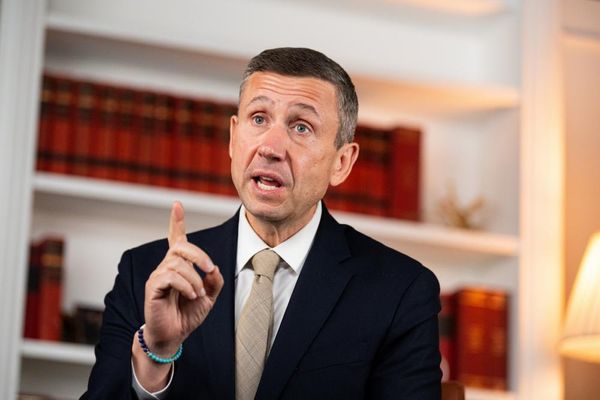
Sutian Pewjan, a 49-year-old rubber farmer who doubles as a village security volunteer known as a Chor Ror Bor and serves as an assistant to the subdistrict headman, described how the conflict had transformed everyday life.
"I work as a rubber tapper and have my own rubber plantation," he said.
"But once the fighting started, I had no income at all because rubber tapping was my only source of income to support my family," he added. "[Normally, I earned from tapping rubber] around 300–400 baht a day."
"The government provided 5,000 baht per household as compensation," Mr Sutian noted.
While the Thai government provided emergency assistance and compensation to affected households, many people say the support did not fully reflect the realities of recovery. Compensation largely focused on physical damage to homes and property, while the administrative burden often outweighed the assistance received. The income they lost, psychological harm, and prolonged disruption to daily life remained largely outside existing assistance mechanisms.
Mr Sutian explained how the conflict continues to affect the close cross-border ties that have long shaped everyday life in the area.
"Some people have relatives on the [Cambodian] side who wanted to come to Thailand to receive medical treatment. People on that side were too afraid to cross, and people on this side couldn't cross over either. The border is still closed," he said.
Thai people are not the only ones who suffered during this border conflict -- our Cambodian neighbours, many of them with Thai relatives, were similarly traumatised, displaced, and economically impacted. Many Cambodian workers fled Thailand out of fear of retaliation during the war.
Ultimately, we need to build lasting peace between neighbours that addresses our differences constructively and rebuilds long-term relationships.
Border communities themselves also possess valuable knowledge that should inform future preparedness. Residents understand local geography, evacuation routes, communication gaps, and the practical challenges that arise during conflict.
Their experiences and recommendations should be incorporated into emergency planning, rather than consulted only after disaster strikes.
"If I could ask the government for one thing, the priority would be an early warning system. It would alert villagers so they know when to take shelter," Mr Sutian told me.
Yesterday marked one year since the start of the Thailand-Cambodia border conflict. It should be more than a moment of remembrance. It should be an opportunity to ask whether enough has been done to protect civilians if violence returns.
Peace is not about the absence of exchanges of fire. It is measured by whether people can rebuild their lives with dignity, whether children can grow up without fear, whether families can rely on timely support when disaster strikes, and whether borders once again connect communities rather than separate them.
For those who call Thailand's border provinces home, these are not abstract policy questions. They are the measures by which people will determine whether they can truly feel safe again.
Thanida Piyachot is a Human Rights Specialist at Fortify Rights based in Thailand.