The December 2025 ceasefire, agreed by the Cambodian and Thai governments to stop fighting along their land border, appears to be holding. While a ceasefire is welcome, it is no substitute for real peace. Real peace would allow the borders to open and trade, travel, and tourism to resume. I remember making my way along the highways from Bangkok to Siem Reap. That couldn't be done today.
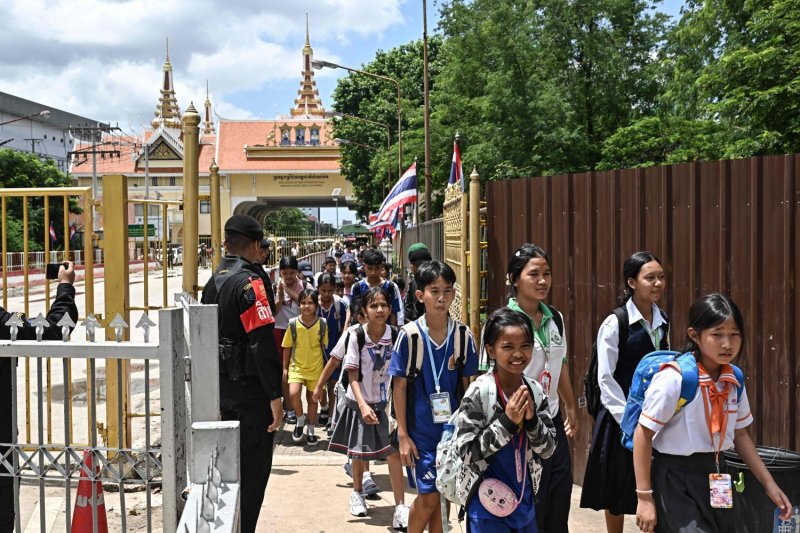
A ceasefire means people are not being killed and homes and infrastructure are not being destroyed. But failing to wage peace carries ongoing costs. Students who previously attended schools near the border are prohibited from doing so because of the threat of renewed violence and the earlier destruction of facilities. Before the fighting started, approximately 1.2 million Cambodians were employed in Thailand. The vast majority of these migrant workers have returned home, likely facing lower income prospects. On the Thai side, the shortage of these workers will put pressure on construction and agricultural costs.
Trade between the two countries has declined sharply. The Bank of Thailand reported trade between Thailand and Cambodia has fallen sharply since the border conflict. The number of people travelling between the two countries for tourism or business has collapsed. The two tourism ministries separately reported that travellers entering from their respective rival countries fell by more than 90% in 2026-Q1 compared with 2025-Q1. These costs will likely not completely cripple the two economies. But they will certainly dampen the potential for growth and make continued poverty reduction that much harder.
The border conflict has other consequences because the world is changing, and emerging challenges will require nations to cooperate, something fighting over the border precludes. Climate change is one such problem. While my own government sometimes expresses doubts, climate change is real, and its global impact is worsening. As I write this piece, hundreds of millions of people are sweltering under heat domes with abnormally high temperatures. Southeast Asia is particularly vulnerable to climate change. Rising sea levels threaten urban areas, including Bangkok, as well as coastal rural areas. Extreme weather will take a toll on agricultural output, with Cambodia's Tonlé Sap region particularly vulnerable.
Most countries recognise the essential problem of climate change and have made public commitments to reduce carbon emissions. However, the current slowdown in atmospheric carbon buildup is insufficient to significantly alter the bleak outlook for adverse climate change. The solution to climate change will come only through cooperative action to set and meet ambitious emissions targets and to ease the burden of restructuring economies to fulfil these commitments.
Where does the border conflict between Cambodia and Thailand fit into this picture? The short answer is that hostile international relations pose significant barriers to the cooperation that is needed. A small example of this can be seen in Cambodia's energy sector. In recent years, Cambodia imported a significant share of its electricity from neighbouring countries, including Thailand. In mid-2025, imports from Thailand were suspended. This puts pressure on the Cambodian system, which is heavily dependent on coal and other fossil fuels.
Climate change is only one of many problems that are intensifying and require collaborative action to resolve. Across the globe, fish stocks are collapsing due to unregulated, unsustainable fishing practices. The continued development of internet technology, particularly artificial intelligence, while promising increased productivity, poses security risks. Growing air and ocean pollution does not respect borders.
These problems cannot be addressed by countries acting alone; they require international collaboration. On their own, relatively small nations such as Cambodia and Thailand have limited influence; however, if they speak with one voice and collaborate with their neighbours, they may be able to influence global action. The two countries will not have identical viewpoints, but they share a common geographic location and a need for technology transfer and financing. Working together makes sense. This will not happen as long as the border issues remain unresolved.
David Jay Green is an economist who worked for more than two decades with the Asian Development Bank.