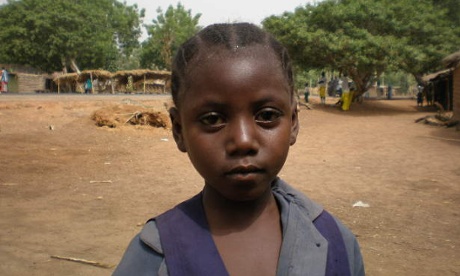
At the eastern edge of the north central region of Nigeria is Benué, a rich and fertile state home to over 4 million people. Known as the ‘food basket’ of Nigeria, Benué produces a high proportion of Nigeria’s staple crops, including potatoes, cassava and soya beans.
However, despite a majority of local people working in agriculture, malnutrition in Benué remains as widespread as in the rest of Nigeria – where child stunting rates are among the highest in the world. In 2013 Benué was also hit by devastating and widespread flooding, ruining crops, destroying homes and spreading disease.
To address the malnutrition challenge in Benué and also help to support local people in the aftermath of the floods, the Global Alliance for Improved Nutrition (GAIN) trialled a new program to help boost child and infant nutrition using multi-nutrient powders (MNPs).
Use of MNPs is recommended by the World Health Organisation (WHO) as a proven strategy to improve micronutrient intake and reduce anemia and iron deficiency in children aged six to 23 months. Easy and safe to use, MNPs are ideal for caregivers to use at home in order to fortify everyday foods. But while the effectiveness of MNPs is beyond doubt, the best and most cost-effective way to get them to local people is still up for debate.
Effective MNP distribution is something that varies widely by country and even region. In Kenya, widespread success has been achieved using community vendors, in China commercial sales supported by public advocacy has been the distribution channel of choice, while in India the national integrated child development services has been harnessed to great effect in order to facilitate clinic and home-based distribution.
In Benué, GAIN wanted to trial a new approach. Across Africa biannual campaigns, such as child health weeks, have been widely used to deliver high impact, low-cost health services such as vaccinations and the distribution of deworming medication to young children. However, it has never been used to deliver home fortification products such as MNPs – until now.
Working with the state government of Benué, GAIN identified the existing platform of bi-annual Maternal, Neonatal and Child Health Weeks (MNCHWs) to use as the pilot model for home-fortification MNP distribution. MNCHWs have been enthusiastically adopted across Nigeria as an efficient means of delivering health services in areas which are often unstable and unserved by a national network of health clinics. As a result they are a promising delivery channel for state sponsored MNP products.
With the state government supplying the MNPs, as produced by a Largos-based pharmaceutical company, GAIN’s role was to support the monitoring, evaluation and of the trial. A communications and messaging campaign was developed around the slogan “eat well, grow well” to raise awareness of the importance of nutrition for health and development of infants and young children, and spread the word about the new MNP products being offered at the MNCHWs.
Over the course of two MNCHWs, the GAIN trial managed to reach over 30% of eligible children in the area, distributing some eight million MNP sachets to local people. Encouragingly, surveys among health workers and caregivers suggest that the MNPs were (also broadly being issued and) being used by mothers mostly in the correct quantities. This is significant since most established MNP programs rely on monthly contact with caregivers to reinforce correct usage and dose.
But although it’s a comparable success rate to other services offered throughout the week, the 30% of children reached fell some way short of the 50% reach that the state health ministry and GAIN had hoped for. Although partly attributable to factors such as health worker training and the need for additional communications, the shortfall is probably a product of the wider challenges facing Nigeria’s overburdened health infrastructure.
Given the limitations of Nigeria’s health system, MNCHWs are already under-resourced and under-staffed. Too few health workers work long hours to deliver too many services, resulting in risks to delivery and resistance to new initiatives being tagged onto the program. The pilot was also challenged by an initial under-supply of MNPs at the first MNCHW, leading to an extra MNP event being needed half-way the six month period in order to distribute enough sachets for every child to consume at the recommended dosage.
If home-fortification MNP programs are to be successful in Nigeria, it seems the real test lies in whether the national government is willing and able to invest in strengthening the national health system as a whole. In the meantime, if local people are to gain access to MNPs and to ask and expect to receive MNPs on a regular basis, local governments need to be supported to boost the capacity of health workers on the ground.
Content on this page is paid for and provided by GAIN, a sponsor of the Guardian Global Development Professionals Network.