Nicolette Little’s From Red Dresses to Memory Stones: Multimedia Activism and Gender-Based Violence in Canada looks at five projects — the REDress Project, the Disposable Red Woman, the digital memorialization of the Montréal Massacre, the documentary Slut or Nut and the Memory Stones Project — that Canadian activists have used to confront gender-based violence and spread awareness. In this Q&A, the media and technology scholar talks about what she found in interviews with the people behind that activism and what it tells us about grief, protest and collective remembering.
The Conversation Canada: You cover five different multimedia projects. What drew you to them specifically?
Nicolette Little: They really hadn’t been studied before. The only one that had been explored was Jamie Black’s REDress Project, and even then, it was so minimally explored (and not in the media studies field) that it was kind of shocking. But more importantly, they were very clearly resonating with a lot of different people across Canada. The REDress Project was inspiring a ton of what we call “copycat projects.” Disposable Red Woman inspired newspaper articles. It was shock art that just stopped people in their tracks. The Memory Stones Project impacted tens of thousands of people around the world. They were understudied, but they’d had such incredible cultural impact in the conversation about gender-based violence in Canada.
TCC: How do you prioritize consent and the well-being of your sources when you’re covering topics that are both serious and traumatic?
NL: I was doing interviews with people who often had experience of gender-based violence, whether themselves or a loved one. They were what I call “sensitive interviews,” and being trauma-informed was really important. This is a term that gets thrown around a whole ton. It’s assuming from the get-go that people probably have some challenging experiences in the past, and treading carefully.
One thing I would do, for example, is recruit through intermediaries as a safe way because then they could decide if they wanted to reach back out to me. I’m trained in sensitive interviewing; I used something called “semi-structured interviews,” where I ask loose questions and the person can choose how they want to take it and what they want to focus on. It’s really quite important. Triggering someone has such mega downstream effects. It can cost them hundreds of dollars to get appropriate therapeutic supports.
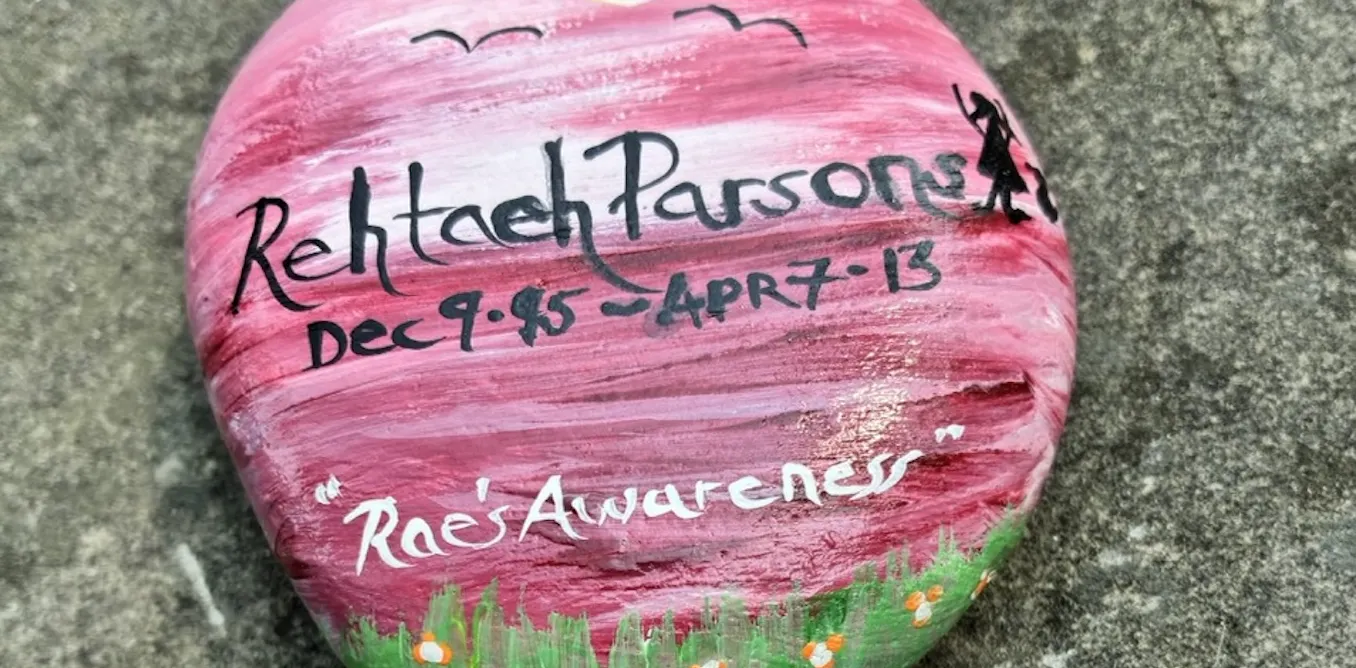
TCC: The Memory Stones Project relies on strangers finding painted stones and sharing them online. How is the impact measured when the format depends so much on chance encounters?
NL: I wanted to choose projects that were clearly relevant and impactful and making people think about gender-based violence. But [it was more about] studying the unique methods that they chose to use to share their messages.
When you get a 70,000-person-strong social media account — Rehtaeh Parsons’s memorial page — and there are people from countries across the world commenting on the stones and how they found one and how the message really [affected] them, [that’s] impact. There were ways to measure impact: through the numbers of people responding and then in those responses talking about how they were going to commit themselves to addressing gender-based violence and supporting girls like Rehtaeh.
TCC: When it comes to the annual digital memorialization of the Montréal Massacre on X, what can you say about the tension between the permanence advocates want and the ephemerality of tweeting?
NL: As a critical media studies feminist researcher, I think a lot about digital traces, ephemerality and attention cycles. I was able to study all of the memorial tweeting for the past four years, which comes up on the day of the Montréal Massacre, because it’s all there archived. If you scroll back far enough, it’s all there — I use data scraping to make that easier. But people only really see what’s freshly posted. And that is an issue that several of the participants brought up.
Read more: Montréal Massacre, 30 years later: My experience as a woman in engineering
Carol Todd, who lost her daughter in B.C. following sexual exploitation online, was talking about the fact that when she was exhausted, sometimes she would shut down her social media and step back. But unless she was constantly posting, she felt like [the topic] became irrelevant really quickly.
Mandi Gray is one of the ones who found a way around that. She stepped away from social media and ended up co-producing the independent documentary Slut or Nut: The Diary of a Rape Trial in 2018. She felt like in the format of the independent documentary, it just wasn’t as quickly erased as a tweet or as an Instagram post. It’s hard to get people to look, but these activists were doing really interesting jobs of drawing people into a conversation that [many] don’t want to have.
TCC: If a reader takes away only one thing from your book, what do you want it to be?
NL: Hope. It’s a book about the fascinating, creative, multimedia ways everyday citizens [decided]: “That’s enough. I’m addressing this.” Yes, it’s about gender-based violence in Canada, but it’s [also] about how people across the world have jumped on board with the activism and have been inspired to share the message. These activists used everyday objects like beach stones and red dresses. They were mixing them with technologies we already know how to use, like social media platforms, and they were doing so in a way that’s impactful. It’s amazing and outstanding, but it’s also not hard to do. It’s a matter of will and of being willing to use the skills you already have to make a difference.
This interview has been condensed for length and edited for clarity.
This article was originally published on The Conversation. Read the original article.