“I was prepared, I admit, to dislike Jeremy Hutchinson on principle,” declared Peter Conrad in the Observer. “Here is a man whose life has been an exercise in clannish, well-connected endogamy.” Among the venerable lawyer’s off-putting attributes were the fact that he was raised in the bosom of the Bloomsbury group, and inherited a Monet which he sold and then “snapped up a house in Hampstead with the proceeds”. To add insult to injury, he went on to live, “physically hale and intellectually acute, to the age of 100”. From this less than entirely objective position, however, Conrad was “charmed into surrender” by Jeremy Hutchinson’s Case Histories, a biography by Thomas Grant. The only doubt he had left by the end was whether charm should play such a significant role in the justice system. “We trust jurors to determine what’s right and wrong: should they be wooed with such silken finesse by the histrionics of eloquent QCs?” For Ben Macintyre in the Times, the book was “a fascinating episodic cultural history of postwar Britain, that chronicles the end of the age of deference and secrecy, and the advent of a more permissive society”. He praised Grant for bringing out “the essence of each case ... with clarity and wit, and a minimum of legal technicalities. If the tone leans towards the worshipful, that may be an occupational hazard of lawyers, who are often as elaborately polite and deferential to one another outside court, as they are assiduously rude to each other inside it.”
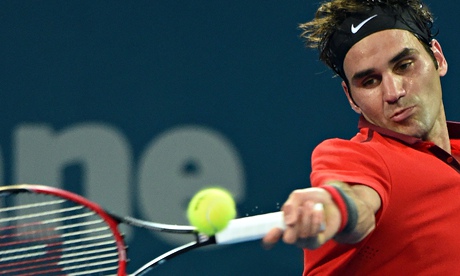
William Skidelsky’s Story of Obsession, a paean to the genius of Roger Federer, was praised by Simon O’Hagan in the Independent as “thought-provoking, instructive and highly readable”. He quibbled, however, with the author’s definition of obsession. “Few dispute that Roger Federer is both the greatest and the most aesthetically pleasing player in tennis history, so to be powerfully affected by him is perfectly understandable. Tim Henman and Me: A Story of Obsession – now that would have been different.” For Ed Smith in the Sunday Times, the book was strongest when it deconstructed the tennis champion’s technique (it’s all down to his old-fashioned grip, apparently). He was less keen on Skidelsky’s characterisation of Rafael Nadal (“ungracious”), warning that although the book is “gentle and wise … Nadal fans will not warm to it”.
Quicksand, the third novel by the previously Man Booker-shortlisted Australian author Steve Toltz, seemed to excite and irritate reviewers in equal measure. The biggest rave came from Robbie Millen in the Times, who called it “the funniest book I’ve read in the past 12 months … imaginative in its cursing and perfectly judged in its bad taste”. Elsewhere, however, the reception was more circumspect. “Highly original, entertaining ... this is a high-octane, adrenaline-fuelled, frenetic tour de force of sustained brilliance,” wrote Simon Humphrey in the Mail on Sunday. “Unfortunately, it is also too long, too self-indulgent, and one’s patience pales well before the end.” In the Daily Mail, Claire Allfree found Toltz “ostentatiously talented”, but described the book as “one long, elaborate hollow gesture”. “It is impressive, though the reader wonders how Toltz will sustain it over more than 400 pages,” wrote Theo Tait in the Sunday Times. “In fact, he does sustain it, and that, really, is the problem.”