The Hammersmith Palais
The Hammersmith Palais de Danse opened in west London in October 1919. Vast and sumptuous, it was the blueprint for all the plush public dance halls that followed. Reviewers were madly enthusiastic. “This new super-palace of jazz and other dances of the day is declared to be without its equal as a dancing hall anywhere in Europe,” sang the Daily Express.
The Palais opened during the headlong rush to hedonism that would be a feature of the postwar years. Controversially so; some thought the frivolity was disrespectful to the war dead (Vera Brittain described the young as “light-hearted and forgetful”).
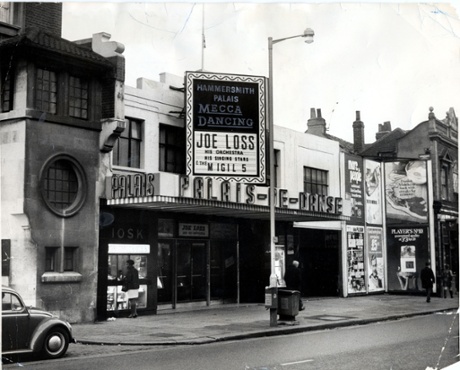
The venue’s music policy was also contentious: the raucous, syncopated jazz sounds of ragtime. First heard in Britain in theatre shows just before the war, ragtime bands had also been a feature of private members’ clubs such as Ciro’s, but until the opening of the Hammersmith Palais, working-class people hadn’t had the pleasure of dancing to what one reviewer called “weird discords”.
Palais-style dance halls defined British nightlife for several decades. The likes of the Streatham Locarno, Ritz in Manchester and Nottingham Palais offered escape, thrills and the promise of modern sophistication.
According to one survey, these venues attracted 3 million dancers every week in 1951. But the disruptive ingredients in early jazz were lost in the lilting rhythms of dance orchestras, and through and beyond the 1950s, developments in music and nightlife drew the more adventurous customers away. Many dance halls, including those owned by the Mecca chain, became bingo halls or live music venues. But by the time it was demolished in 2012, Hammersmith Palais had witnessed gigs by bands such as Slade, the Ramones, U2 and New Order, and inspired one of the most memorable singles of the punk era, “(White Man) In Hammersmith Palais”, which emerged after DJ Don Letts took Joe Strummer of the Clash to a reggae all‑nighter there in 1977.
The Flamingo
From the early 1940s big dance halls were losing customers to the more informal, intimate atmosphere of jazz clubs. From the mid-1950s, after the arrival of rock’n’roll, young music fans were attending skiffle clubs. By the mid-1960s, there were small-scale folk clubs; basements where DJs played obscure black American import records to mods; and bands wanting to be the Beatles making a racket in back street venues all over the country.
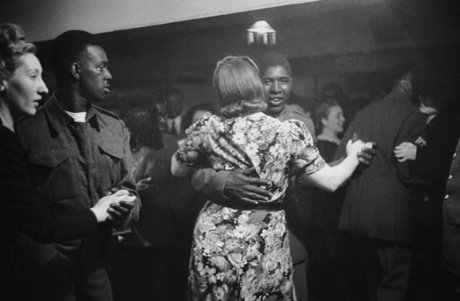
The Flamingo was founded by Jeff Kruger in 1952, though it was 1957 before it found a home on Wardour Street in London’s Soho. In 1962 the all‑nighters that impresario Rik Gunnell was hosting at the Flamingo attracted a multiracial crowd; it was a favourite of black American GIs stationed at bases in Hillingdon and Ruislip. Rumours persisted that the club was involved in drug-dealing and prostitution. Duke Vin (real name Vincent Forbes) had built a reputation throwing parties in the Jamaican community. He became a regular DJ at the Flamingo, playing R&B and ska. The mods enthused about Caribbean culture; Prince Buster became a hero, as did singer Jackie Edwards, who wrote “Keep On Running”, a hit for the Spencer Davis Group.
The Spencer Davis Group and the Who were among the British bands energised by black American R&B music, and the scene in Soho clubs such as the Flamingo spread nationwide via TV shows such as Ready Steady Go!, creating a new wave of mods. The underground sounds went mainstream, fuelled by moral panic. In May 1964 undercover journalists from the Sunday Mirror encountered pill-popping at the Flamingo: “The drug menace”, they said, was sweeping Soho’s “all-night clubs and dives”.
Club A-Go-Go
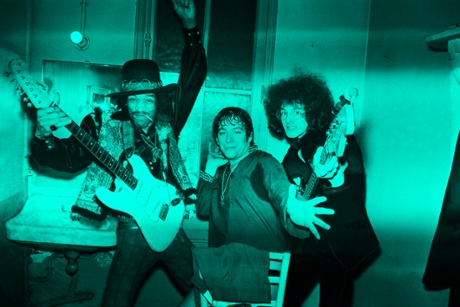
In the 1950s, Newcastle after dark was a tough, hard-drinking, jazz city. Local lad Eric Burdon spent some of his formative years at the Downbeat and the New Orleans Jazz Club. Over in Liverpool, the Cavern opened in January 1957 with a programme of jazz and skiffle, but eventually moved with the times as rock’n’roll revolutionised teenage tastes. Local skiffle acts mutated into rock’n’roll-influenced beat groups; notably the Beatles, of course.
In early 1957 Burdon and John Steel were in the Pagan Jazzmen. But they also delved beyond rock’n’roll into rhythm and blues, favouring John Lee Hooker over Buddy Holly. Within a year they were no longer jazzmen.
Club A-Go-Go opened its doors at the end of 1962, on the top floor of a building on Percy Street in Newcastle city centre. Originally conceived as part casino, part live venue, it was owned by Mike Jeffery. The Pagans became regulars there and soon became the Animals who, as resident attraction at Club A-Go-Go, played alongside visiting US artists such as Sonny Boy Williamson.
Art student Bryan Ferry was drawn to Club A-Go-Go, later telling writer Michael Bracewell: “Some quite hard men used to go there – like gangsters; dressed in mohair suits, with beautiful girls – the best-looking girls in Newcastle, quite tarty. It was really exciting – it felt really ‘it’.”
As well as offering Ferry clues to being cool, Club A-Go-Go played a part in the career of Jimi Hendrix. In August 1966 the Animals’ bass player Chas Chandler was in New York where he witnessed Hendrix playing at the Cafe Wha?. He brought the singer over to England and became his manager, alongside Club A-Go-Go owner Jeffery, who died in 1973 in a plane crash over France during a court case relating to his handling of the Hendrix estate.
The Sombrero
In the 1960s, the Curtain in Brighton had a “supper club” licence, which entailed charging an entrance fee that secured a supper ticket, which you could then exchange for a plate of food. If customers ate on the premises, the club was entitled to serve alcohol and play music until 1am. But there were other restrictions on activities at the Curtain: as it was popular with homosexual men, dancing had to be supervised. A monitor on duty would swoop on any gay couple that came close to touching each other on the dancefloor.
In 1962 David Browne, the manager of the Kandy Lounge in Soho, was taken to court after plainclothes police officers had apparently “observed men dancing the twist with each other”. Other gay bars and clubs operating in Soho in the 1960s included the Mambo, the Alibi and Le Duce.
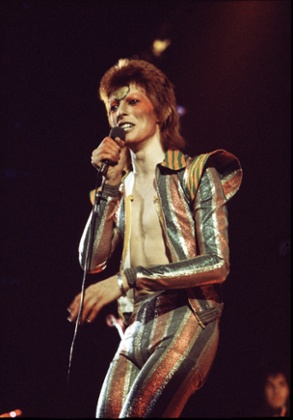
Following the decriminalisation of homosexuality in the 1967 Sexual Offences Act, the queer scene expanded. One venue in particular, Yours or Mine, on London’s Kensington High Street – known as the Sombrero (the exterior decor included a sombrero above the door) – was the place to be. You could make a reasonably grand entrance into the club down a sweeping staircase. DJ Rudi was set up in an arch often decorated with flowers. The club also had a supper licence and waiters would distribute plates of ham with potato salad. The Sombrero both channelled and created the sexual and gender experimentation that were a feature of the early 1970s. David Bowie visited with his wife Angie; some of the outfits favoured at the Sombrero – jumpsuits tucked into boots, little gold tops – found their way into Bowie’s Ziggy Stardust wardrobe.
Cream
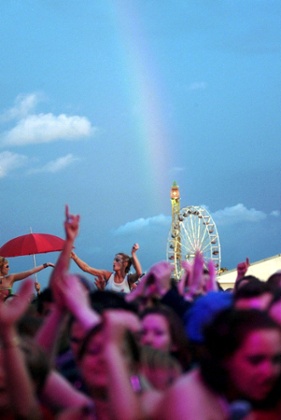
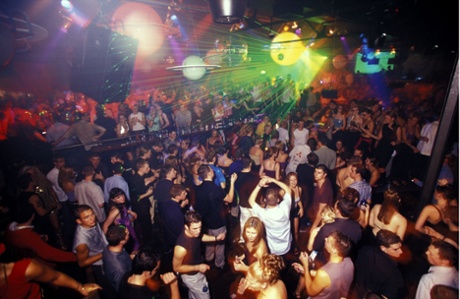
James Barton, Darren Hughes and Andy Carroll launched a weekly night at Nation in Liverpool on October 1992. Called “Cream”, the first few nights attracted between 200 to 300 people. Within three years, they were attracting 10 times that number. In the story of how house music became the dominant sound of the late 1980s, Cream doesn’t have a pioneering role like that of Shoom in London or the Haçienda in Manchester, but it took the status of DJs, and the presentation of house music, to a new level.
Crowds at early acid house events dressed down, but Cream was one of several club nights, alongside Miss Moneypenny’s and Renaissance, that put some glitz back into the scene. And for a few years at least, the club had that rarest combination: credibility and commercial success. Alongside the other dominant superclub of the 1990s, Ministry of Sound, it exploited the potential of dance music compilations. Cream-endorsed albums were capable of selling 250,000 copies. “We weren’t underground,” Barton once told me. “We represented big, commercial, bright.”
In 2002, under pressure from upstart clubs, more eclectic music policies and fewer superstar DJs, Cream closed its weekly club night, concentrating on the annual dance music festival Creamfields; 80,000 people are expected at this year’s event this weekend in the Cheshire countryside.
In 1996, it was said that 70% of applications to study at the local John Moores University identified Cream as a key attraction in the city. What would our definition of Liverpool be now if the Cavern or Cream had never existed? You’d have to rewrite the city’s past, present and future. As well as holding a special place in our personal histories, and having the potential to influence music and fashion, nightclubs and music venues can be as important to a city as the local factory, the football team, or even the cathedral.
• Dave Haslam’s Life After Dark: A History of British Nightclubs & Music Venues is published by Simon & Schuster.