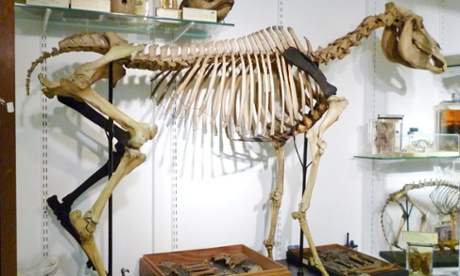
The tottering remains of one of the rarest zoological museum specimens in the world – a quagga whose ancestors were hunted to extinction in South Africa in the 19th century – is now standing firmly on four legs again through 3D printing, which recreated a flipped version of its right hind leg to replace the missing left leg.
Jack Ashby – manager at the Grant Museum of Zoology in London, which owns one of only seven quagga skeletons known to exist – regards the new leg as a triumph.
“Not only does it add a fantastic chapter to a specimen with so many stories, but the new leg also makes the whole skeleton more stable. Try balancing on three legs for 100 years.”
The ancestors of the Grant’s quagga were once plentiful on the South African plains, distinctive in their faintly comical half plain, half striped hide, like a zebra wearing brown trousers. The last known living specimen died in Amsterdam on 12 August 1883, and it was only when the zoo sent out hunters to find a replacement that the scientific world realised the animal was extinct.

The quagga is now one of the Grant’s greatest treasures, but it had a woeful time in the decades before its importance was recognised. It was put on to an iron frame in 1911 with every expense spared, one of six skeletons mounted at the same time at a total cost of £14. The neck was put on upside down, the legs didn’t fit into their sockets, something unpleasantly brown and sticky was oozing through the breastbone, the frame was bolted straight through some of the fragile bones, and the poorly supported spine was sagging under its own weight. To add insult to injury, the poor creature was catalogued as a zebra.
By 1972, when scientists took a closer look at the museum’s two “zebras” and recognised that one was a quagga and one was a donkey, the quagga had also lost a leg – possibly loaned out for study and never returned.
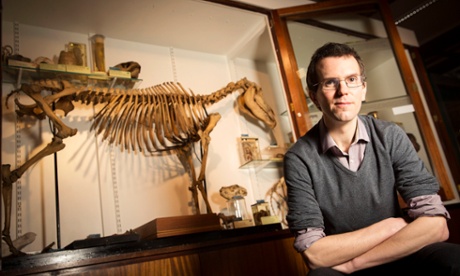
“The files are full of copies of letters from my predecessors saying: ‘Have you by any chance got our quagga leg and if so can we have it back?’” Ashby said.
The quagga has now been treated with much greater respect, through the museum’s Bone Idols project to restore 39 of its largest and most important specimens.
The museum worked with the Royal Veterinary College and the Bartlett Manufacturing and Design Exchange at University College London’s school of architecture to rebuild the skeleton, including scanning the one remaining hind leg in a CT machine and creating a mirror image. The bones were then modelled in solid nylon using a 3D printer, and articulated by specialist Nigel Larkin to make the quagga complete again. The new leg has been coloured black, to make the intervention clear.
Ashby still has some hope that the real missing leg may turn up: the Grant has form in surprising discoveries, including the half dodo found in a drawer a few years ago, filed away as a crocodile.