A mother's public rejection of her son's alleged role in one of Australia's deadliest terror attacks has collided with mounting evidence and official findings as investigators piece together the Bondi Beach massacre.
The Sydney community remains shaken after a father and son opened fire near a crowded Hanukkah celebration at Bondi Beach on 14 December 2025, killing 16 people, including a ten-year-old child, and injuring dozens more. New South Wales Police and federal authorities quickly treated the violent episode as an antisemitic terrorist act after witnesses described indiscriminate gunfire at families and celebrants attending the Jewish festival.
Calm Before Chaos: Mother's Account vs Official Investigation
The mother of one of the Bondi Beach shooters, identified as Verena Akram, has publicly described her son, Naveed Akram, 24, as a 'good boy' who she says 'doesn't have a firearm' and was not the sort of person who 'goes out' or 'mixes with friends'. She told reporters she last spoke to her son hours before the attack, during what she believed was an ordinary weekend where her son and his father, Sajid Akram, planned a trip to Jervis Bay.
In that conversation, she recounted that her son had said he had been swimming and intended to eat before returning home. This account stands in stark contrast to the unfolding evidence. 'He rings me up and said, 'Mum, I just went for a swim. I went scuba diving ... we're going to eat now,' she said.
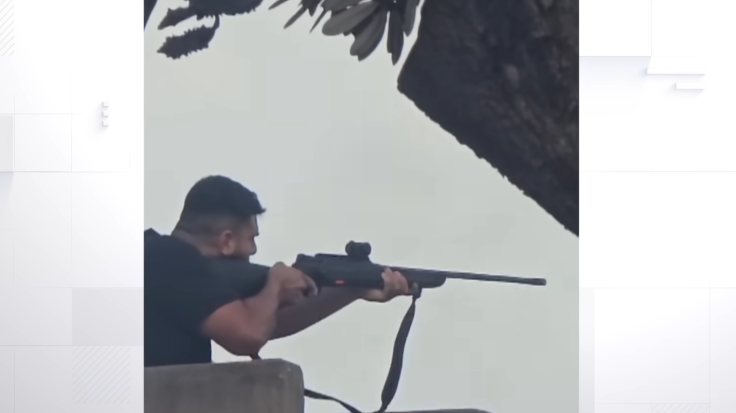
However, forensic examinations, eyewitness accounts, and security footage confirm that the Akram father-son duo were armed and positioned on a pedestrian bridge near Bondi Beach when they opened fire on the crowd. Police recovered multiple firearms licensed to Sajid Akram and found improvised explosive devices in a vehicle linked to the pair.
Terror, Targeting, and Evidence
Australian authorities have classified the Bondi Beach shooting as an act of terrorism motivated by antisemitism. Bullet casings, rifles, and other weaponry were recovered at the scene, matching images and videos circulating on social media that show armed suspects firing into groups of people. Emergency responders and police engaged the shooters; Sajid was killed by officers, and Naveed was critically injured and taken into custody under guard.
Witness testimony from the incident paints a chilling picture of a calm day at the beach turning horrific within minutes. Survivors described the sound of gunfire disrupting the festival atmosphere, forcing families and children to dive for cover or flee into the Pacific Ocean for safety. A bystander, later identified in media reports as Ahmed al-Ahmed, was captured on video tackling and disarming one of the gunmen in a dramatic act of bravery that likely saved lives.
Police leadership has outlined that Sajid held a valid firearms licence and legally owned six firearms, all seized as part of the investigation. The storage and procurement of these weapons, along with the planning that preceded the attack, are now central to inquiries into how the pair came to be armed and what warning signs may have been overlooked.
Grief, Denial, And Community Response
The chilling contrast between Verena Akram's comments and the evidence has sparked debate about how close family members can be to such acts of violence without recognising warning signs. 'Anyone would wish to have a son like my son ... he's a good boy,' she said, a remark that has reverberated across media as officials highlight the complexity of recognising radicalisation within domestic settings.
Psychologists and counter-terrorism experts note that relatives of individuals who carry out extremist attacks often express disbelief, a phenomenon seen in other terror cases globally, where outwardly ordinary family dynamics mask radical ideological shifts or violent intent. Experts emphasise that denial is a human response to trauma and cognitive dissonance when confronted with catastrophic events involving loved ones.
The wider Sydney community has been left to mourn a tragedy with international implications. Australian Prime Minister Anthony Albanese and leaders from allied nations condemned the attack as a targeted assault on a peaceful religious festival, reaffirming commitments to combat antisemitism and terrorism in all forms. Vigils and memorials have been held across the city in remembrance of the victims, whose ages ranged from young children to elderly individuals with deep ties to the local Jewish community.
As the investigation continues and court proceedings loom, the divide between a mother's poignant belief in her son's character and the physical realities of evidence and eyewitness accounts reflects the profound human complexity at the heart of the Bondi Beach massacre.