BOISE, Idaho _ The Greater Boise Auditorium District may help the American Civil Liberties Union fight Idaho's new law banning transgender girls and women from taking part in women's sports.
The district is considering the ACLU's request for a friend-of-the-court brief. The district would use revenue from the 5% tax it imposes on hotel-room stays to pay the legal bill. That could be up to an estimated $50,000, a district spokesperson said.
The district's elected board voted unanimously Tuesday to study the request for the next few weeks, spokesperson Mary Michael Rodgers said by phone. The board wants to ask the Boise Metro Chamber of Commerce and the Boise Convention and Visitors Bureau, an arm of the chamber, if they would help foot the brief's cost.
Board members worry that hotel-room bookings, restaurant patronage and other spending by out-of-state conventioneers and tourists will fall as organizations boycott Idaho because of the law.
"The board has no interest in getting into the politics of the debate, as to what's right or wrong," Patrick Rice, the district's executive director, said Wednesday by phone. "We have no political position on that. It's 100% about the economic impact." The NCAA said in June that the law "conflicts with the NCAA's core values of inclusivity, respect and the equitable treatment of all individuals." The NCAA could relocate the first- and second-round games in the 2021 NCAA men's basketball tournament scheduled next March in Boise.
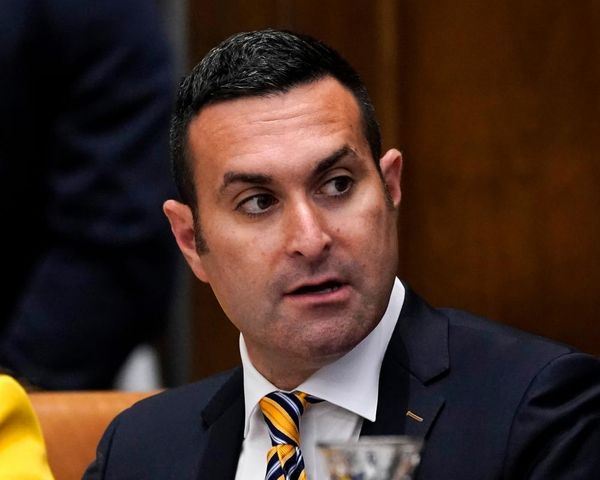
The auditorium district's chairperson, Kristin Muchow, co-authored an op-ed piece the Statesman published in June that called for the law's repeal, "either legislatively or through the courts." Rice estimated that event cancellations triggered by the law could cost Boise's hospitality industry $100 million in lost business from college basketball tournaments and other potential visits over the next several years.
In last winter's legislative session, Idaho lawmakers passed, and Gov. Brad Little signed, House Bill 500, also known as the Fairness in Women's Sports Act.
As previously reported, the law applies to all teams sponsored by public high schools, colleges and universities. It does not allow girls or women's teams to admit those born as male, even if they identify as female. It does not apply to transgender athletes who want to compete on boys or men's teams.
The ACLU responded by suing in federal court in Boise on behalf of Lindsay Hecox, then 19, a transgender Boise State University student, and a then-17-year-old unnamed non-transgender Boise High School student. Both identify as female.
Chief U.S. District Judge David Nye granted a preliminary injunction in August that put the law on hold until a final court ruling. Nye said that while Idahoans may be sharply divided, the plaintiffs "are likely to succeed in establishing the act is unconstitutional as currently written." The auditorium district fosters economic development through its legal authority to build, run and promote public auditoriums, exhibit halls, convention centers and sports arenas.
Its hotel-room tax is estimated to bring in $5.1 million this fiscal year. That's a decline from $8.4 million last year, because the coronavirus pandemic drove down occupancy and room rates.