
- Boeing lands $75 million contract for its new long-range guided bomb
- GBU-75 bomb travels over 300 nautical miles using a turbojet engine
- Boeing spent nearly $100 million of its own money before this deal
Boeing has received a $75 million Undefinitized Contract Action from the US Air Force to begin building its new long-range guided bomb.
The weapon, known as the GBU-75, pairs a 500-pound-class, or 226-kilogram, JDAM warhead with a wing kit and a compact turbojet engine.
This combination allows the bomb to travel more than 300 nautical miles, far beyond what earlier JDAM variants could achieve.
Turbojet kit extends JDAM's reach
Boeing's official designation for the kit is the BSU-111/B Payload Delivery Unit, built around the existing Joint Direct Attack Munition guidance system.
Earlier upgrades to the JDAM family included a tail kit that extended range to roughly 15 nautical miles and a wing kit that reached 40.
The new turbojet engine, designed by Kratos and designated the TDI-J85, pushes that distance well beyond 300 nautical miles now.
Boeing says it has invested nearly $100 million of its own funds into developing the JDAM LR program before this contract arrived.
"This first production contract is a major milestone for the JDAM LR program, allowing us to deliver long-range precision strike at a lower cost," said Bob Ciesla, vice president of Boeing Precision Engagement Systems.
The Air Force Life Cycle Management Center at Hill Air Force Base in Utah manages JDAM purchases for both the Air Force and Navy.
Despite that dual role, the first batch of GBU-75 bombs produced under this contract is intended for the Navy.
Testing record and contracting concerns
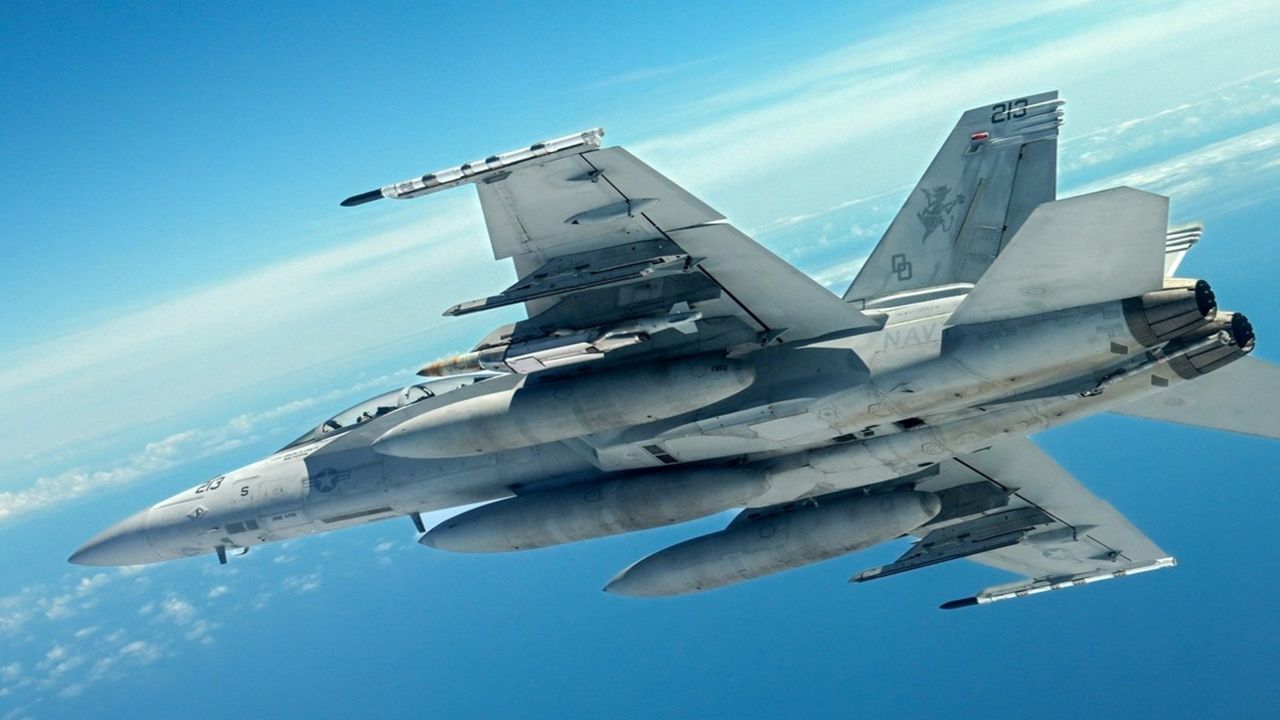
The Navy tested the system in April 2026, when F/A-18 Super Hornets released two JDAM LR units over the Point Mugu Sea Range in California.
On April 1, the bomb separated cleanly, ignited its engine, and flew for 34 minutes, landing within meters of its intended site.
That flight covered roughly 200 nautical miles, while a second test on April 3 added altitude changes and additional maneuvering.
"As Naval Air Forces in theater continue to rely heavily on JDAM systems, the program recognizes a critical need to provide the fleet with greater standoff range," said Capt. Sarah Abbott, the Navy's Precision Strike Weapons program manager.
The Pentagon's daily list of contract announcements had not included this award as of August 5, raising questions about disclosure timing.
Because the deal is an undefinitized contract action, Boeing began production work before both sides agreed on a final price.
The Government Accountability Office has repeatedly warned that such contracts carry financial risk, since contractors are reimbursed for allowable costs regardless of final terms.
Boeing's announcement did not disclose how many GBU-75 bombs the contract covers, what they will ultimately cost, or when deliveries will begin.
Boeing has also proposed a mining variant called QuickStrike Long Range, pairing the kit with a ship-tracking sensor for maritime use.
Taken together, the contract suggests steady confidence in the JDAM LR design, though unresolved pricing means taxpayers still do not know the program's full cost.