

The Bank of England must tread carefully to avoid financial stability dangers if it creates a digital equivalent to its existing banknotes, Governor Mark Carney said on Thursday.
Cash usage is falling in Britain, making shoppers and businesses more reliant on electronic money held with banks and payment companies rather than banknotes issued by the BoE.
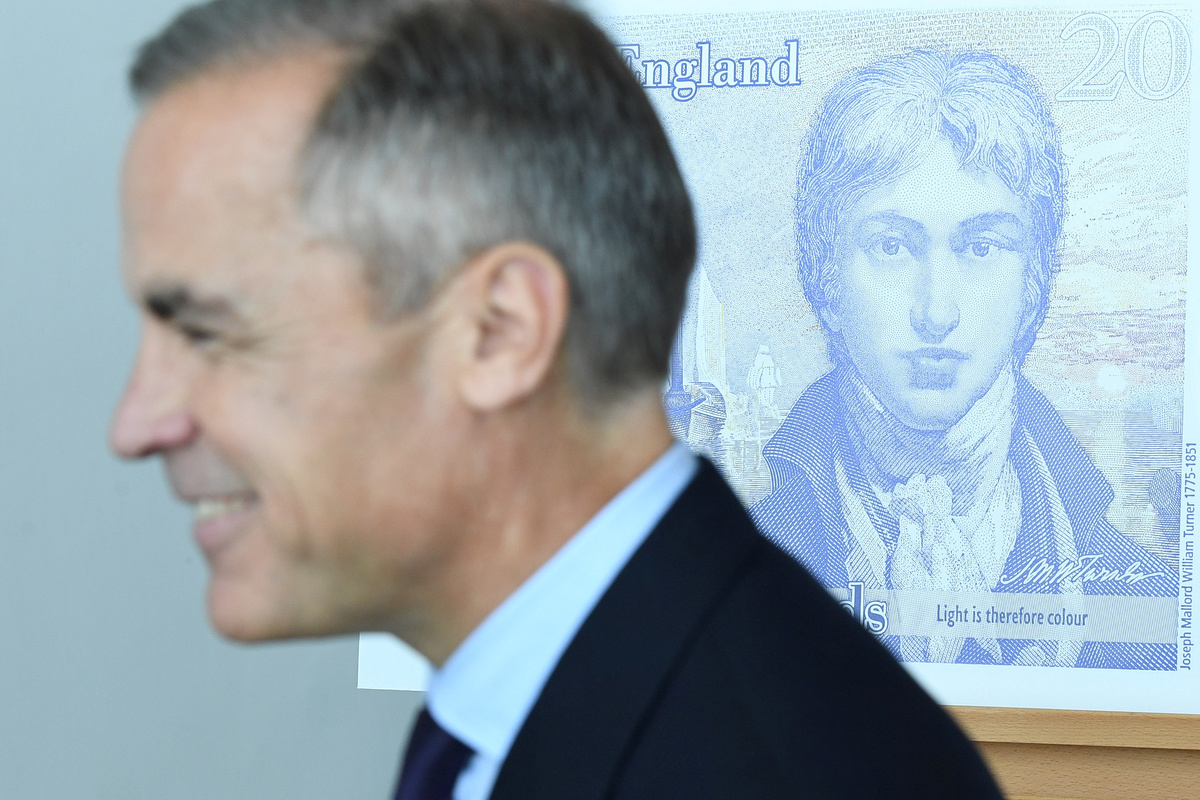
The BoE said it was seeking the public's views on how it might design a digital currency of its own to operate alongside physical cash -- though a decision on whether to go ahead would need government approval.
"While CBDC (central bank digital currency) poses a number of opportunities, it could raise significant challenges for maintaining monetary and financial stability ... and would need to be very carefully designed if it were to be introduced," Carney said in the foreword to a BoE discussion paper.
Cryptocurrencies such as bitcoin have failed to take off as a means of payment in Britain, and the BoE has been critical of the lack of detail behind Facebook's proposal for a so-called 'stablecoin' called Libra.
The BoE's move was welcomed by think-tank Positive Money, which is critical of commercial banks' lending policies.
"The government and central bank must continue to work together to accelerate efforts to issue a digital currency before they are beaten to it by the likes of Facebook," Positive Money's head of policy David Clarke said.
The BoE said that if it introduced its own digital currency, it would be denominated in sterling and would not replace banknotes or commercial bank deposits, and need not be based on the blockchain technology that underpins cryptocurrencies.
But, like cash, it would offer an alternative to using banks for payments between individuals and businesses and could make cross-border payments easier.
One of the BoE's deputy governors, Jon Cunliffe, has warned that taken too far, a central bank digital currency could undermine commercial banks -- a concern echoed in the BoE paper.
"If significant deposit balances are moved from commercial banks into CBDC, it could have implications for the balance sheets of commercial banks and ... the amount of credit provided by banks to the wider economy," the BoE said.
"Nonetheless, CDBC can be designed in a way that would help mitigate these risks," it added.
One option would be for the BoE to provide the underlying infrastructure for a digital currency -- sitting alongside its existing sterling payment systems -- but for private companies to be responsible for dealing with customers.
The BoE consultation will run until June 12.
(Reporting by David Milliken; Editing by Kate Holton and Catherine Evans)












