The first spark of inspiration for police corruption blockbuster Line of Duty came to Jed Mercurio as he was wobbling on a footpath in Glasgow pretending to be sober. It was the mid-Nineties and, with production just wrapped on an episode of Mercurio’s ground-breaking medical series Cardiac Arrest, the young writer and the cast had hit the town to celebrate. Somewhat worse for wear, he was approached by two police officers.
“They were really going at me,” Mercurio would recall. “They wanted me to give them some resistance so that they could take it to the next level. But I stayed polite and focused, and tried to answer the questions.”
Anyone else would have filed such an encounter as a lucky escape. But it set wheels whirring inside Mercurio’s head: what if the police had taken it the next level?
Having worked as a junior doctor at a large hospital in Birmingham, he had first-hand experience of how big institutions functioned. If it was his word against that of two beat cops, he was in little doubt as to who would come off second best.
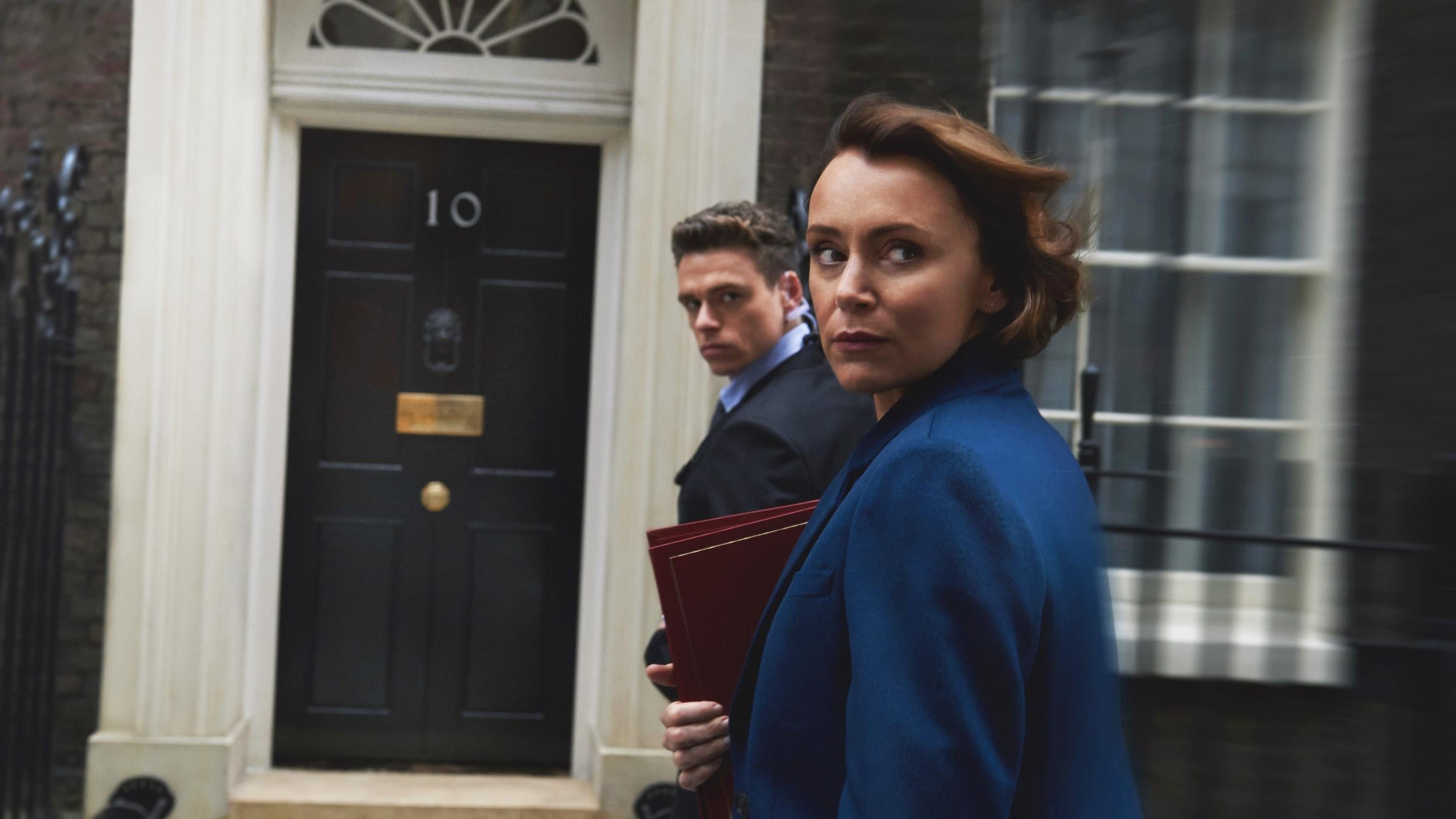
Mercurio once again applies his remarkable ability to chase the seed of an idea all the way to the most devastating possible conclusion in his new series, Bodyguard. It stars Line of Duty veteran Keeley Hawes and Game of Thrones’s Richard Madden (aka Robb Stark of the detachable head) and tragically is not a brooding BBC remake of the 1992 Whitney Houston-Kevin Costner action weepy.
But it’s something almost as good – a political thriller in which Madden plays a PTSD-afflicted ex-squaddie assigned as security liaison to Hawes’s cynical and ambitious Home Secretary, suspected of whipping-up hysteria about terrorism to further her career. As with Line of Duty and Mercurio’s earlier medical dramas it functions simultaneously as a commentary on the dangers of unchecked institutional power and as a high-octane romp.
It is also a showcase for a television writer at the height of their powers. What other dramatist could give us a potboiler in which the viewer finds themselves fretting about the potential for systemic abuses within the security services one moment and hugging the sofa the next as the hero reverses an armour-plated Mercedes through a hail of bullets?
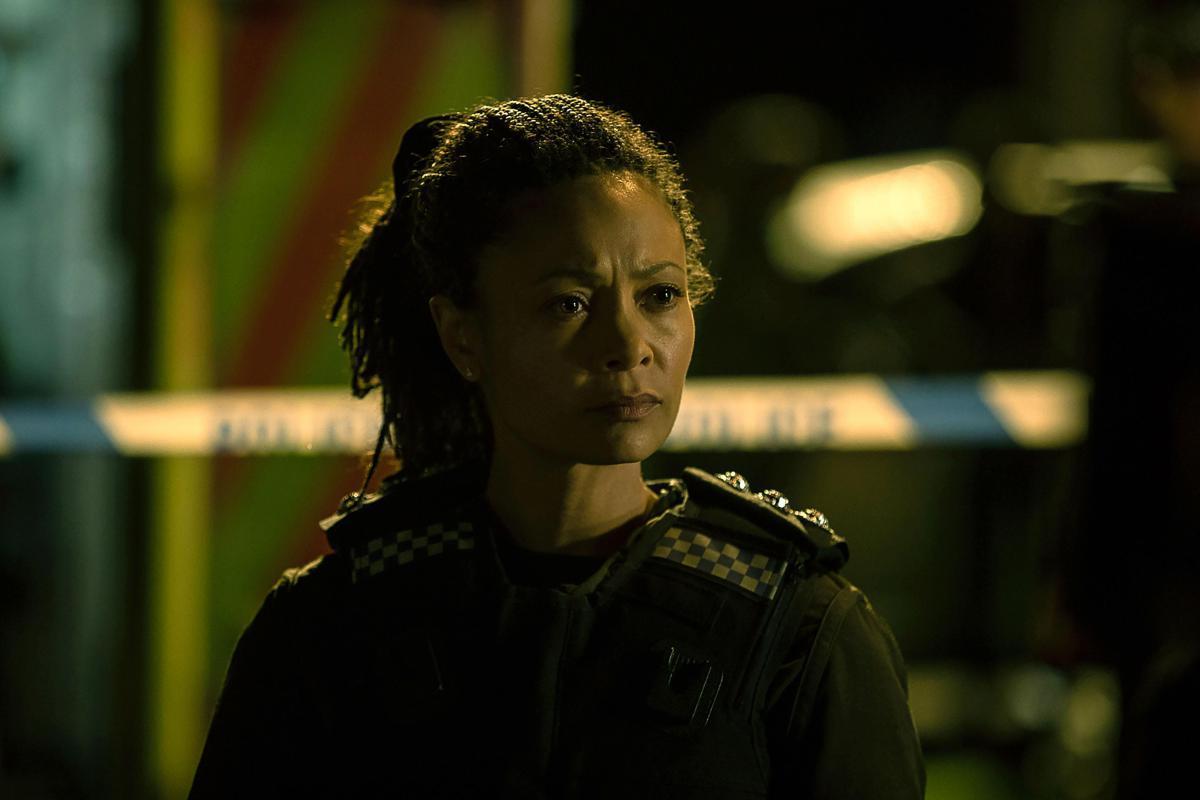
Line of Duty, which returns in 2019 for a fifth run, pulled off the same tightrope walk. In season one viewers were perpetually on the edge of their sofas as officers from the AC-12 anti-corruption unit investigated Lennie James’s mercurial detective Tony Gates. Season four, aired to deafening acclaim last year, featured movie star Thandie Newton as a DCI suspected of playing fast and loose to put a potential serial killer behind bars. At its best, the series excels as an argument against blindly trusting the state and its institutions and also a gripping caper chockful of surprises.
What both the Bodyguard and Line of Duty are especially good at it is delivering Hollywood levels of action while retaining the gloss of a quality BBC drama. This signature Mercurio touch is, it’s tempting to conclude, related to his own outsider status and his consequent willingness to depart from the ground rules of “serious” television.
Mercurio grew up in Cannock in the West Midlands, the child of Italian immigrants (his father was a coal miner). As a child, he adored cheesy sci-fi such as Star Trek and Voyage to the Bottom of the Sea. He came late to drama, having already qualified as a doctor and served briefly with the RAF as a commissioned pilot officer in the medical branch (receiving flying training with the University Air Squadron). The argument might thus be made that, having taken an unconventional route to TV, he is less hidebound by convention.
Other writers might, for instance, blanch at giving their new series the same name, more or less, as a moderately rubbish Kevin Costner movie, much less kicking off with a cold open in which one of the deceased hunks from Game of Thrones spends 10 minutes in a commuter train loo talking a sobbing suicide bomber out of blowing up the carriage. But Mercurio believes utterly in his characters and their travails and, through the sheer forcefulness of his writing, compels the viewer to feel likewise.
Another factor in the impact of his shows – all highly successful with the exception of his 2015 Sky casualty ward series Critical – is that he aspires to more than entertain. Mercurio is a conjurer but also a provocateur.
As a junior doctor, he had the scales removed from his eyes regarding hallowed public bodies and how they really function. The results could be seen in the unflinching Cardiac Arrest, a warts-and-more-warts look at the reality of the NHS which he wrote in secret (he was credited as “John MacUre”) whilst still pounding the wards.
The series had come about when Mercurio answered an advertisement in the British Medical Journal posted by a production company looking for doctors with programme ideas (“ I had written some pretty ropey sketches for the medics’s review about students on a ward round being questioned by an aggressive consultant, so I sent those off.”)
Cardiac Arrest, which debuted on BBC One in 1994, was the anti-Casualty. It depicted junior doctors as both traumatised and coruscatingly cynical and consultants as gilded layabouts passing on the real work to their terrified underlings. Sexism was a daily gauntlet for female staff – and the public too (two especially odious medics maintained a “babe alert” system for when attractive patients were admitted).
Mercurio also confronted racism, a subject rarely addressed in Nineties prime-time drama. “Screw her. I’m not a frigging vet,” said one doctor when told that a patient named Mrs Singh didn’t speak English. Later, a senior figure on the wards casually explained that “foreign” doctors were overlooked for promotion.

Having held up a mirror to the NHS with both Cardiac Arrest and the subsequent series Bodies (adapted from his novel of the same name), Mercurio then turned to the police with Line of Duty. The powers that be were not exactly thrilled at having the spotlight shone in their direction, he would report.
“We specifically didn’t receive assistance where other programming does,” he remarked. “The start of series one features a counter-terrorism unit shooting dead an innocent men… We sent the script to the Met and they said they wouldn’t do that kind of thing.”
There’s a sense throughout his career that Mercurio, if not quite touching an electric fence, enjoys putting his hand in close proximity to the live rail. As portrayed in the Line of Duty, the force is a viper’s nest of killers, creeps and liars. Here and there, it is true, glimmers the occasional good apple – though who is to say they are pure all the way through? (In interviews recently Mercurio has hinted that the next season might paint Adrian Dunbar’s sainted Superintendent Ted Hastings in a more ambivalent light).
He is likewise playing with figurative matches on Bodyguard. Though the series unfolds in an alternate reality where Brexit doesn’t exist, in other ways the picture it paints of British politics is uncannily plausible. We are teased with an image of Hawes’s Home Secretary Julia Montague smiling next to David Cameron while the suggestion that she is plotting to undermine her Prime Minister and position herself for power carries obvious echoes of recent internecine struggles in Westminster.
But, as with Line of Duty, this is also TV with a great, big pulpy heart. The first three episodes are crammed with explosions, shoot-outs and dangerous liaisons (Madden is required to call on all his Game of Thrones bonkbusting powers). Serious and silly, slow-burning yet packed with surprises, it is one the purest expressions yet of Mercurio’s vision of what great telly should be. As a late summer escapade, it’s thrilling. As an appetite-whetter for the next Line of Duty, it is simply mouth-watering.
Bodyguard begins on BBC One on Sunday at 9pm