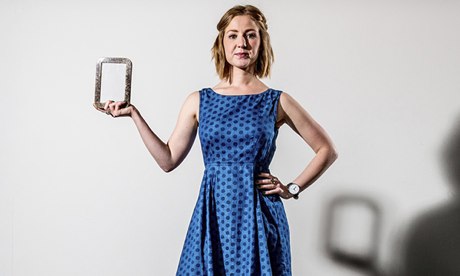
While it's true that human placentas have been cooked, eaten and used to develop hair products, Amanda Cotton's project, developed after she graduated from an MA in Sustainable Design at the University of Brighton, is taking the notion of sustainable art to an intimate level: she is moulding picture frames from frozen human placentas.
Cotton got the idea to sculpt picture frames using parts of human placenta after living with a midwife a year ago. It was then she learned about the sacks' disparate post-natal usages, and presence in the art world. "We need to think of all waste in a completely new way – as raw materials, which hold huge potential," she says. "Why not use human waste where possible?"
Since then, and after developing the technique using animal membrane, Cotton has had her first order. Ulrika Jarl, who expects the arrival of her second child in December, plans to store her placenta in a cool box for Cotton to collect. "What attracted me was the use of materials we think of as waste," Jarl says. "I can understand why some people might find this a bit yucky."
The frames – which are optionally inscribed with the child's date of birth and name – are made using entire placentas, brought to the boil, slow-cooked and ground into miniature flesh pieces, which are then mixed with resin and cast into a marble-effect mould. "I chose to create souvenirs that pin-point key times in one's life, using materials of personal significance," Cotton adds. "My work is about expressing the amazing and intricate materials our bodies provide."
Cotton, a London resident, flits between working full-time at an interior design shop in east London and developing her own business online where she hopes to sell more of the 4" X 6" frames. The site showcases her other biomaterial-related projects too, including earwax necklaces and human hair-weaved tablewear because ... well, why not?