
Welcome to Verducci’s View, a new weekly baseball newsletter from Sports Illustrated senior writer Tom Verducci. Every Monday, Tom will empty out his notebook over email and cover MLB’s hottest topics, provide in-depth analysis through both text and video breakdowns, look forward to what’s worth watching during the week and more. This week, we’re focusing on the late Bobby Cox, Cody Bellinger's new groove and more.
Everything—a horse, a vine—is created for some duty ... For what task, then, were you yourself created?”
— Marcus Aurelius, Meditations
The soul of baseball is there if you know where to look. In Atlanta, whether it was at the old Atlanta-Fulton County Stadium or Turner Field, you followed the whiff of cigar smoke down a narrow concrete tunnel and took a sharp left into a tiny room before you reached the home dugout. A small television was always tuned to a weather channel, even on the most cloudless of days. A grandfatherly Platonic philosopher-king—thoughtful, humble, more teacher than ruler—sat in a comfy office chair and, between pulls on his stogie, asked you to grab a seat, or a stool as the cubbyhole allowed.
This was Bobby’s Room. Bobby Cox spent much of his time before games there. He was more comfortable here than up the runway in his large, well-appointed office off the main clubhouse, the one with fancy furniture, shelves, bookcases and framed pictures, for goodness’s sake. Bobby’s Room, co-opted from an original groundskeepers’ area, fit him much better. Closer to the field. Utilitarian. Players, reporters and groundskeepers would have to pass by going to and coming from the field, each one an invitation for a conversation.
When Cox died Saturday at age 84, my mind went directly to that room. What a privilege it was to be one of the many welcomed in. So small was the room that it was always a private conversation. For a passerby to insert themselves into the conversation was an intrusion. I treasured those conversations, never knowing the corporate-style, formal press briefings with managers of this generation would burnish them with a sweet patina of nostalgia, like vinyl records.
Bobby Cox always—always, even four hours before the game—wore a full uniform. Game jersey, stirrups, spikes. Yes, spikes to manage a baseball game. He dressed for baseball like an admiral. Putting on a uniform was an honor, a sign of respect for the game and the job that should never be compromised. No cutoff hoodies for Bobby.
Many times in Bobby’s Room, one of the televisions would be tuned to an afternoon game from Wrigley. We would talk baseball like two guys skipping work to sit in the bleachers. Most impressively, Bobby would ask questions. Maybe it was about a team I had seen recently. I’m sure not much I ever told him was of much use. I was always impressed by his humility. The smartest people don’t try to show you how smart they are; they have an unsatiated thirst to learn, not to hear the sound of their own voice.
To be in Bobby’s Room once or many times is to know that Bobby Cox found the task for which he was created as surely as few fortunate people ever do. He was a born manager. Not in the John McGraw sense of a master game manipulator who squeezed every competitive edge from a ballgame, but as leader of men.
He was a benevolent ruler (until you showed a lack of respect for the game, in which case Cox ran many a player off his team so as not to poison the orchard he tended). A teacher. A friend, never more so than in tough times. A powerful leader who wielded power not for his own sake but for the unit. A Marcus Aurelius in spikes.
He aged, but his style never got old. He was teammates with Mickey Mantle and managed Freddie Freeman. He spent 50 years in professional baseball. He was ejected from 162 games, a record, but never held a grudge, for which umpires loved him. The arguments were born of his fatherly instinct to protect players, not to demean umpires. He won 2,504 games, fourth all-time. Only McGraw, who got his start in 1899, had a higher winning percentage among the 17 managers who managed 3,500 games.
More than his prolificacy, loyalty to and respect for his players set him apart. “Players’ manager” can be used as a euphemism for a manager who runs a loose ship. Cox was a players’ manager in its original form. He backed them like a fiercely proud parent.
Braves pitcher Tom Glavine once told me he would be stunned when he picked up the next day’s papers to see Cox’s quotes after a game in which Glavine was shelled. Cox would say Glavine threw the ball well, was unlucky, or maybe a few calls didn’t go his way. “I would be bad,” Glavine would say, “and it’s like he saw a completely different game.” All in the name of backing his boys.
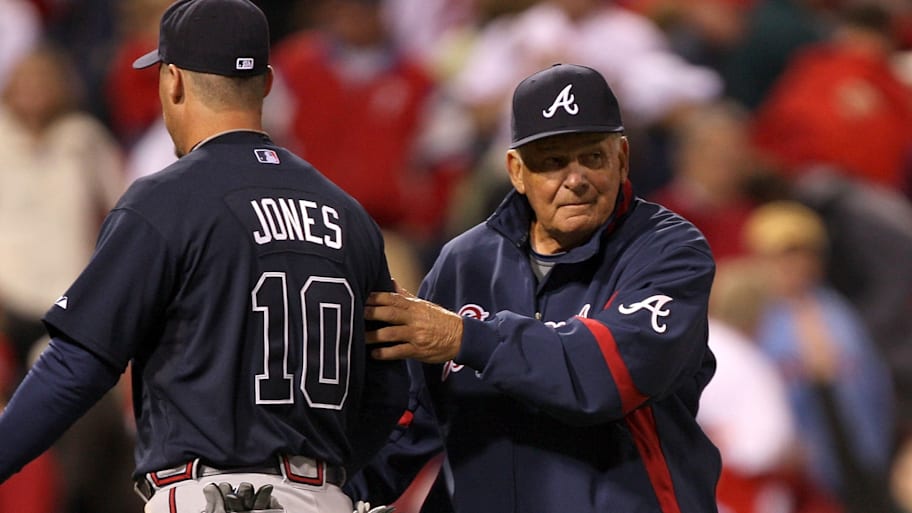
Cross him, though, especially by not giving an honest effort, and look out. Andruw Jones learned that lesson on July 21, 1998. Jones was thrown out at home by 10 feet after running through a stop sign, laughed about it in the dugout, then allowed a pop-up to fall in front of him while pouting over a strikeout in his previous at-bat. Cox pulled him from the field, then ripped him after the game in language a manager today would never use.
“He’s only 21,” Cox said. “I have to remember that, I suppose. But I didn’t act that way when I was 21, nor did Hank Aaron or Willie Mays. You don’t like to do stuff like that. But to me, it was obvious that Andruw didn’t try for the ball.
“Either go home or play. Mistakes are nothing. But it’s a mistake not to try.”
Asked if he would fine Jones, Cox said, “I’ve taken so much money from him it’s a joke. I don’t know what to do. He’s been sent home when he was in the minor leagues. We’ve done a lot of things with him.
“He’s got to grow up. It’s as simple as that. No one is bigger than the game.”
Jones called the incident a turning point in his career. He loved Cox for the tough love.
Cox managed 4,644 games. I was there for the last of them, a painful 3–2 loss to the Giants in 2010 NLDS Game 4. Cox and the Braves were eight outs from sending the series to a fifth game when San Francisco scored twice in the seventh. Something remarkable happened after the last out. The Giants stopped their celebration on the field, turned toward Cox in the first-base dugout and applauded him. Ever gracious, Cox stood for an on-camera interview with me only moments after barely getting through saying goodbye to his team.
A short while later, he sat in the interview room to field questions from reporters. He deflected questions about himself and held up well—until someone asked him if he spoke to his players.
“The best I could,” he said. “I told them, um, I was really proud of them ...”
And that’s when it hit him. The emotions rocked him like a wave against the side of a boat. It wasn’t that he was sad that he had managed his last game. It was the reality that he would no longer lead, teach, instruct and mentor a team of players. It was the sense of team, not self, that sent him reeling.
He pursed his lips, stroked his chin, pulled his cap down ... anything to hold back the tears. For 17 seconds, he could not speak. When he did, he apologized.
“A grown man shouldn’t do this,” he said quietly.
Another five seconds passed. Finally, he righted himself by falling into his default mode of protecting his players.
“But I can’t say enough about Derek Lowe ...” he said, referring to his hard-luck losing pitcher.
When Cox was done, he stood up and walked out of the room, still in full uniform, with his spikes click-clacking for the last time. The room of hard-bitten reporters applauded.
The greatest impact Cox had in the game is not measured in wins but is carried by those he influenced, especially his players who were introduced to his form of baseball Stoicism, a hardball philosophy built on selflessness, wisdom, respect and understanding. As Marcus Aurelius said, “People exist for the sake of one another; teach them, then, or bear with them.”
The spin on Bellinger
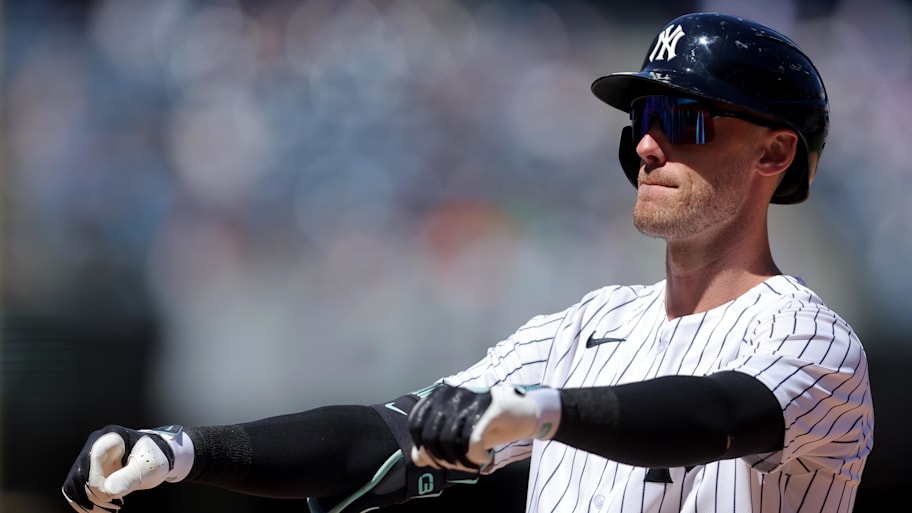
It’s long past due for teams to update their scouting report on Cody Bellinger of the Yankees. A narrative developed in the spotlight of the 2017 World Series that Bellinger could not hit breaking pitches. The Astros threw him 49% breaking pitches, an absurdly high amount. Bellinger, then with the Dodgers, hit .118 against all that spin.
The Red Sox in the 2018 World Series and Rays in the 2020 World Series followed Houston’s lead. In those three World Series, Bellinger hit .103 against spin while being fed a diet of 40% breaking pitches.
Under Yankees hitting coach James Rowson the past two seasons, Bellinger is the best slugger in baseball against spin (.601). This season he is crushing spin for a .300 batting average and ridiculous .867 slug, which leads the league.
A big part of Bellinger’s improvement against spin has been his plate discipline. This season, for the first time in seven years, Bellinger ranks above average in avoiding chase, rocketing from the 35th percentile last year to 78th. He has the eighth best improvement in chase rate.
Pitchers the past two years are throwing Bellinger more breaking pitches than they did over his first eight seasons. And he is crushing them like nobody else:
| Bellinger vs. Breaking Pitches | Percentage | AVG | SLG |
|---|---|---|---|
| 2017–24 | 25.3% | .230 | .451 |
| 2025–26 | 28.0% | .271 | .601 (best in MLB) |
Jose Altuve Stands Tall Among Short Kings
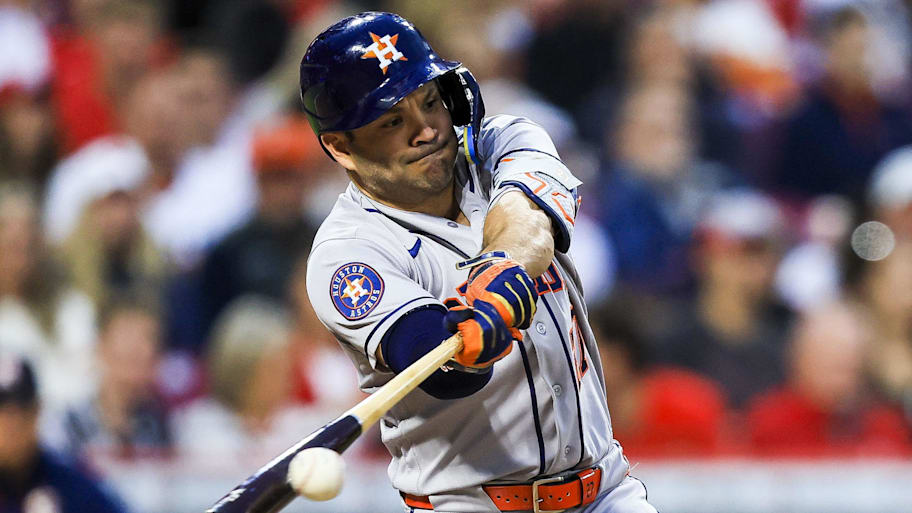
Among players no taller than 5'7", Joe Morgan has the highest WAR, which might qualify him as the biggest little man in the game’s history. You can also make a case for Yogi Berra, who has the most home runs among the shorter set—90 more than the next best, Morgan.
Jose Altuve is putting himself in the conversation as he approaches 2,500 hits (he has 2,421) in a prolific career. Only Wee Willie Keeler (2,932 hits), Rabbit Maranville and Morgan reached 2,500 hits among players 5'7" and shorter. Altuve among that set also ranks second in doubles (behind Jimmy Rollins), third in homers, third in total bases (Morgan and Rollins), third in slugging (Hack Wilson and Berra) and sixth in WAR (Morgan, Billy Hamilton, Berra, Keeler and Joe Sewell).
Altuve turned 36 last week. Manager Joe Espada gifted him a bottle of wine, appropriate because of how well Altuve has aged. He is signed through the 2029 season. He averaged 156 hits the previous five seasons. He needs to average 153 hits per year over these next four season to reach 3,000 hits.
Difficult? Sure. Availability and performance typically decline in the late 30s. But know that this season Altuve has posted his fastest sprint speed since 2022 and he has the second biggest improvement in chase rate in MLB.
“He’s in better shape than a lot of the younger guys on the team,” Espada says. “He sleeps and eats well and he’s in the weight room every day. Is he capable of playing 155 games [a year]? Physically? No doubt.”
Seen and Heard
Here’s another look at how ABS is changing how baseball is played, not just a few random calls. The percentages of pitches thrown in the strike zone is the lowest since pitch tracking began in 2008. It has dropped from 50.6% last year to 47.3% this year. And the batting average against those pitches in the zone also is down to a 19-year-low (.277, matching 2022) ... Who is the toughest pitcher to hit with two strikes? It’s not Paul Skenes or Shohei Ohtani or Jacob Misiorowski. It’s Reds left-handed reliever Sam Moll, who throws his fastball 91–92 mph. Hitters are 0-for-22 against Moll when he gets to two strikes ... Chase Burns of the Reds is the rare kind of rising star pitcher these days of the varied pitch menus: essentially a two-pitch pitcher (fastball, slider, with a fringy changeup). No one throws so hard (98.1 mph) from such a high release point (6.51) and only eight pitchers can spin their slider so fast ... Only Gary Nolan struck out more batters in their first 15 starts for the Reds than Burns. Remember Nolan when people start talking about the good old days when guys threw a ton of innings. Nolan made his debut at 18. The Reds let him throw 226 innings that year. The next year, and pretty much for the rest of his career, his arm ached, though the team had trouble abiding by his complaints. Manager Sparky Anderson told him, “You’ve got to pitch with pain, kid” ... One shorthand way of measuring strength of lineups is to look at what teams get from the 7-8-9 slots. The Chicago Cubs rank first in runs and walks from the bottom three spots and third in OPS. They are giving opposing pitchers no breather innings and turn the lineup over faster ... Luis Mey of the Reds joined the Century Club (hitting 100 mph) on May 7. That’s 43 pitchers through May 8 that hit 100 mph, up 23% from the same date last year (35) and up 438% from a decade ago (8) ... Misiorowski has hit 100 mph 193 times. That’s more than 23 teams put together this year and almost as many as all pitchers threw the entire 2008 season (214).
Breakdown of the Week
Christian Walker of the Astros has rebuilt his career, if not his trade value come July, by being on time against velocity. Last week he became only the eight right-handed hitter to homer off one of Shohei Ohtani’s four-seam fastballs—and the first since Mookie Betts eight years ago to turn one around to the pull side.
The fastest pitches on which Ohtani ever allowed a home run happened in the same game: 98.7 mph to Braden Shewmake and 97.7 to Walker.
What did Walker do to turn around elite velocity rather than getting beat by it? Check it out here.
TV on TV This Week
Thursday, May 14: Giants @ Dodgers, 10 p.m. ET (MLB Network)
Saturday, May 16: Orioles @ Nationals, 4 p.m. ET (FS1)
San Francisco is a bad baseball team that is last in home runs and last in walks. It is only the fourth team in the live ball era to have as few as 25 homers and 75 walks in its first 39 games, joining the 2010 Astros (who lost 86 games), the 1964 Mets (109) and 1920 Phillies (91). Its leadoff hitters—remember, that’s the spot by design that gets the most plate appearances—have the worst OBP in franchise history in the live ball era and the fifth worst by any team in these past 126 years.
The Giants were in no shape to afford to carry a pitch-framing master catcher who can’t hit, Patrick Bailey, so they made a rare May trade and shipped him to Cleveland, which treats catchers like pitchers: they influence the game with no offenses needed. Until 2020, Cleveland catchers hit .216 or lower only four times in franchise history. This is the seventh straight season they have been that bad at the plate.
More MLB from Sports Illustrated
- What the Heck Is Going On With Cal Raleigh?
- The Giants' Grim Outlook Goes Well Beyond This Season
- Urgency or Depth? Analyzing the Yankees' Recent Roster Decisions
- Ranking the 10 Best First Basemen in Baseball
This article was originally published on www.si.com as Bobby Cox Provided Endless Examples of Being a Good Leader.