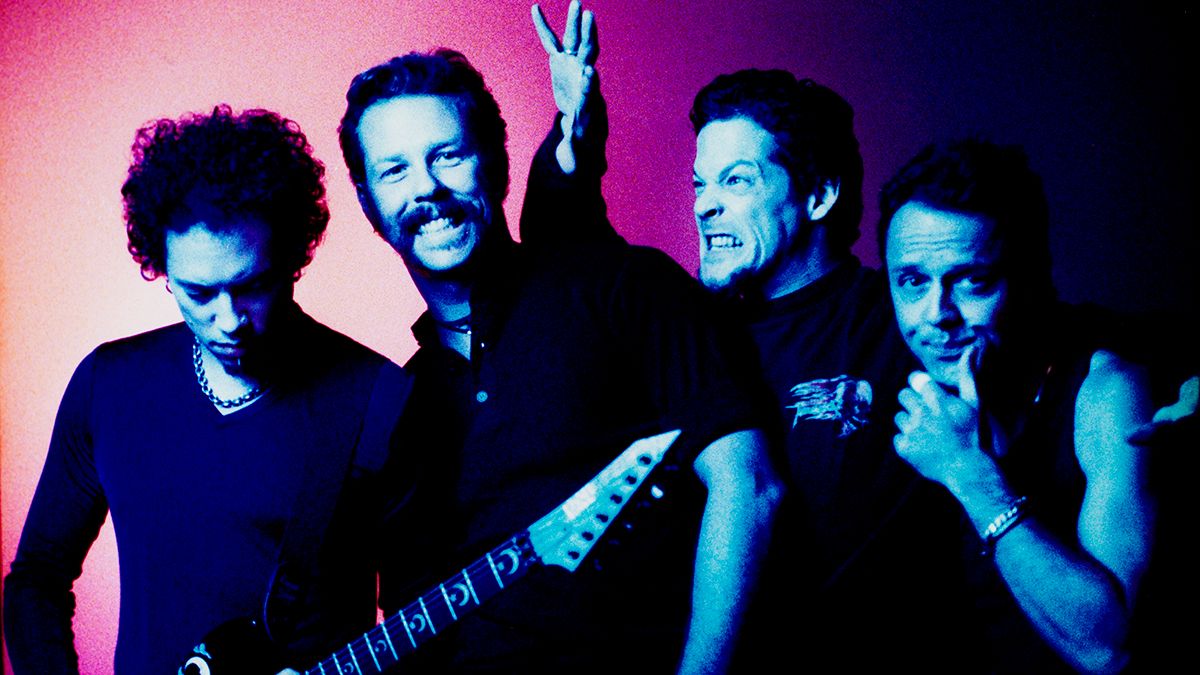
Metallica’s Load came after a period of intense reflection for the metal icons.
Following years of heavy touring between 1991 and 1993, all members broke off to explore influences outside heavy metal and the music realm, with the dynamic guitar duo of James Hetfield and Kirk Hammett taking a deep dive into hunting (for Hetfield) – and film, jazz, and Asian arts (for Hammett).
When they returned to the band, they took a fresh approach to the instrument. Hammett, who had only handled lead guitar on record up to this point, would now join Hetfield on rhythm duties across the album that would define this new phase of Metallica.
Yet Hammett's transition to rhythm guitarist was never planned. It came about quite naturally.
“It was never really something that we spoke about,” Hammett told Guitar World's Tom Beaujour in a 1996 interview. “The first mention of it came while we were recording the drum tracks.
“When we do that, we all play the songs together in a single room, but the only thing that goes onto the multi-track is the drums – everything else just gets taped. Some of the songs were sounding so good on those tapes that James was like, ‘Well, maybe Kirk should play on the final version of some of these.’”
“Later on, on a day when James happened to be away on a hunting trip, I was laying down a couple of solos, and when I finished the lead on one of the tunes our producer, Bob Rock, said, ‘Okay, tune up, and we'll do the rhythm for this song now.’ I was like, ‘What?’”
As Hetfield adds, “By the time I came back, Kirk had put down rhythm tracks on four songs.”
Hammett specifically went out of his way to come up with a second guitar part that would complement Hetfield’s, and not, as he put it, “ape it”.
“Not that the riffs weren't interesting,” he clarified. “The riffs are the riffs – they're the most important part of the song. Our parts have a really good sense of interplay. And you can actually separate the two guitars and tell who's playing what. James is on the left side, and I'm on the right.”
Was it ever a point of contention that Hammett didn't get to play rhythm guitar up until that point?
“Not really,” he replied. “In fact, on this album we argued more about the solos than anything else. But we're always arguing about something, so it was just par for the course.
“I often have a pretty specific idea of what the solo to a particular song should sound like, so it throws me for a loop when Kirk comes in with something else,” Hetfield added. “But then everyone sits down, we talk it out and work out a middle ground that everyone can be happy with.”
While the album proved controversial among Metallica fans for straying from the band's thrash metal roots – complete with a revamped, leather-jacket-clad look and (gasp) short hair – it was nevertheless a commercial success, topping the charts in more than 15 countries.