Getting around these days is heavily dependent on using motorised transport, which in turn contributes to air pollution. That air pollution is becoming increasingly dangerous. Outdoor air pollution exposes our bodies to toxic particles and kills around 4.2 million people per year.
Diesel emissions cause almost half of all deaths by transport-related air pollution, while those living closest to major traffic arteries are up to 12% more likely to suffer from dementia. The global transport sector also accounts for almost one quarter of energy-related carbon dioxide emissions, which makes it a major contributor to climate change.
People residing in Bangkok are no strangers to air pollution, in a city that remains one of the most congested in the world. A 2017 report showed Bangkokians spend upwards of 64 hours a year sitting in traffic jams.
The issue is likely to get worse unless action is taken. Demand for transport is, by 2050, predicted to be double 2005 levels. The global vehicle fleet is expected to swell by up to four times over the next few decades, with most of this growth in developing countries.
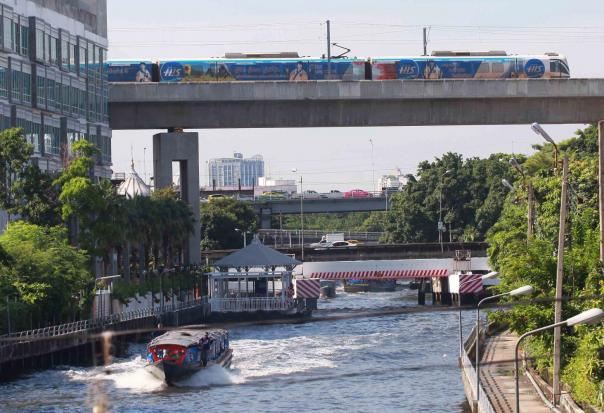
One hundred years ago, this transportation conundrum wasn't an issue, not least because cars were still relatively novel. And in Bangkok particularly, the city moved around differently, using the web of canals-- or klongs -- throughout the city as a primary means of transportation.
In the early 1900s, the city gradually stopped dredging new canals and started filling in others to pave the way for a new mode of transportation: the automobile.

Even though Bangkokians today are car -- and motorcycle -- crazed, the city has not forgotten its waterborne roots. Klong boats remain a popular means of getting around. Around 300,000 trips are taken per day on Bangkok's network of waterways.
Much like older public transit in many cities, water buses are powered by soot-belching diesel engines. A klong boat throttling away from a jetty will often leave a black cloud floating above the water's surface.
The pollution that is apparent to the eyes and lungs of commuters has until now not been given the appropriate attention. That's about to change.
In conjunction with World Environment Day 2019, UN Environment and the Climate and Clean Air Coalition announced they will be supporting Thailand's Pollution Control Department to assess the impact of canal transport on air pollution in the city.
"Bangkok suffers annual bouts of severe air pollution and this previously unmeasured source may be a significant contributing factor," said Bert Fabian, Programme Officer in UN Environment's Air Quality and Mobility Unit.
"We want to improve the air we breathe, but we can't do this without the best possible data."
Experts from the three organisations will attempt to identify the types and amount of pollutants emitted from public transport on the klongs. Even without this assessment, however, some operators are already taking steps to address the apparent problem.
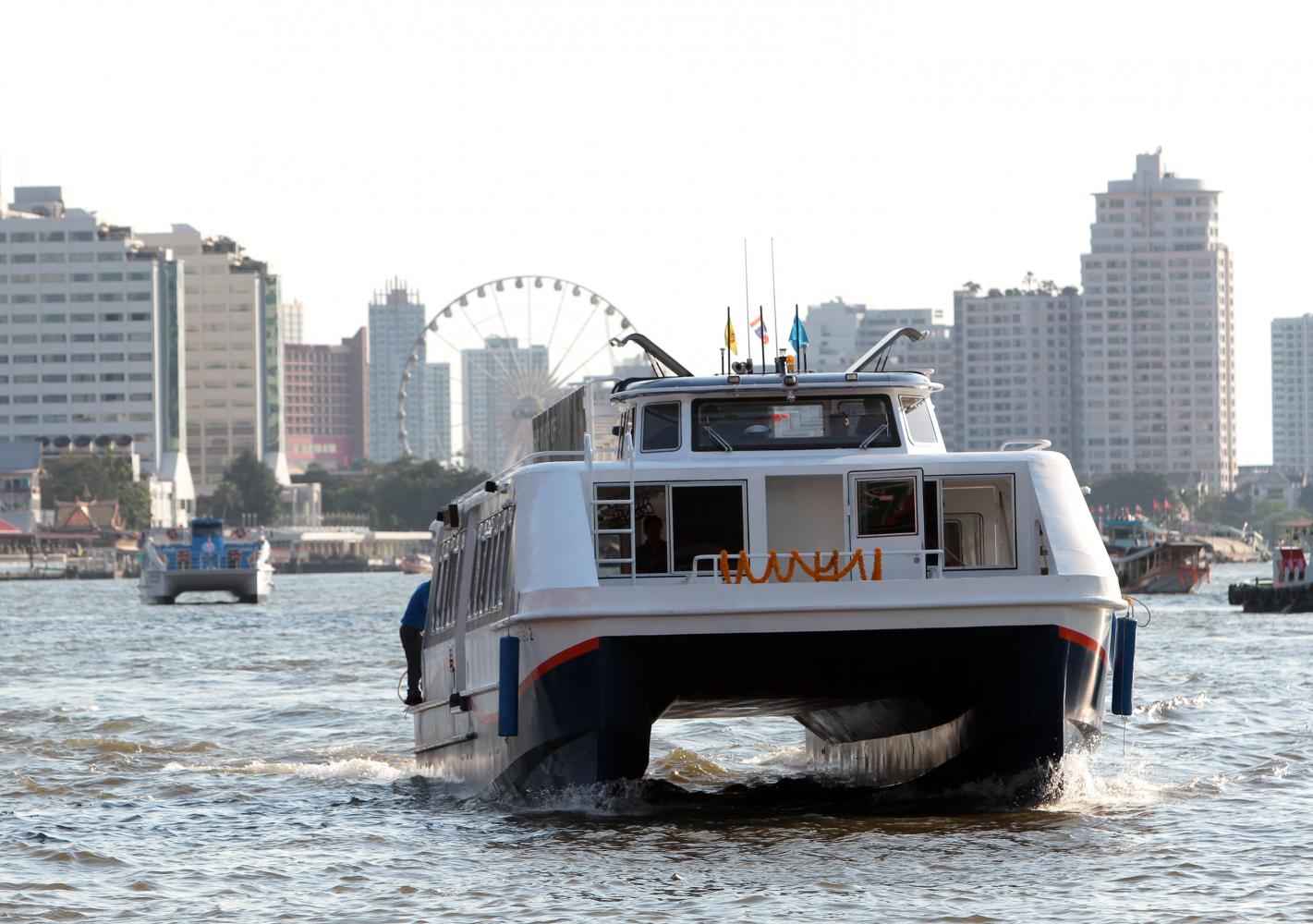
The Harbour Department announced a project in May that will see them develop a 100-passenger electric boat with Kasetsart University. Another project from Energy Absolute will attempt to develop an electric boat on a much larger scale. The operator aims to invest 1 billion baht in building 54 electric boats that will ply the Chao Phraya River.
Both of these ventures follow in the footsteps of Thailand's first electric boat, a 40-person waterbus that was deployed in Bangkok in late 2018.
As Bangkok looks for solutions to its traffic woes, the potential of its historical transit system can't be overlooked. Some 960 kilometres worth of canals are potentially available to use in the city. Currently, only 67.5km are in the network's service.
Further integrating waterborne public transit into Bangkok's other mass-transit systems has high potential to improve access across the city and make public transit more environmentally friendly.
Expanding those same mass-transit systems will help beat air pollution as well.
Bangkok's longer BTS lines and increasing bike lane availability are helping more residents find a more sustainable way to get around.
Environmentalists agree that more can always be done, and many examples can be found from around the world.
Lower taxes on clean vehicles saw the number of electric and hybrid cars in Sri Lanka's fleet grow tenfold between 2013 and mid-2018. Globally, sales of plug-in electric and hybrid cars hit 2.1 million in 2018, 64% higher than in 2017.
Electric public mobility is growing. Shenzhen famously became the first city to employ an all-electric 16,000-strong fleet of public buses in 2018. Other cities in China, like Hangzhou, boast up to a 70% electric fleet. Jakarta has recently taken the first steps with a trial of the electric buses.
Other cities have had success with low-emission zones. London introduced the world's first ultra-low emission zone in April, with plans to expand it by 2021. From July, all old diesel cars in the lowest air quality category will be banned from the Greater Paris area. Policies and standards that require the use of cleaner fuels and advanced vehicle emissions standards, meanwhile, can reduce vehicle emissions by 90% or more.
The average person will play a role in the shift, according to Joyce Msuya, Acting Executive Director of UN Environment.
"While our cities and countries are busy setting up new systems and regulations, we ordinary citizens should not sit on our hands. We can walk, bike, take public transport or ride-share.
"We can cluster tasks, achieving in one journey what we might otherwise do in two or three. We can switch to hybrid or electric vehicles. If we have to drive, we can do it and use less fuel by, for example, not accelerating and braking rapidly, and by not leaving engines running when cars are stationary," Ms Msuya said.
In Bangkok, where more electric boats may soon be cruising the klongs, there may be yet one more option for residents to both beat traffic and air pollution.