Boardroom bosses should meet employees every year to justify pay practices, according to proposals put forward by one the City’s biggest fund managers as it warned that wage inequality needs to be addressed by major companies.
But Legal & General Investment Management (LGIM) – which last month called for ratios between the chief executive and that of median employee to be published – fell short of supporting the call by Theresa May to put workers on boards.
The prime minister has raised the prospect of putting employees on company boards, and making shareholder votes on executive pay legally binding.
“Employee representatives should play a role by meeting with the remuneration committee annually to ask why the committee considers the pay practices applied in the organisation to be fair,” said the senior corporate governance manager at LGIM in a research paper.
Angeli Benham said: “Companies should not forget that workers are their most valuable asset and success would not be delivered without their effort. Companies that are exercising restraint, cutting costs and headcount should be sensitive if they are also increasing executive pay.
“All employees, regardless of the health of the company, should be recognised for their contribution to the success of business.”
Citing research by the High Pay Centre showing pay for FTSE 100 bosses increased 146% from 2000 to 2013 compared with 43% for all employees of FTSE 100 firms, she said inequality “has a material impact on society. This inequality, and the furore that surrounds executive pay, can no longer be ignored.”
“High pay does not always guarantee performance. Total pay for executive directors, particularly chief executives, has increased sharply over the past decade. When compared to the performance of the market, the increasing level of executive pay is becoming difficult to justify,” Benham said.
In a letter to firms last month, LGIM not only called for disclosure on pay ratios but also for a cap on directors’ bonuses, so they were no bigger than two times salary. The move appeared to grasp the recommendations of a high-level executive working group, which published its findings in July. That group – in which the L&G chief executive, Nigel Wilson, played a key role – rejected May’s ideas for a binding vote on pay deals and did not set out how much directors should be paid.
While May has highlighted a focus on corporate governance, companies are also being subjected to scrutiny by the business, innovation and skills (BIS) select committee, chaired by MP Iain Wright, which is also embarking on a study of executive pay.
Shareholders have an advisory vote on annual pay deals and one on three-year pay policies, which is binding. This year’s annual general meeting season kicked off to an explosive start when shareholders voted down pay deals at BP and Smith & Nephew, the medical equipment group.
LGIM wants companies to reduce the focus on annual bonuses and target long-term pay. Benham also highlighted pensions and called for the disparity between contributions for executives (about 25%) and employees (about 5-10%) to be reduced.
“Fair pay for employees is good for business and the economy. Employees on lower incomes spend a larger proportion of their pay than others. Data from the British Retail Consortium shows that household consumption accounts for about 60% of GDP in the UK. Ensuring employees are adequately and fairly remunerated also promotes better worker productivity and retention,” she said.
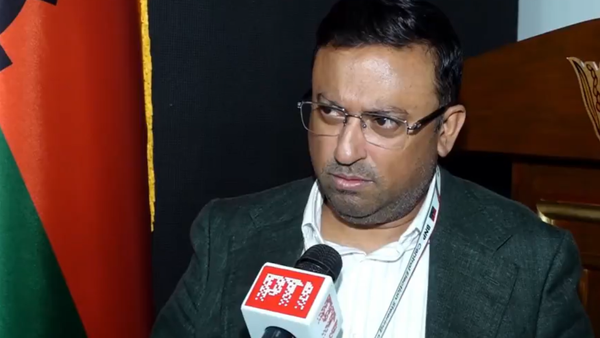
Sacha Sadan, director of corporate governance at LGIM, urged rival fund managers to vote at annual meetings and not show their displeasure at boardroom practices by abstaining. He said votes against the chair of the remuneration committee could be particularly effective.
Pay levels might also start to decline if companies move away from long-term incentive plans – awards of shares paid out over three or five years that are linked to performance targets – and handed out “restricted” shares instead. These shares are not tied to performance but must be held by directors for up to five years. LGIM is calling for these share awards to be 50% of the value of those contained in long-term incentive plans.
However, with share prices currently rising, directors being paid in shares could be enjoying higher pay.