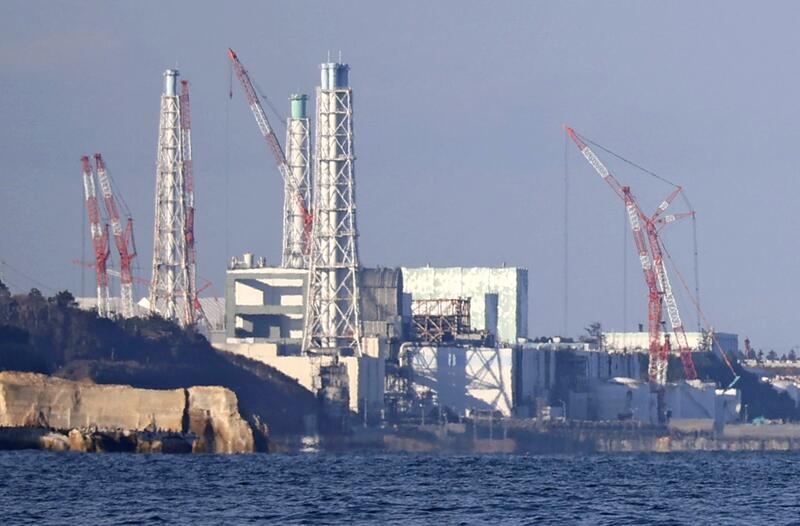
Radiation levels were found not to have fallen at 2.2% of sites inspected in a Board of Audit study of the Environment Ministry's decontamination work in areas for which evacuation directives had been issued due to the 2011 meltdowns at the Fukushima No. 1 nuclear power plant in Fukushima Prefecture, a report by the board showed Wednesday.
The inspection was conducted upon a request from the Diet. According to the Board of Audit, air dose rates were compared before and after the Environment Ministry carried out decontamination at about 560,000 selected locations in 11 municipalities affected by the accident at the Tokyo Electric Power Company Holdings, Inc. plant. The decontamination efforts being evaluated were ones that had been conducted by 2017.
The comparison found that the rates had not dropped at about 12,900 locations, or 2.2% of the total.
At about 50,000 locations, or 8.9% of the total, the air dose rates fell, only to rise again when measurements were conducted around six months to a year after decontamination. Thus, sustainable effects of the decontamination work could not be confirmed for those locations.
According to the ministry, concentrations could have increased locally due to rainfall and other factors.
In some cases, measurements were taken after a considerable period of time had passed since the accident at the plant.
At the 560,000 locations selected, dose measurements were carried out before and after decontamination, with a long average interval of 245 days. But at 22% of the locations, the interval was even longer at more than one year, with the longest being 1,248 days, or about three years and five months.
The ministry has now changed its method, to measure doses immediately after decontamination. The report called for measurements to be taken at regular intervals due to the possibility of natural changes.
Evacuation directives imposed after the disaster have been lifted in areas where the annual cumulative radiation dose has fallen to 20 millisieverts or less. Decontamination is planned to continue in areas categorized as difficult-to-return zones.
About 3.17 trillion yen had been spent on the decontamination project by fiscal 2019.
Read more from The Japan News at https://japannews.yomiuri.co.jp/