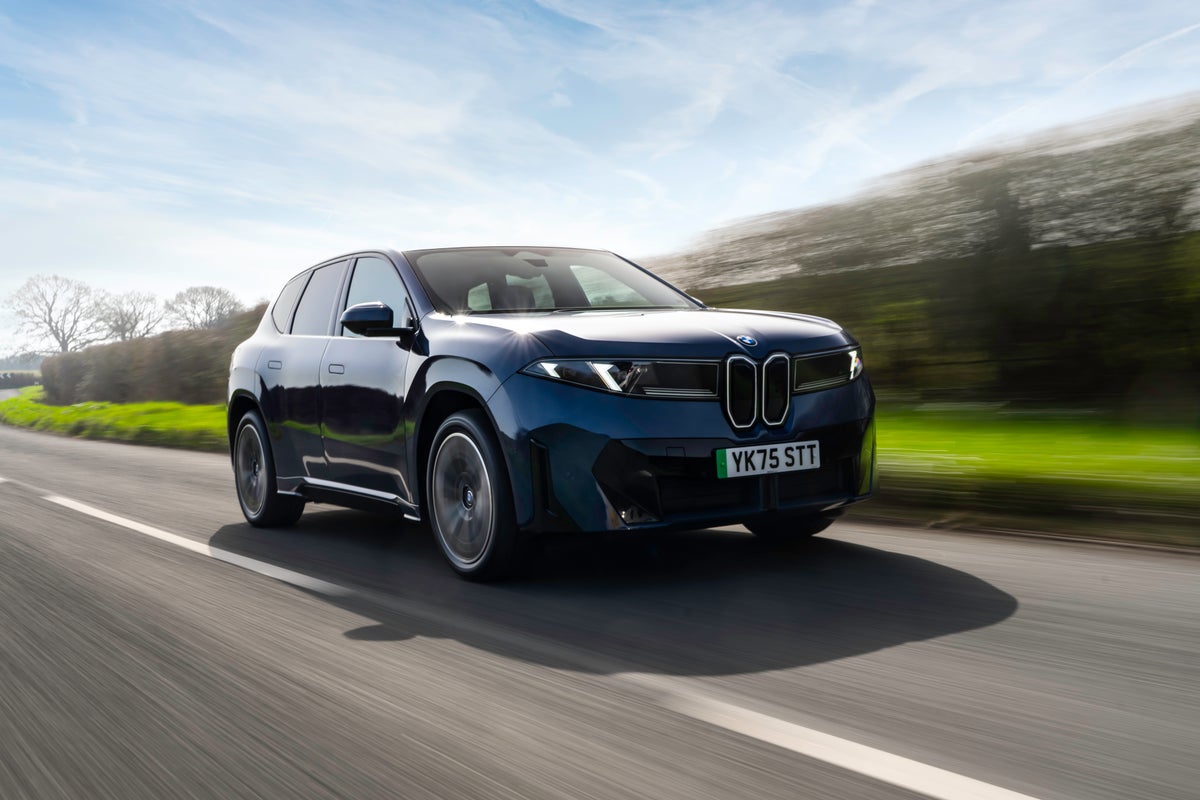
It’s not often that a car launches an entire new era for a brand, but that’s exactly what BMW says its iX3 represents. The all-electric SUV is the first production model built on BMW’s long-awaited Neue Klasse architecture – a completely new generation of electric technology that will underpin dozens of future BMWs over the next few years.
That’s quite a responsibility for one car, but the iX3 seems more than capable of carrying it. The new model introduces BMW’s sixth-generation eDrive technology, an 800-volt electrical system and a range figure that, at up to 500 miles, immediately places it among the longest-range electric cars on sale in the UK.
Neue Klasse – which translates roughly as “new class” – also has some heritage behind it. It’s 60 years since the original Neue Klasse BMWs helped reshape the company in the 1960s, and this latest version is intended to do the same for the electric era.
The iX3 is, therefore, far more than just another electric SUV. It introduces new design ideas, a new digital architecture with what BMW calls “superbrains”, a brand-new user interface and a new generation of motors and batteries.
But the important question is whether all that technology translates into a genuinely compelling electric car. After spending plenty of time behind the wheel, the answer looks very promising indeed.
How we tested
I’m living with a BMW iX3 for a couple of weeks and have already driven over 1,000 miles. Most recently I took it from London to Lincolnshire and back – with range to spare – testing the car with the family on board across every variety of road from motorway to dirt track. I also tested the range on a 400-mile round trip from Buckinghamshire to Liverpool to see if the range promises really stack up. I’ve tested all the tech including the audio system and self-driving kit, plus the practicality has had a thorough workout with the entire Fowler family on board.
BMW iX3: from £58,755, BMW.co.uk
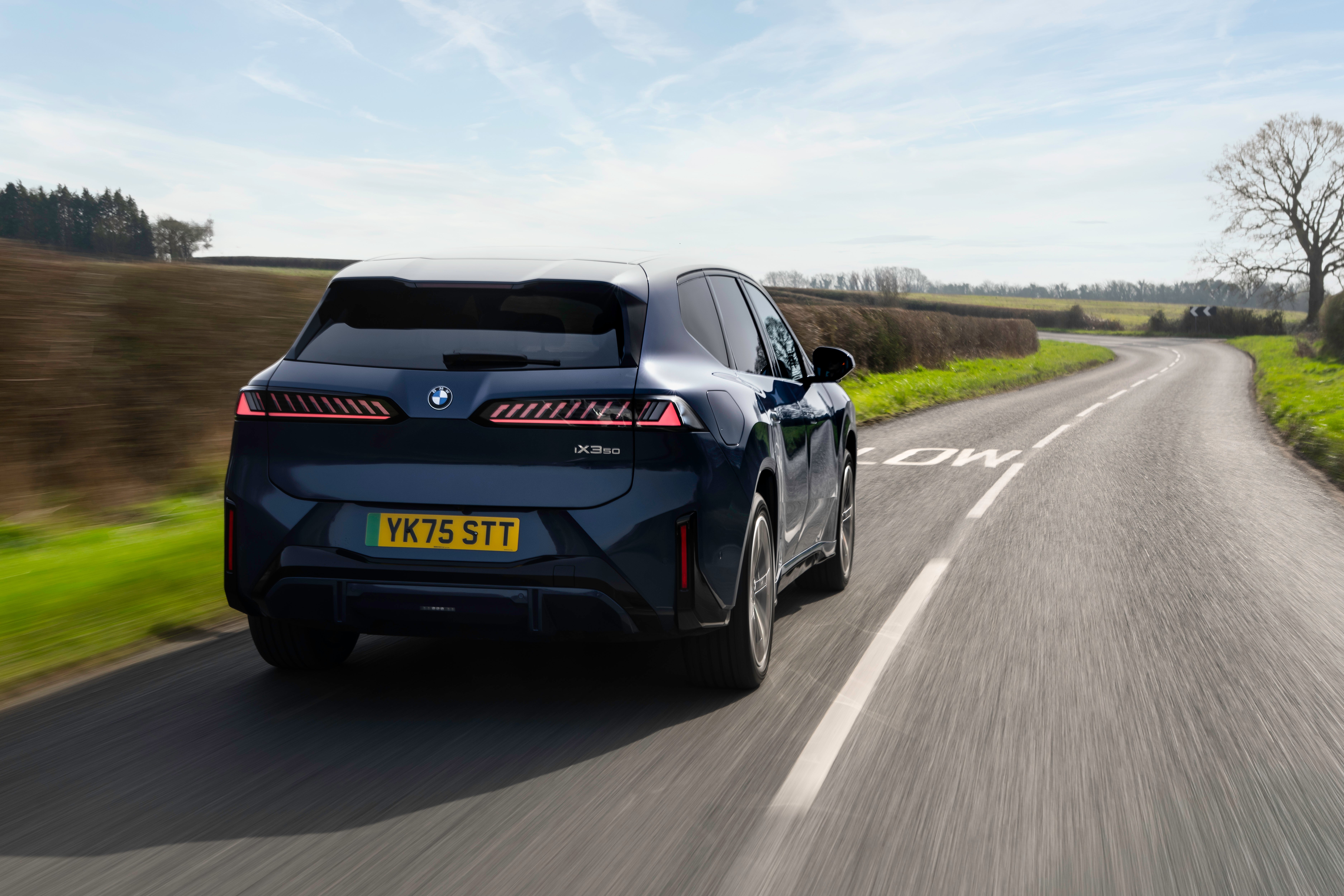
Independent rating: 9/10
- Pros: Exceptional range and charging performance; spacious and practical interior; impressive software and digital technology; strong performance and driving dynamics
- Cons: Ride quality can feel fidgety; range on motorway not as good; some cabin materials feel mid-spec; steering wheel controls can be fiddly
BMW iX3 specs
- Price from: £58,755
- Battery size: 108.7kWh usable
- Maximum claimed range: 500 miles
- Maximum charging rate: 400kW
- Power: 469bhp (0-62mph in 4.9 seconds)
Battery, range, charging, performance and drive
The headline figure that will grab most buyers’ attention is the range. BMW claims up to 500 miles under WLTP testing for the iX3 50 xDrive, which immediately makes it one of the longest-range electric cars available in the UK.
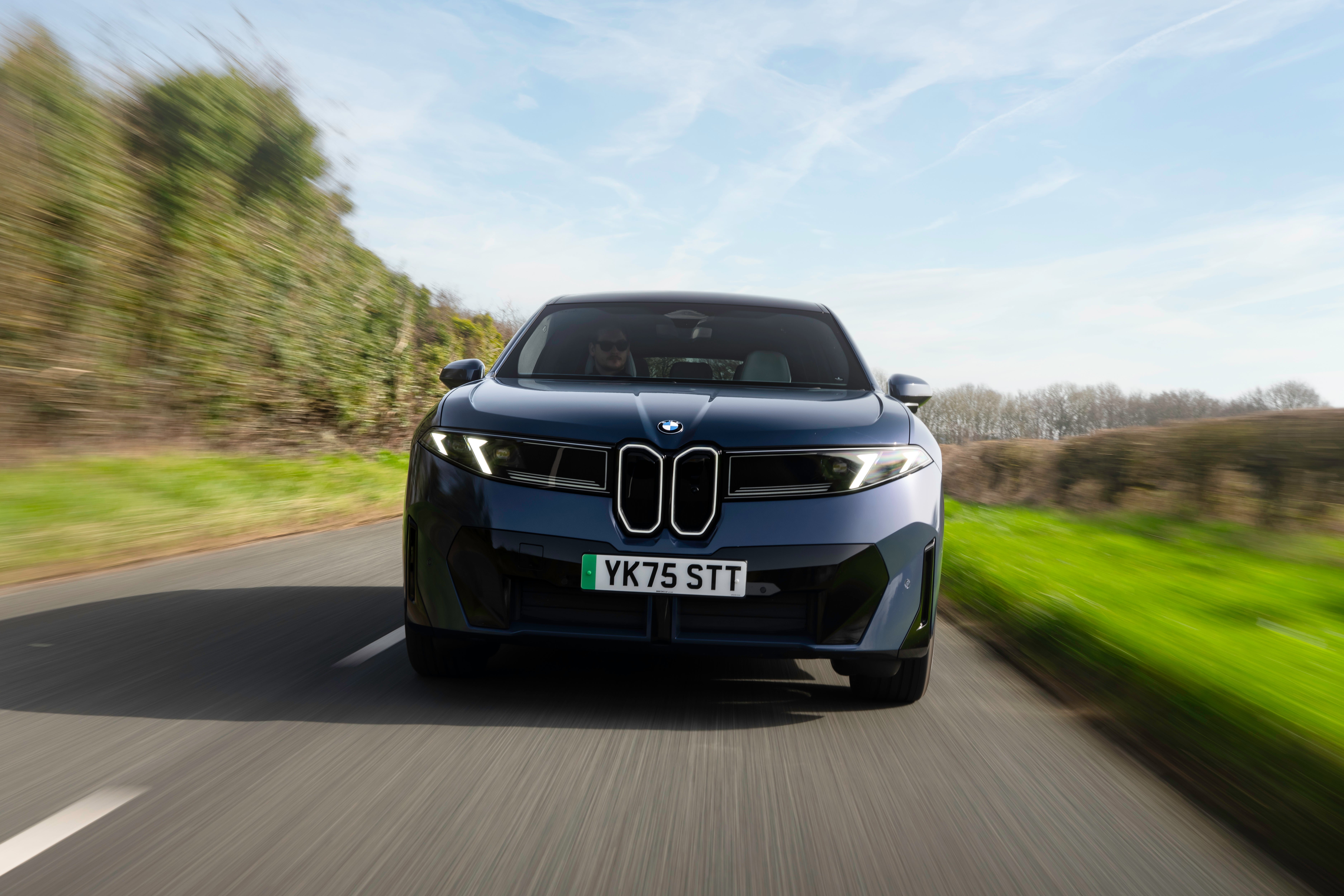
That impressive figure comes from BMW’s sixth-generation eDrive technology and a usable battery capacity of 108.7kWh. The system uses new cylindrical battery cells that increase energy density while also improving charging speeds and efficiency.
However, the official WLTP tests are rarely replicated in the real world. That 500 mile figure would be easily achievable in mostly stop/start traffic, but on my long 405-mile, mostly-motorway journey, I only managed around 385 miles, although that’s still a decent range for an EV. Things were better on my drive to and from Lincolnshire where there was more stopping and starting – a figure then in the high 400s was much more like it.
Performance is strong, though. Two electric motors provide all-wheel drive and a combined output of 469bhp and 645Nm of torque. The result is a 0-62mph time of 4.9 seconds and a top speed electronically limited to 130mph.
Charging performance is equally impressive. Thanks to the 800-volt architecture, the iX3 can charge at up to 400kW, which BMW says can add as much as 231 miles of range in just 10 minutes at a suitable rapid charger.
In my own experience, it got pretty close to that. The charger I used topped out at 350kW, but even then the speed was remarkable – by the time I’d popped to the loo and bought a bag of apples there was already more than 100 miles of extra range showing.
BMW’s own data suggests most EV owners charge their cars roughly two and a half times per week, and with the kind of range this car offers that feels entirely believable.
Efficiency is equally impressive. In mixed driving I saw figures suggesting that real-world range in the mid-400-mile region should be perfectly achievable, particularly in warmer weather.
On the road, the iX3 feels exactly like you’d hope a BMW would. Steering is precise with plenty of feedback, body control is excellent and there’s generous grip, giving the car a confident and composed feel through corners.
It’s quick, too, with strong and instant acceleration whenever you press the pedal. BMW has even added a subtle synthesised sound to accompany the power delivery, although otherwise the car is very quiet and refined.
What impressed me most, though, is how integrated everything feels. This is one of the most convincing software-defined vehicles I’ve driven from a traditional car maker, with the interaction between software and hardware feeling almost Tesla-like in the way the throttle response and braking work together.
There are different levels of regenerative braking to select – I’d usually opt for the highest level for full one-pedal driving. Or you can select ‘adaptive’ which changes the level of regenerative braking depending on traffic conditions ahead. I’m still not entirely convinced by the concept, but began slightly warming to it. One feature I do really like is the very smooth stops the system produces. It’s one of the most natural braking experiences I’ve come across in an EV.
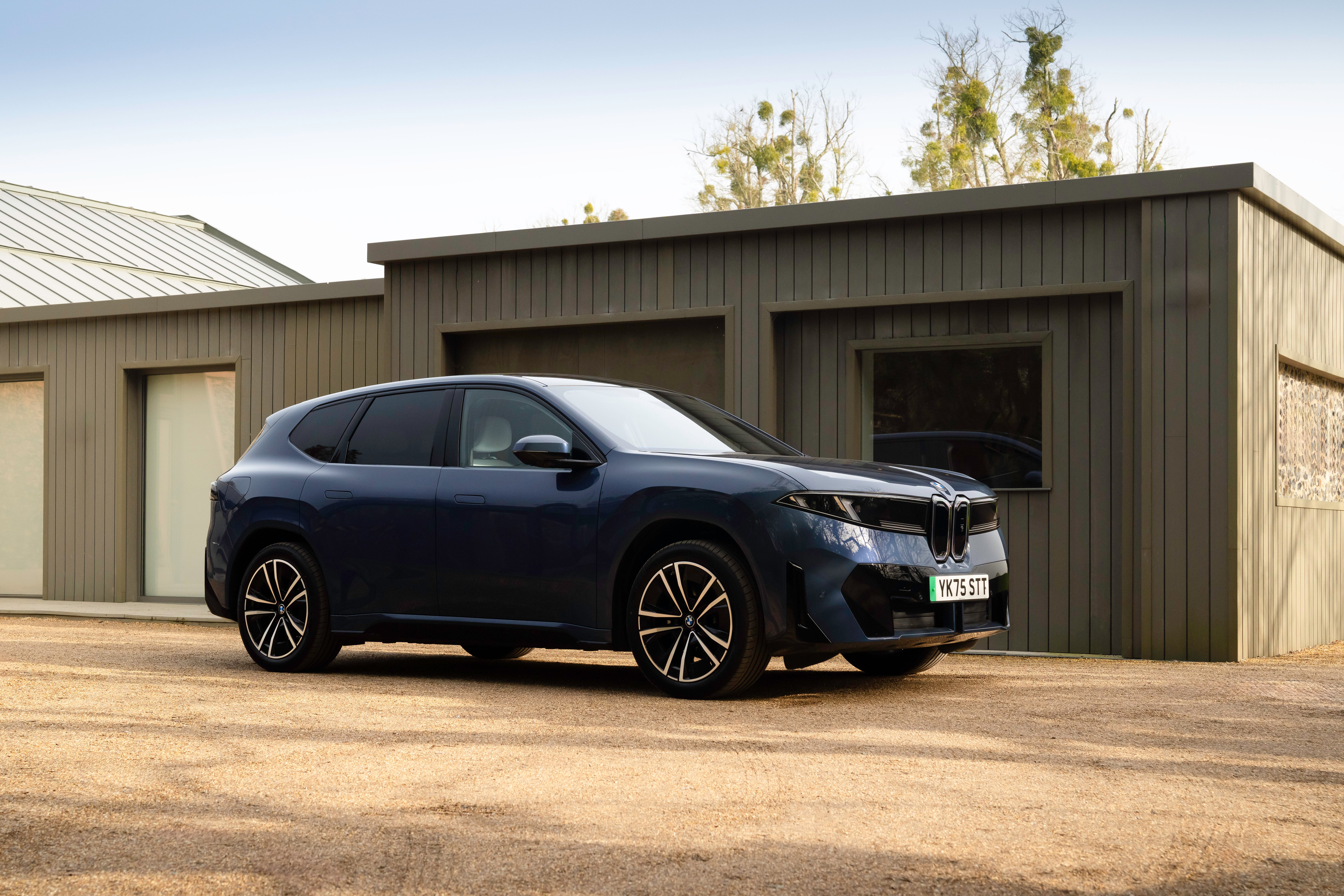
If there’s a downside, it’s the ride quality. I first drove an M Sport Pro model on 22-inch wheels which felt really fidgety over broken roads at times. Then I swapped into an entry-level car on 20-inch wheels and it didn’t really feel that much better. It’s not enough to spoil the experience – and none of my passengers complained – but I expected it to be a little bit softer.
Interior, practicality and boot space
Inside, the iX3 introduces BMW’s next-generation interior design philosophy. It’s cleaner and more minimalist than previous BMW cabins, but still very much driver focused.
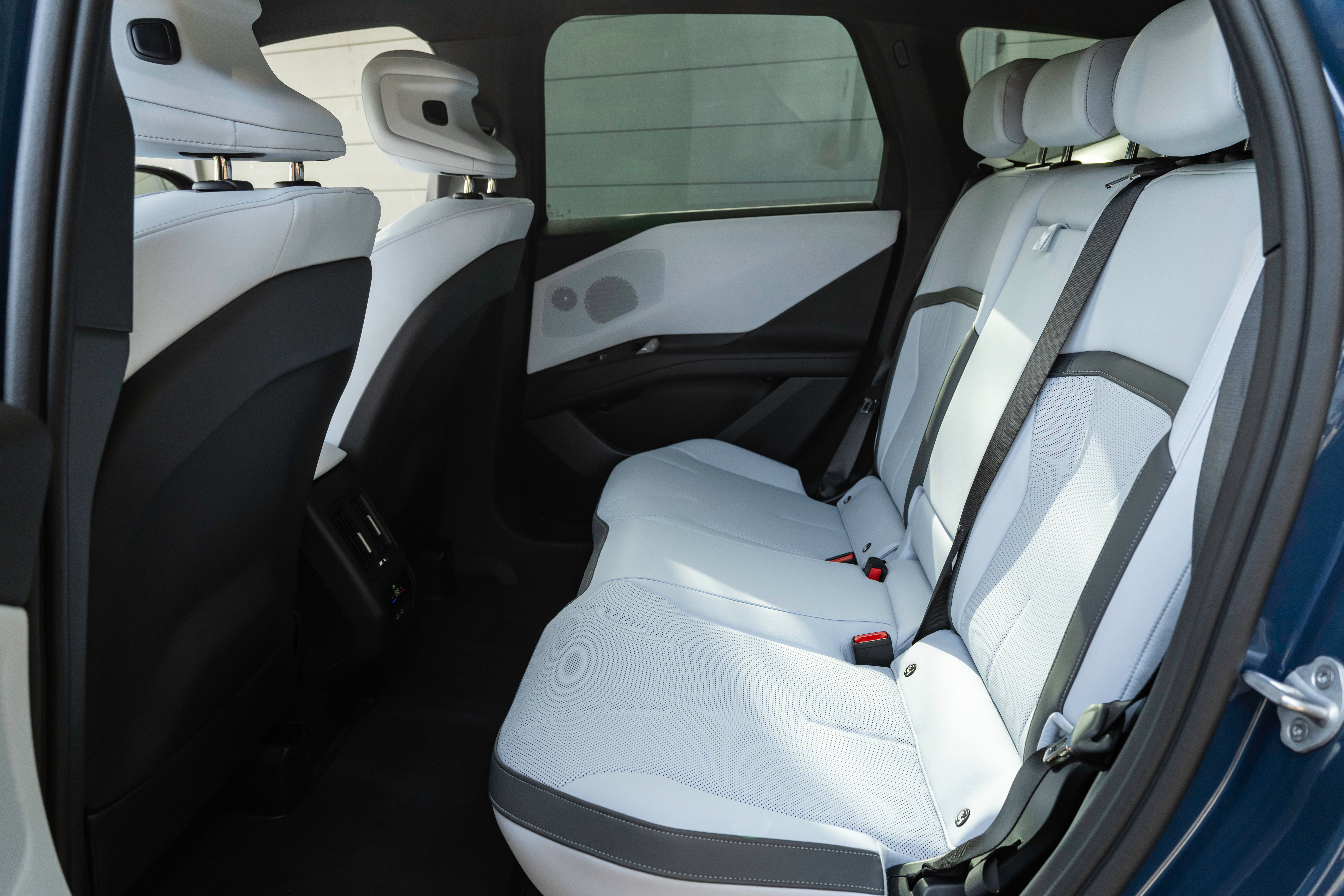
The standout feature is the new Panoramic iDrive cockpit and the dashboard layout that flows across the dashboard and into the doors. It creates a sense of space and makes the cabin feel modern without losing the traditional BMW focus on the driver.
Passenger space is excellent. The all-electric platform allows for a generous cabin, with plenty of room in both rows and especially good rear legroom compared with the previous model.
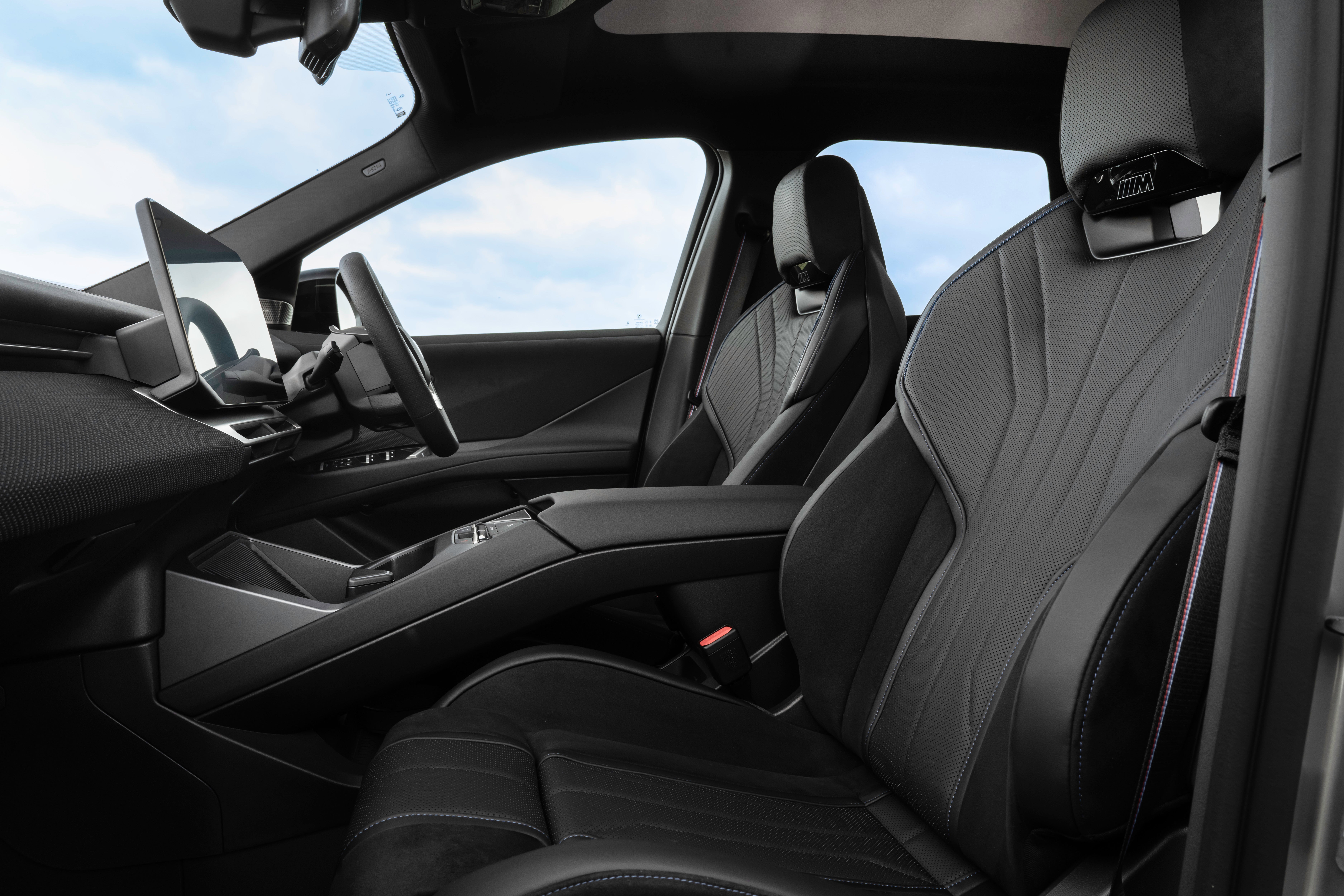
Visibility is good all round and the seating position is comfortable, making the car easy to live with day to day. The seats themselves are extremely comfortable, too.
Boot space is impressive for a mid-size electric SUV. The luggage compartment offers 520 litres with the rear seats in place and expands to 1,750 litres when the 40:20:40 rear seats are folded flat. There’s also a 58-litre storage compartment under the bonnet, which is ideal for charging cables.
Inside the cabin there are plenty of storage spaces, including a redesigned centre console with cupholders, wireless phone charging for two devices and USB-C ports.
Not everything is perfect, though. A few details reveal some cost-saving compared with BMW’s more expensive models. The door bins, for example, are unlined plastic and anything placed inside them can end up rattling around.
The pop-out door handles are also unusual. Instead of pulling a handle you press an electronic switch, which takes a little getting used to. I still found myself instinctively trying to pull the handle every time.
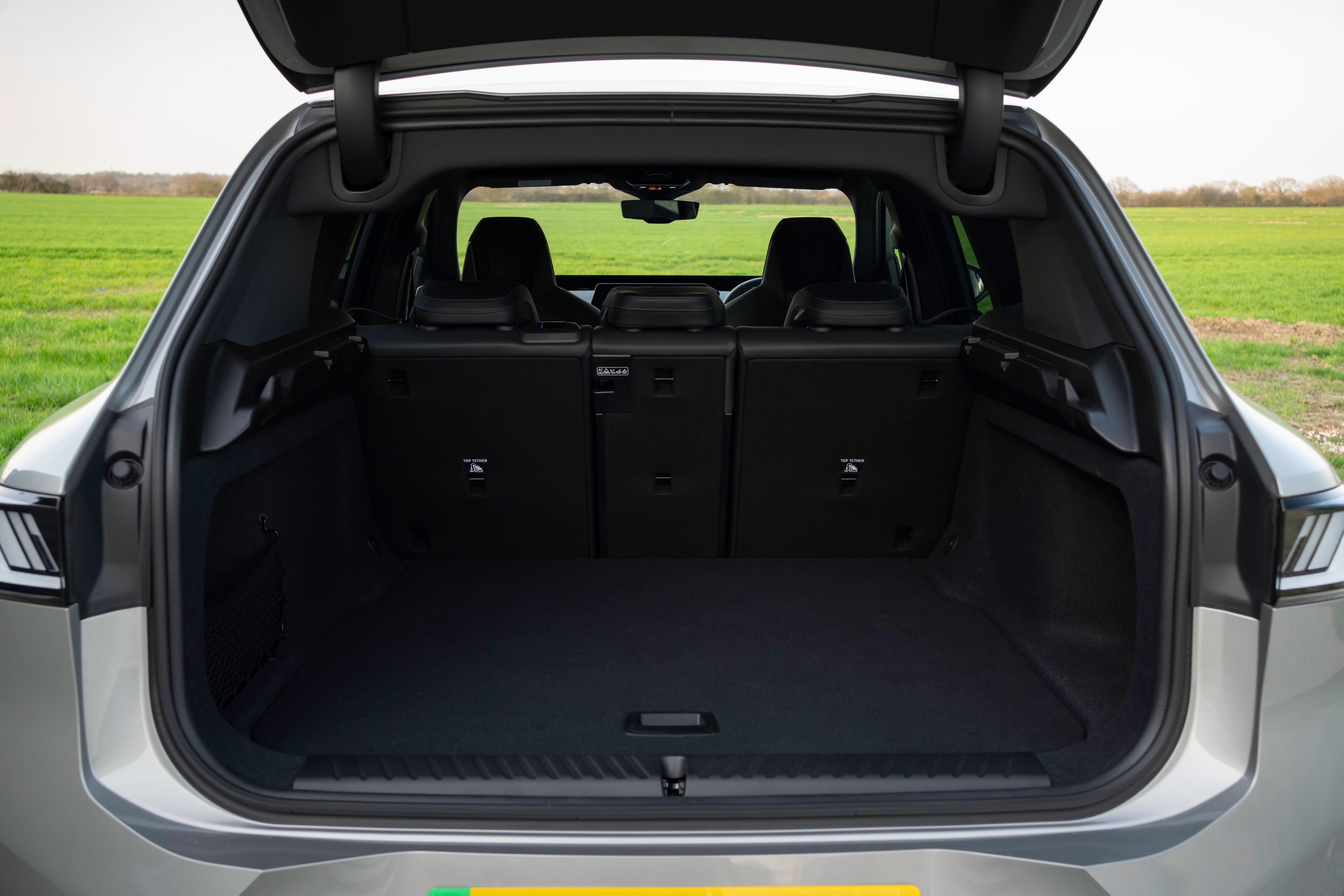
Overall, though, the cabin is spacious, comfortable and practical, with a modern design that feels perfectly suited to BMW’s new electric era.
Technology, stereo and infotainment
Technology is one of the areas where the iX3 really shows what the Neue Klasse platform is capable of.
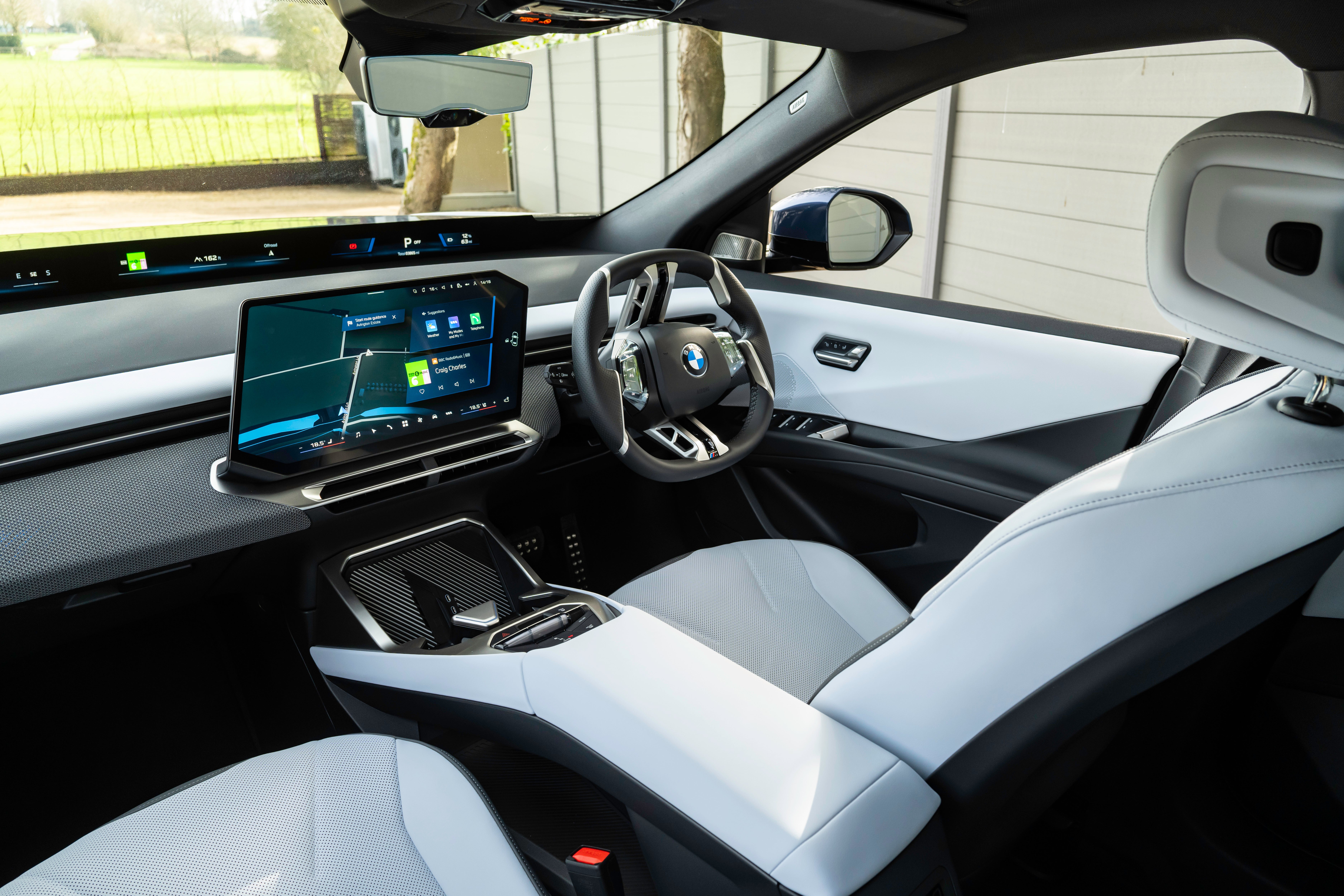
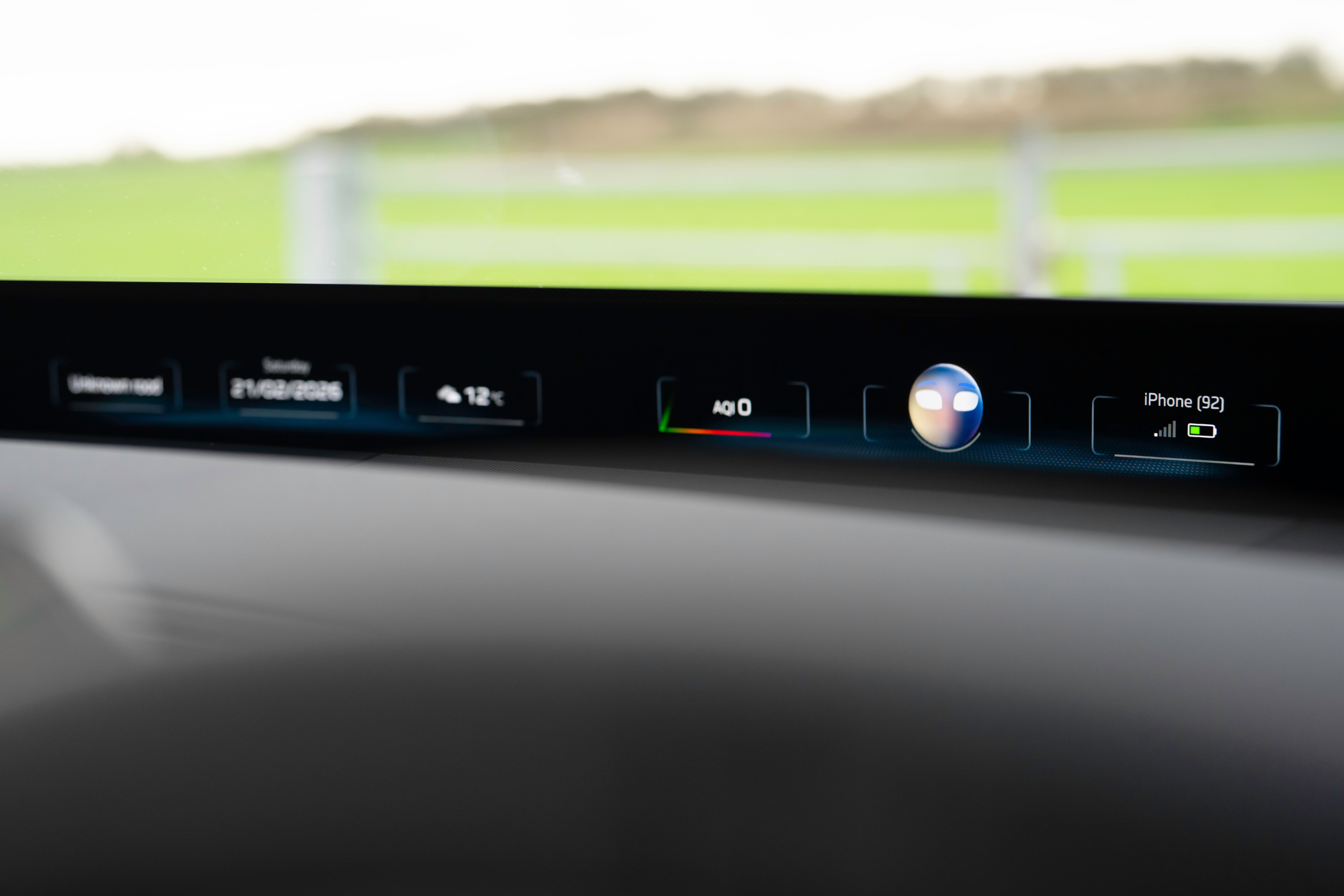
The headline feature is BMW’s new Panoramic iDrive system, which completely changes the way information is displayed in the car. Instead of a conventional instrument cluster, key information is projected across the full width of the windscreen using the BMW Panoramic Vision display.
Alongside that sits a central touchscreen and an optional 3D head-up display that projects navigation and driving information into the driver’s field of view.
In practice, Panoramic iDrive is a revelation. Even when driving an entry-level car without the optional head-up display, I never felt I needed anything more.
One of the best things about the system is how customisable it is. You can personalise what information appears across the display so it suits your preferences.
Underpinning everything is the BMW Operating System X, which enables a wide range of connectivity features, downloadable apps and over-the-air software updates. The car’s digital architecture also includes four high-performance computers – the “superbrains” – which control driving dynamics, automated driving, infotainment and comfort systems.
That computing power even allows BMW to reduce the wiring harness by around 600 metres, which helps improve efficiency and reduce weight.
Voice control has also been upgraded through the BMW Intelligent Personal Assistant (who you can also have blinking at you in the Panoramic display), while entertainment options include music streaming apps, video streaming services and in-car gaming.
The stereo system is impressive even in standard form, with good clarity and punch, although the optional Harman Kardon system takes things up another level.
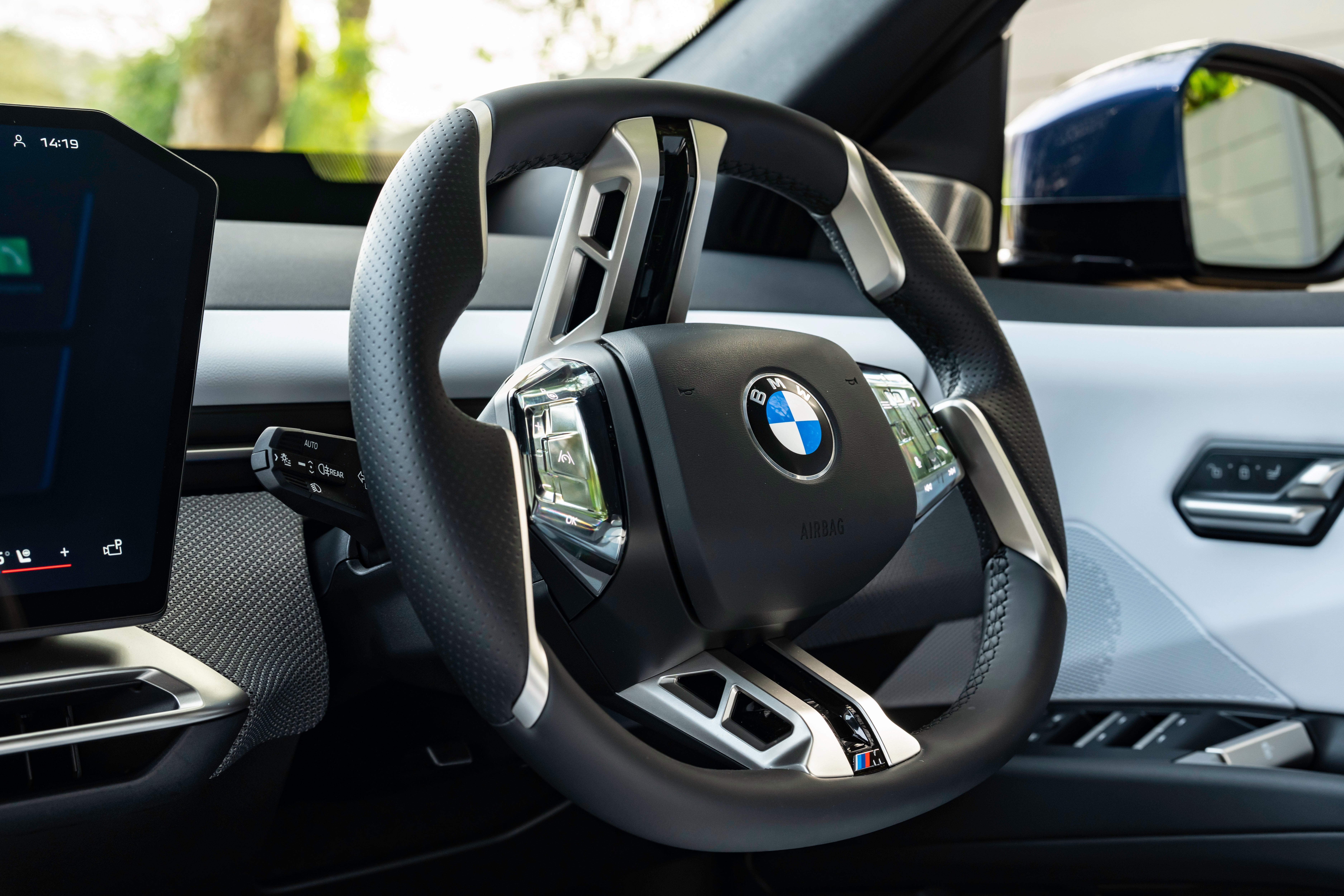
There are a couple of usability quirks, though. The haptic controls on the steering wheel aren’t as intuitive as the old iDrive rotary controller used to be, and I occasionally had to glance down to make sure I was pressing the right button. More than once I nearly dialled someone while trying to skip a track in my music playlist.
Still, once you get used to the layout the technology is genuinely impressive and among the most advanced systems currently available in any electric car.
Prices and running costs
The BMW iX3 range starts from £58,755 in the UK for the entry-level model, rising to £61,255 for the iX3 M Sport and £62,755 for the range-topping iX3 M Sport Pro.
All three versions are well equipped as standard. Even the entry-level iX3 comes with 20-inch alloy wheels, heated electrically adjustable front seats, Driving Assistant Plus with adaptive cruise control and wireless phone charging.
The iX3 M Sport adds sportier styling and interior details including M exterior design features, 20-inch M alloy wheels and a sports steering wheel.
At the top of the range, the iX3 M Sport Pro brings additional upgrades including M Sport seats, adaptive LED headlights, BMW Iconic Glow lighting which lights up the smaller, more vertical double-kidney grille, and further design enhancements.
Running costs should be competitive thanks to the car’s strong efficiency and long range. The ability to charge extremely quickly also reduces time spent at rapid chargers during longer journeys. The iX3 also introduces bidirectional charging capability, meaning it can supply electricity back to a home or power external devices when connected to compatible hardware.
Sustainability has also been a key focus in the car’s development. Around one third of the vehicle is made using recycled materials, while BMW says the overall product carbon footprint is more than 30 per cent lower than the previous generation model. Production takes place at BMW’s new Debrecen plant in Hungary, which operates without fossil fuels during normal production.
The verdict: BMW iX3
The BMW iX3 marks the beginning of a completely new chapter for the brand. As the first Neue Klasse model it introduces a huge amount of new technology, from the 800-volt electrical architecture to the impressive Panoramic iDrive system.
The long range and extremely rapid charging make it a convincing electric car for long-distance driving, while the driving experience still feels reassuringly BMW-like with strong performance and excellent steering feel.
There are a few small compromises – particularly around ride comfort and some interior details – but overall the iX3 sets a very strong benchmark for premium electric SUVs and shows just how serious BMW is about the electric future.
BMW iX3 rivals
- Tesla Model Y
- Volvo EX60
- Audi Q6 e-Tron
FAQs
How long does it take to charge?
BMW quotes a maximum range of up to 500 miles for the iX3 50 xDrive, making it one of the longest-range electric cars currently available in the UK. With charging at up to 400kW, it can add 231 miles in as little as 10 minutes.
How much does it cost – is it worth it?
With strong performance, extremely long range and advanced technology, the iX3 offers a competitive package within the premium electric SUV market, starting from £58,755 in the UK.
Does BMW replace batteries for free?
BMW provides a standard three-year unlimited mileage warranty for the car itself. The high-voltage battery is covered separately for eight years or 100,000 miles, guaranteeing a minimum level of battery capacity over that period.
Why trust us
Our team of motoring experts have decades of experience driving, reviewing and reporting on the latest EV cars, and our verdicts are reached with every kind of driver in mind. We thoroughly test drive every car we recommend, so you can be sure our verdicts are honest, unbiased and authentic.
With more than 30 years of experience, Steve Fowler is one of the UK’s best-known automative journalists. Steve has interviewed key industry figures, from Tesla’s Elon Musk to Ford’s Jim Farley, and is a judge for both Germany’s and India’s Car of the Year Awards, as well as being a director of World Car of the Year. When it comes to electric vehicles, Steve reviews all the latest models for The Independent as they launch, from Abarth to Zeekr, and he uses his expert knowledge of car buyers' needs to provide a comprehensive verdict.
Best electric cars 2026: Top 13 EVs to buy
Best used electric cars 2026: Top 10 second-hand EVs recommended by our EV Editor
BYD Seal 2026 update – it’s all change, except for the price
Grok AI gets a ‘sexy’ personality for UK Tesla owners but it can argue with you, too
Used electric cars are safer to buy than second-hand petrol or diesel models
New all-electric Polestar 5, 4, 2 and 7 models confirmed
Electric vs petrol or diesel cars: Our EV editor compares hidden costs and which is best
Living with the Hyundai Ioniq 9: Fast charging makes long-distance driving easy