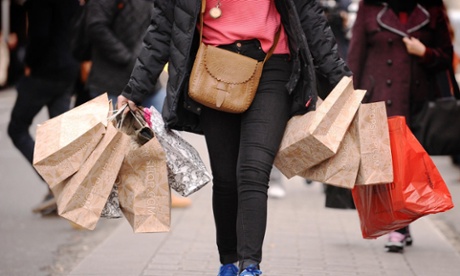
This week I will be speaking at a debate called: The high street is dead! Long live the high street. Most people would instinctively understand the relevance of this discussion. Over the past few decades, we have all borne witness as our town centres have been changed forever by a confluence of factors: socio-economic, political, cultural and technological.
What the consumer wants has changed. Today, the high street is as much service as retail orientated; coffee shops have boomed, discounters have thrived, but so have luxury boutiques and “challenger” banks, betting shops and charity shops. Some of that is due to economics, some to policy, some to the disruptive influence of e-commerce, and some to changing behaviours, including those driven and shaped by the internet. These changes have been so recent, so rapid and so profound that everyone, from shopkeepers to policymakers, is still coming to terms with it.
However, some things remain constant. For instance, I would challenge the premise of the debate. People will always want to go out and shop together, even if how they choose to express that is different, whether they go to an artisan market or a department store. It’s a ritual, it’s a fundamental anthropological need and it will never disappear. Many people think that e-commerce has somehow stolen the market from bricks and mortar sellers, but those people are often surprised to learn that online only accounts for around 10% of retail sales. Technology can help to further customise our shopping experiences and drive personalisation, but it will never replace the need to get out of the house and go shopping and have that personal experience.
So the high street will always be with us. But it will be different. It is already adapting to online and becoming fused with it. We are entering an omni-channel age, where retailers are using a combination of an online and offline presence to build an even more powerful proposition for the customer. What’s more, the convergence of online and offline means that retailers can generate a bespoke experience for customers in-store: using their shopping preferences to anticipate what they might want and need, and using technology to ensure customers get access to the inventory they want quicker. Online is driving a convenience revolution and the changing nature of the high street is the ultimate expression of that.
I think also that the C2C or “customer-to-customer” model that eBay brought to life has also changed shoppers’ expectations. People can literally shop the world, however they want it, when they want it. The lessons of the marketplace have had an effect. To accommodate the need for greater and more diverse inventory, we are on the cusp of a new era where the centre of gravity in-store will move from front to back as access to inventory becomes a higher priority than the shop floor. More and more customers will browse “shoppable storefronts” and choose what they want from a screen, using virtual reality to understand how their items will look on their bodies or in their homes.
We are also beginning to see the emergence of beacon tech, where customers are alerted to offers through their smartphones – the ubiquitous “mission control” of our modern lives – when they are in proximity to their favourite stores. One in three people now make a monthly purchase on their phones in the UK, far higher than anywhere else in Europe, but they are just as likely to look up an item on their phone and then buy it in a shop as they are to see it in a shop and buy it online. Far from being the enemy of the high street, there is much evidence to suggest all this technology is helping to keep our town centres relevant.
Let’s take the example of click-and-collect, where you can pick up an item you order online at a location close to you, at a time when you please. By the end of 2014, around 65,000 eBay sellers will offer items for collection at Argos stores around the UK, rising to around 80,000 in 2015. More than two-thirds of UK shoppers have now used click-and-collect at least once, compared to only 51% two years ago. Of course, when people come back to the high street, they often buy more goods and services.
Online needs the high street and the high street needs online. E-commerce is not a blessing or curse, it’s an opportunity. Sellers will be successful if they give buyers what they need and love, and buyers will always want to enjoy the best of both worlds. That necessitates an omni-channel future, the ultimate expression of co-dependence.
It’s not in-store, it’s not on your phone, it’s not physical, it’s not virtual … it’s just shopping.
More like this
• Beacon technology offers plenty of options for retailers
• Six ways technology is changing the way we shop
• Brought to you by eBay: The omni-channel opportunity for retailers
Paul Todd is the leader of eBay marketplaces in Europe
This advertisement feature is provided by eBay, sponsors of the Guardian Media Network’s Technology in retail hub