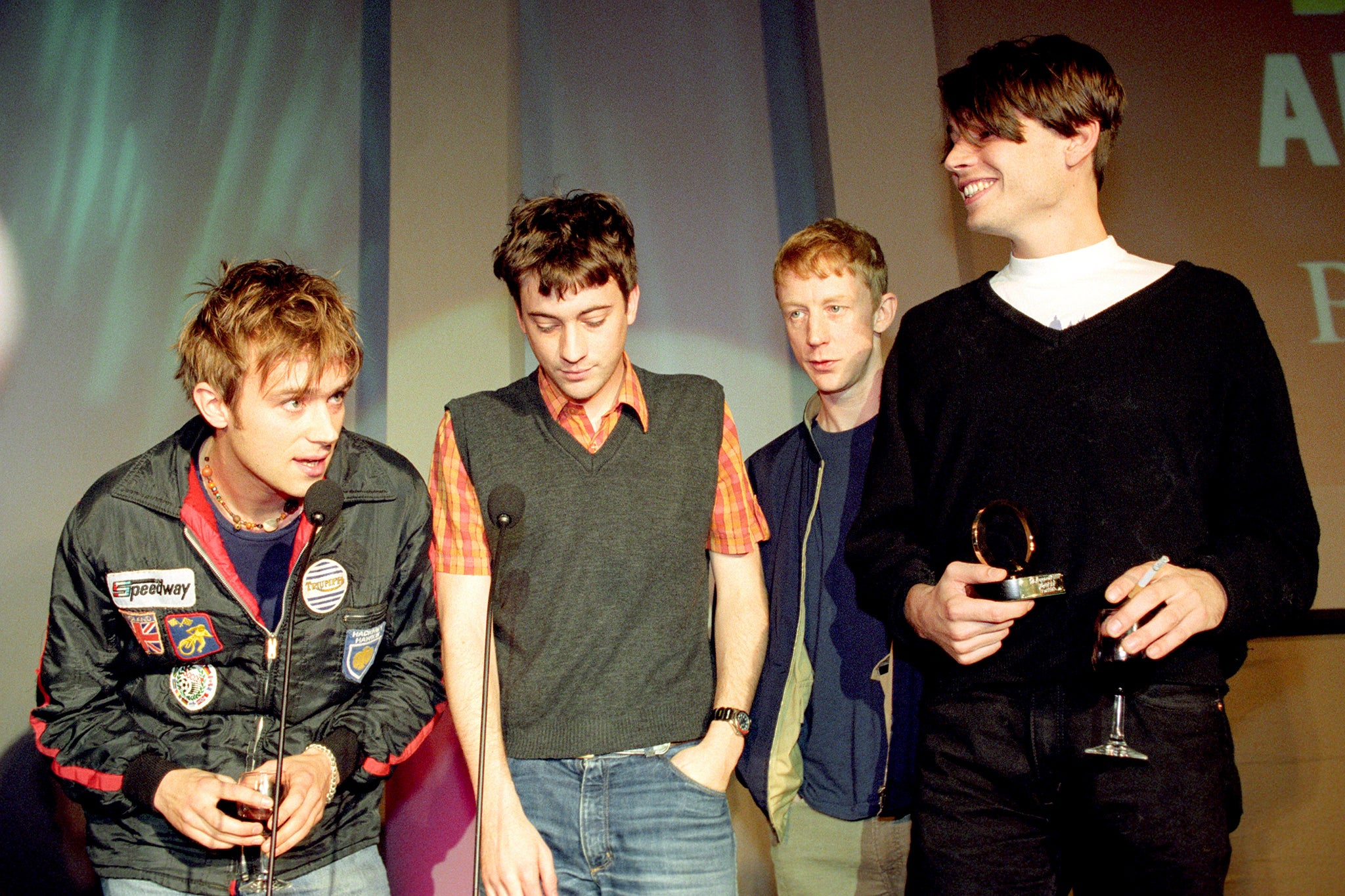
Blur drummer David Rowntree has lost his bid to continue a legal battle over the distribution of £200 million in music royalties, after the Court of Appeal dismissed his challenge.
The ruling brings an end to Mr Rowntree’s attempt to bring a legal claim on behalf of 160,000 songwriters against the Performing Right Society (PRS), the organisation responsible for collecting and distributing royalties.
Mr Rowntree had alleged that the PRS’s method of distributing "black box" royalties – funds that cannot be matched to specific musical works or individuals due to data issues – was "systematically and disproportionately biased" against songwriters.
He contended that these unidentified royalties were paid to producers but not to songwriters, potentially depriving them of up to £200 million in unpaid earnings.
The legal battle began in August when the Competition Appeal Tribunal rejected Mr Rowntree’s initial challenge, concluding it lacked a "reasonable prospect of success". The drummer subsequently appealed this decision, with his legal team arguing earlier this month that the tribunal had "erred in law" and should be compelled to reconsider.
However, the PRS robustly defended its position, with barristers asserting that the challenge was "unsustainable", "incoherent and discloses no arguable claim". On Monday, Court of Appeal judges sided with the PRS, dismissing Mr Rowntree’s appeal.
The court heard that "black box" royalties arise when the PRS collects funds but cannot identify the musical work or individual recipient due to "data problems", such as missing payment or contact details. These royalties are then distributed "pro rata to its distribution of royalties which can be matched".
In a 21-page ruling, Lord Justice Miles explained that a "true" distribution of these royalties is inherently unknowable "because the root of the black box royalties problem is the absence of accurate information; and, conversely, if accurate information were available, the relevant royalties would be matched".
He added that, consequently, no member could claim entitlement to a specific amount of these funds.
Lord Justice Miles further elaborated that the fairness of any distribution rule for "black box" royalties could only be assessed by comparing it to an alternative, stating: "It makes no sense to speak of any given rule as ‘fair’ or not in an abstract sense."
He noted that a different distribution method could "demonstrably favour" superstar artists like Ed Sheeran over those whose songs are rarely played.
The judge, sitting with Lord Justice Zacaroli and Lord Justice Nugee, concluded that Mr Rowntree "has not offered even a broad description" of a superior distribution method.
He stated: "In my judgment, the reason why no counterfactual has been advanced, even in general terms, is manifest: it is that the very data failure problem which has given rise to the black box royalties means that there is no plausible basis for suggesting a more accurate, let alone fairer, distribution."