Afternoon summary
-
Andy Burnham, the favourite in the Labour leadership contest, has said that the debacle over the party’s stance on the welfare bill has shown it is “crying out for leadership”. He said that he was opposed to the bill, but that he accepted Harriet Harman’s decision that the party should abstain as a compromise, for the sake of party unity. (See 1.38pm.) He told the World at One.
It was a mess, wasn’t it? The run-up to this vote was a bit of a mess. It is quite clear that this is a party now that is crying out for leadership and that is what I have shown in recent days.
I persuaded Labour to change its position. It did put down this reasoned amendment. But let me be clear, this was still a compromise position and it wasn’t a strong enough position for me. I as leader would have opposed this Bill outright last night and would do so if I was elected leader.
I faced a choice. Having made the party move its position, did I then defy the compromise? I wasn’t prepared to split the party and make the job of opposition even harder.
- The Treasury has said that, as part of its spending review, the system used to allocate funding to schools will be reviewed. Many Tory MPs believe the current system is unfair on schools in rural areas. Under the review, civil servants will also lose progression pay. (See 1.56pm.)
That’s all from me for today.
Thanks for the comments, especially to all of those who responded to my “reader survey” questions.
Q: How well is the pensions guidance working for people who want to take advantage of the new pension rules?
Very well, says Osborne. The feedback from users has been very positive. More than 90% are satisfied.
And that’s it. I will post a summary soon, although I’m afraid that was all a bit dull. This is from the Northern Echo’s Rob Merrick.
Labour MPs failing to lay a glove on George Osborne as Treasury Committee examines Budget...so different to those days of pasties & caravans
— Rob Merrick (@Rob_Merrick) July 21, 2015
Andrew Tyrie goes next, and asks Osborne to clarify the point about the distributional analysis.
Osborne says he saw charts based on the old system prepared for this budget. He will show them to the committee. But he won’t carry on doing them like this in the future.
Q: If students are forced to take on too much debt, won’t they be forced into City jobs, instead of taking up jobs in a sector like manufacturing.
Osborne says he does not accept that.
For students, going to university is still the right thing to do. The system is progressive.
Q: How is it progressive?
Because low-paid workers in your constituency, who do not go to university, are not being asked to pay for people who will benefit from a university education.
Getting rid of tuition fees would be regressive.
Q: Are you a climate change denier?
Osborne says he would not necessarily accept that, but he thinks climate change is happening, that it is partly man-made, and that it is bad for the world.
Q: Are you looking to change any of the international climate change targets?
No.
Q: But you have taken a series of measures that minimise carbon reduction. Are you sure they will not affect carbon reduction?
Osborne says for various reasons those measures do not represent value for money.
Labour’s Helen Goodman goes next.
Q: When I was a junior Treasury official in 1981, I was asked to work on a distributional impact analysis. You did not publish charts on the impact of measures decile by decile. Did officials produce those charts?
Osborne says he decided that, going forward, it was better to produce them on the new basis.
Osborne says he produced a chart. It would not suit Goodman’s political purposes. But he would be happy to send it to her.
Tyrie intervenes.
Q: So you did get charts decile by decile?
Osborne says he was shown these figures. He is happy to give the charts to the committee. But it will be a one-off. It benchmarks against Labour forecasts from 2010. The Treasury will not produce these figures in the future.
Q: But you told me that it would cost too much too produce these figures?
Osborne says he meant producing the figures on that basis in the year’s ahead would be too expensive.
Andrew Tyrie goes next.
Q: People think the IMF got too close to the EU negotiators dealing with Greece. Now it has stepped back, and concluded that the Greek debt will not be repaid. Do you agree?
Osborne says it was good to have the IMF involved in those talks. It provided independent rigour. It would have been odd if the IMF had been excluded. And, recently, it is the IMF that has been trying to “tell it as it is”.
Q: I agree. But that is new. Shouldn’t it have been more robust from earlier on. What are the government’s view.
Osborne said David Cameron expressed this at PMQs.
Q: Saying what?
Osborne says Cameron made it clear Greece needs debt relief.
Chris Philp, a Conservative, goes next.
Q: Buy-to-let landlords make up 18% of house purchases. Do you have concerns they are crowding other buyers out?
Osborne says there are buy-to-let landlords who save their money, and buy a buy-to-let as an investment. The government wants to help people like them.
But some tax rules were unfair, in that they favoured buy-to-let. He has changed the tax relief rules to address that.
He says the Bank of England’s financial policy committee also has powers to look at the buy-to-let market.
Q: Would you give the Bank direct oversight in this area? The Bank of England governor is concerned that he might recommend changes, but that, because they would not be implemented straight away, investors could get round them.
Osborne says he is willing to give the Bank “directional powers”. An announcement is due soon, he says.
George Kerevan, the SNP MP goes next.
Q: Did you consider altering the new bank tax for mutuals?
Osborne says he did not consider that.
Q: Did you change your plans for capital spending between the March budget and the July one?
Osborne says capital budgets have gone down this year. But more capital spending will be allocated in the spending review.
Rees-Mogg asks a question to Sir Nick Macpherson, the Treasury permanent secretary, who is giving evidence with Osborne.
Q: What do you think of hypothecation? It is now happening for the road tax. But I thought the Treasury hated hypothecation.
Macpherson jokes that the Treasury’s views are irrelevant. He says taxes have been hypothecated in the past, but he says they should not be used too much, because if the revenue can only be used for one purpose, that limits flexibility.
Osborne says he wants to look at further “radical devolution” in England.
Q: Aren’t too many areas of spending now ring-fenced?
Osborne says it is right for a government to take decisions about its choices.
Q: There are two different ring-fences. Some budgets are simply protected. And others are linked to GDP (aid and defence). But the money is spent before people know what GDP will be.
Osborne says the aid and defence targets are international ones. You should not be too “purist” about how they are created, he says.
Jacob Rees-Mogg, a Conservative, goes next.
Q: Won’t employers have to pay more under the national living wage, not just from the wage, but from the national insurance they will pay on the new rate?
Osborne says he has taken other steps to help firms.
Q: Why did you not just describe the “national living wage” as an increase in the minimum wage? It is not a living wage.
Osborne says it is a living wage. It was based on the Resolution Foundation report.
Q: But this distracts from the real living wage. And this will discourage people from paying the real living wage. You can call this a living wage. But it is not one.
Osborne quotes from what they Living Wage Foundation said about his announcement. They called it a massive victory.
Q: In-work poverty will fall as a result of the cuts to tax credits in the budget?
Osborne says it fell in the last parliament, even though Labour MPs like Streeting said it would not.
Osborne says the RBS shares are still worse considerably less than what the government paid for them. But selling them now is the right thing to do, because of its impact on the economy and on the banking sector.
Wes Streeting, the Labour MP, goes next.
Q: What are we going to do about the home secretary? (This gets a laugh.) Her approach to student visas could damage universities.
Osborne says May is doing an excellent job. She supports foreign students coming to the UK. But she does not want student visas abused.
Q: Let’s turn to Boris Johnson. When will you agree to the new runway at Heathrow?
Osborne says the government is looking at the Davies review. The government has to look at this carefully. If it acts too quickly, it could increase the chance of the decision being challenged by judicial review. The process is important.
Q: Will the decision be made early in the autumn?
Osborne says the decision will be taken. He refuses to say when.
Andrew Tyrie goes next.
Q: Where you concerned by reports in the Sunday Times that you are going to relax the ringfence rule for banks (separating investment banking from retail banking).
Osborne says he did not see the reports. He is not aware of any plans along those lines.
Stephen Hammond, a Conservative, goes next.
Q: Professor Philip Booth told the committee that your fiscal rule was a very bad one.
Osborne says Booth also told the committee he did not approve of any fiscal rules.
Q: What about having a fiscal rule relating to the economic cycle?
Osborne says the problem with that approach is that you have to measure the economic cycle, and that is hard. In the last parliament, meeting the debt target was difficult. That was because it was a hard target. (The deficit target was a rolling one, which made it easier for the Treasury to hit it.) He says he was held to account over that. That made it an effective target.
Q: Should targets separate capital spending from current spending?
Osborne says, if you do tha, you lose sight of overall spending. It is important to get overall spending down.
And you then get into an argument about capital spending. Some would say that training a teacher is better than building a classroom.
You get into a state where you think current spending is bad, and capital spending is good. That is wrong, he says.
Q: Your plans for tax revenues assume an extra 1m immigrants. Where will they live?
Osborne says the government wants to cut net migration to the tens of thousands.
Q: How much will your new insurance tax increase insurance for under-25s?
Osborne says the tax is levied on businesses, not individual customers. The bank levy does not necessarily lead to bank charges going up.
Insurance companies will have to decide whether to pass these charges on.
But insurance companies also benefit from lower corporation tax.
Q: For young drivers, under 25, premiums will go up from £90 to £142.50. Some young people won’t pay that.
Osborne repeats the point about the tax being levied on firms.
Q: Network Rail has cancelled projects worth £2bn. Some of them were shovel-ready. This is not just a pause.
Osborne says he shares Mann’s frustration with Network Rail. They underestimated the costs of projects. A new boss has been appointed.
Labour’s John Mann goes next.
Q: In your Mansion House speech you called for an end to banker bashing. Then you sacked Martin Wheatley, the banking regulator. Did you speak to the banks about that?
Osborne says he does not accept the claim he sacked Wheatley. He chose not to renew his contract. And he does not accept that the government has been soft on the banks.
He says he wanted the Financial Conduct Authority to move forward under new leadership.
Q: Is the new bank tax designed to help the big banks?
Osborne says this tax doesn’t amount to letting the banks off. It will make the bank levy sustainable for the long term.
Updated
Osborne says he did not want to open up the idea of green field development. That would be highly controversial. So planning rules have been relaxed for brown field development instead.
Labour’s Bill Esterson goes next.
Q: Is it wise to take decisions that leave poor students leaving university with debts of £53,000, not £40,000?
Osborne says universities are one of the jewels in the crown of the economy. The last Labour government was right to replace grants with loans, and right to introduce tuition fees.
He says, under the new system, the loans will be higher than the grants they replace. So students will be better off.
Q: Do you accept that you are increasing debt?
No, says Osborne. He says if you invest in students, you have a more productive economy.
Q: So the IFS is wrong to say that long-term debt will go up?
Osborne says if you have a more productive economy, it will be less reliant on consumer booms.
And it is worth considering the counter-factual. Without these policies, the cap on student numbers would have remained. He wants everyone to have the chance to go to university.
Q: I am concerned, given low interest rates, we are living through what Keynes called the euthanasia of the rentier, not save and invest. Does that concern you?
Osborne says low interest rates force governments to work harder to improve capital allocation.
Steve Baker, a Conservative, is asking the questions now.
Q: Have you considered rasing the Bank of England’s inflation target?
Osborne says he has to consider this every year. He decided not to raise it.
George Osborne's evidence to the Treasury committee
George Osborne, the chancellor, is giving evidence to the Commons Treasury committee.
Andrew Tyrie, the committee chairman, goes first.
Q: Before the election you told the committee that you would not change the way that the Treasury carries out its distributional impact analyses of the budget. But you did. That means we don’t have a data series. Why did you change?
Osborne says in the last parliament distributional impact analyses reflected changes compared to Labour’s spending plans for the 2010-15 parliament. But there were no Labour plans in 2010 for spending beyond 2015.
Q: Will you publish figures for this budget, based on the old methodology?
Osborne says he will think about it. But he won’t give a commitment. These exercises are costly, because they take a lot of time to produce.
Civil servants to lose progression pay under spending review
George Osborne, the chancellor, has published more details of the Treasury’s spending review in this 28-page document on his plans (pdf). Here are some of the key points.
-
The spending review will abolish progression pay for civil servants. “Progression pay” is the system that enables staff to get automatic pay rises linked to length of service, without having to be promoted.
The government will continue to examine pay reforms and modernise the terms and conditions of public sector workers. As part of this, the government has agreed proposals with all departments to abolish contractual progression pay across the civil service.
-
The government will use the spending review to join up health and social care services more.
In the last parliament the government created the biggest ever financial incentive to join up health and social care services, with each part of the country now managing its share in a £5.3 billion pooled budget. The government is also backing the ground-breaking plan to bring together £6 billion of health and social care funding in Greater Manchester. In the next Spending Review period the government will continue to join up services from hospital to home and areas that want to go further more quickly will be considered for devolution deals that suit their area and benefit local communities.
-
The spending review will include a review of aid spending.
The government will continue to meet its ODA [official development assistance] commitment of 0.7% of GNI. To achieve an optimal allocation of ODA spending, the Treasury will run a competitive process as part of the Spending Review to scrutinise proposed ODA spending across government and ensure ODA spending represents high value for money.
- There will be a review of school funding.
The government will also make schools funding fairer and focus efforts to support school improvement in underperforming areas, including coastal areas, encouraging the best academy chains to expand and bringing new sponsors where needed.
Updated
Andy Burnham says he compromised on welfare bill for sake of Labour party unity
Andy Burnham, the favourite in the Labour leadership contest, has just given an interview to the World at One about his decision to follow the party whip and abstain on the main welfare bill vote last night, even though he had previously strongly condemned the bill.
He said that, as a result of his intervention, Labour did decide to table a reasoned amendment saying the bill should not get a second reading. Labour MPs voted for this amendment before the main vote on the bill itself, which was the division that saw the Labour party split.
Burnham said that this was a compromise. If he had been leader, the party would have opposed the bill more strongly, he said. But he said he did not want to split the party.
"I wasn't prepared to split the party and make the job of opposition even harder," @andyburnhammp explains his #WelfareBill abstention #wato
— The World at One (@BBCWorldatOne) July 21, 2015
Labour's position on welfare bill was "a compromise position and not strong enough for me" - Andy Burnham #wato
— norman smith (@BBCNormanS) July 21, 2015
"I would have opposed this Bill outright if I was leader last night" and I will do as leader - @andyburnhammp http://t.co/PiVSALQ5fv #wato
— The World at One (@BBCWorldatOne) July 21, 2015
"The run-up to this whole vote was a bit of a mess," says @andyburnhammp on #WelfareBill vote http://t.co/PiVSALQ5fv #wato
— The World at One (@BBCWorldatOne) July 21, 2015
"This is a party now that is crying out for leadership, but that is what I have shown in recent days" - @andyburnhammp on #Labour #wato
— The World at One (@BBCWorldatOne) July 21, 2015
Lunchtime summary
- George Osborne, the chancellor, has told government departments whose spending is not ringfenced to consider plans for cuts worth up to 40%. Announcing the 2015 spending review, the Treasury said it needed to find £20bn, and it claimed that the government could achieve this “while maintaining the public services people rely on”. Spending is protected in health, schools, international development and defence.
- Frank Field, the Labour MP, has released House of Commons library figures showing that more than 3m people will lose an average of £1,350 next year because of changes to tax credit thresholds announced in the budget. (See 9.26am.)
-
Sir Jeremy Heywood, the cabinet secretary, has told MPs that British ministers could be “hobbled” in summits with European counterparts unless purdah rules are eased in the run-up to the European Union referendum. Speaking to a Commons committee, he said:
The main concern the civil service would have is in relation to the normal activity in Brussels. Maybe not all aspects of that normal activity, but in a typical month you have 10 or 11 ministerial councils in Brussels. Some of those will be informal and private, others will be formal ministerial councils in which legislation is negotiated. British ministers and sometimes British civil servants ... will be sitting in those councils trying to secure the best outcome for Britain.
In the last 28 days of the referendum campaign, let’s assume there are 10, 11, 12 of those councils. We need to make sure, in the normal course of business, that our ministers use whichever are the most potent arguments they can use to win points for Britain in those negotiations, in those minute statements and so on. We would be concerned, certainly our legal advice is very worrying on this aspect, that unless ministers tread very carefully they may well end up using arguments in those internal EU discussions which could be construed by anyone who is litigious as bearing on those questions of the referendum.
-
Simon Stevens, the NHS England chief executive, has told MPs the NHS needs to cut the use of agency staff in hospitals, and replace them with permanent staff.
Simon Stevens says its critical to cut back agency spending by hospitals - biggest factor in trust deficits
— Hugh Pym (@BBCHughPym) July 21, 2015
Stevens says need to turn agency work into well paid permanent nursing jobs
— Hugh Pym (@BBCHughPym) July 21, 2015
-
Amber Rudd, the energy secretary, has signalled that the government has not ruled out accepting the Competition and Markets Authority’s proposal for a temporary cap on energy prices. Giving evidence to a committee, she said the CMA’s plan was different from the Labour one proposed before the election, which the Tories opposed.
Amber Rudd tells energy committee that CMA price cap proposal "very interesting" and "completely different" to Labour price freeze proposal.
— Emily Gosden (@emilygosden) July 21, 2015
Treasury says departments can cut spending by £20bn 'while maintaining public services'
The Treasury has put out a news release with more details of the spending review taking place between now and November. George Osborne, the chancellor, wants to cut departmental spending by £20bn. Departments which do not have ringfenced budgets have been told to model cuts worth 25% and 40% of their budgets by 2019-20.
The Treasury claims this can be achieved without services suffering.
The government is clear - it can achieve this while maintaining the public services people rely on, because it’s done it before.
By 2015/16 the government will have made savings of £98 billion and at the same time the performance of, and the public’s satisfaction with, many public services have continued to improve:
- satisfaction with the NHS is at its highest for years, and dissatisfaction is at its lowest ever
- crime in England and Wales has fallen by more than a quarter since June 2010 and public confidence in the police is up
- number of pupils taught in good or outstanding schools has increased by over a million since 2010
Building on the reforms we have made to public services, including the welfare state, the Spending Review will deliver an ambitious reform programme and devolve more power and services to local areas, to rebalance our economy.
Osborne also wants to sell off much more government land, particularly estates owned by the Ministry of Defence.
Over the past five years, central government alone has reduced its estate by 2 million square metres. That’s equivalent to 27 Buckingham Palaces, generating running cost savings of £800 million, with over £1.7 billion raised in receipts from sales. Over 2000 individual properties were vacated – more than one per day.
This helped government meet its target to sell surplus land with capacity for 100,000 homes in the last Parliament.
But taxpayers still own over £300 billion worth of land and buildings (latest Whole of Government Accounts: 13/14), with the Ministry of Defence alone owning approximately 1% of all UK land (227,300 hectares and roughly equivalent to 318,347 football pitches).
According to the Daily Mail, the MoD estate includes 15 golf courses.
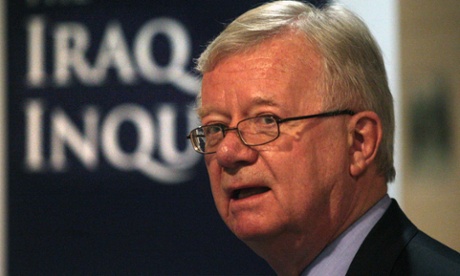
Chilcot has refused offers of extra help to speed up publication of Iraq inquiry report, MPs told
Sir Jeremy Heywood, the cabinet secretary, told MPs this morning that Sir John Chilcot, the Iraq inquiry chair, has repeatedly refused offers of extra assistance to help him speed up the completion of his report.
Heywood was giving evidence to the Commons public administration and consitutional affairs committee, and responding to a question from the Labour MP Paul Flynn. Heywood insisted there was nothing more he could do to get the report published more quickly.
I’m not washing my hands of it. It is an independent inquiry, the timetable is not in my hands. I have repeatedly offered to Sir John extra resources on behalf of the prime minister, extra legal resources and so on.
At the prime minister’s request I saw him again recently, we had a private meeting at which I repeated that request, obviously. I just know that John Chilcot will complete this report as soon as he possibly can. He is as aware as everybody else is about the importance of getting this done and quickly ...
We have repeatedly offered the inquiry further resources, they say they don’t need them, they are doing it as fast as they can.
Heywood also told Flynn that “everybody ... from the prime minister downwards, including Sir John Chilcot” shared his frustration about how long the inquiry was taking to publish its conclusions.
In the Commons George Osborne has just told MPs that Labour has a “new intake of Old Labour MPs” dragging it back to the past.
He may have been reading Sebastian Payne’s Coffee House blog. Payne has been looking at the composition of the group of 48 Labour MPs who rebelled. Here’s an extract.
What is most significant is how many of the rebels are newer members of the Commons. 21 of the Labour MPs who voted against the bill entered the Commons either at the 2015 election or through by-elections preceding it. 18 alone were elected at the most recent general election. The 2010, 2005 and 1997 intakes all brought in roughly half a dozen rebels, while nine came from elections before that — notably including Jeremy Corbyn in 1983, the only leadership candidate to break the party whip.
This shows what might be termed the ‘Miliband effect’ on the Labour Party — something that could turn out to be his most damaging legacy. By encouraging a more left-wing cohort to join the parliamentary Labour Party, his term as leader has made the task of holding the party together for his successor much harder.
Osborne tells MPs spending review conclusions will be announced on 25 November
George Osborne, the chancellor, is taking questions in the Commons.
He has just announced that the results of the spending review will be announced on 25 November.
He said that he wanted to get more for less from government spending.
Politics Live - Readership survey
Regular readers will know that, around this time every year, I like to ask you what you think about this blog (this blog in general, not what I’ve written today). I read comments BTL fairly regularly, so I’ve got a reasonable idea as to what you like and don’t like, but I find it helpful to get feedback on a formal basis every now and then, and in the past it has influenced the way I cover politics here.
So, please, using the comment space BTL, do tell me what you think. Feel free to make any point you want but, if it helps to frame your reply, do tell me: a) what you like about this blog; b) what you don’t like about it; c) what we should do more of; and d) what we should do less of.
I’m also interested in what you think about the readers’ edition. The new website format makes it harder for people to find it, and it has been getting less traffic recently. Should we keep it going?
Also, it was a while back now, but is there anything you want to say about the election coverage?
My colleague Simon Jenkins has written his verdict on last night’s vote for Comment is free. He thinks Harriet Harman took the only sensible option available. Here’s an excerpt.
Perhaps [Harman] would have been wise to seize an initiative by demanding a bipartisan review of working-age benefits in the round. This would embrace the vexed frontier between Labour’s tax credit and the Tories’ universal benefit. But that would have required party consultation, nor would it have answered the question of how to vote last night. While supporting Osborne’s budget would have been more than Labour flesh and blood could stand, voting against the welfare package as a whole would have walked into the irresponsibility trap. Harman’s decision to abstain on the substantive motion but table amendments on details was tactically sound. But it was also strategically disastrous. While three of the leadership candidates obeyed collective orders, Jeremy Corbyn seized the opportunity offered to him and refused. He stuck to the iron law of British politics, which is to know which audience matters when. In a Labour leadership election, that audience is Labour’s core vote.
Kim Howells, the Labour former minister, has told BBC Wales that Labour is facing the most serious crisis he can remember. The leadership election is “a total shambles”, he said, and he did not know what people at the top of the party believed.
I fear that we’ve done it the wrong way round. What we should have decided what was what Labour actually believes in, what its message is, where it goes from here and maybe we should have decided who is closest to that in terms of choosing a leader but we are doing it as usual in a shambolic way and I fear for the future of the party.
I think it is the most serious crisis I can remember in Labour’s history.
This chart, that has been tweeted by the Labour pollster James Morris, helps to explain why people in the party like Harriet Harman and David Blunkett believe the party needs to show that it understands people’s concerns about welfare.
On welfare though, even Greens evenly divide on whether lab too tough or soft; con voters who considered lab v clear pic.twitter.com/71eVcsImli
— James Morris (@JamesDMorris) July 21, 2015
Amongst all voters, and amongst voters who considered voting Labour but who voted Conservative, people are much more likely to favour Labour taking a “tough” (my paraphrase) approach to welfare than a “soft” one.
But the the questions do not apply neatly to the welfare bill. If you look at the wording of the question used in the poll, those figures show majorities for Labour being “tougher on those abusing the welfare system”. The welfare bill is not about people “abusing” the welfare system (unless you count claiming benefits that the Tories want to cut as “abuse”, which would be a perverse interpretation of the word).
Diane Abbott, the Labour MP and a candidate for the party’s nomination for the London mayoral contest, told BBC News this morning that Harriet Harman, the acting Labour leader, “miscalculated” when she ordered Labour MPs to abstain on the main welfare bill vote last night.
This is a bad bill. It will force 330,000 children into poverty, it actually reduces work incentives and, far from the party being split on it, outside of Westminster I think Labour supporters are pretty united and think this is a bad bill which we have to oppose.
I think the underlying sentiment, even inside Westminster, is against the bill. I think Harriet miscalculated the amount of opposition to the welfare bill, we’ll have a new leader in September and I believe that new leader will find a position around which we can all unite.
She also said the Tories did not have an electoral mandate for their changes.
They haven’t got a mandate because whenever they were asked ‘what cuts are you going to make?’ they refused to be specific, because they knew that if they said what they were going to do it would be wildly unpopular ... It’s one thing to talk about cuts in welfare in the abstract, it’s another thing when people realise it’s going to hit real families and real children.

Philip Cowley, the Nottingham University politics professor and an expert on parliamentary revolts, told the Press Association that last night’s rebellion was the largest within Labour ranks since December 2013. He said that only nine rebellions in the last 10 years had been larger than the welfare revolt - one under Ed Miliband and eight during Tony Blair’s premiership.
“Compared to Blair’s rebellions over Trident or the education and inspections bill, last night looks pretty mild,” he said. But there were now fewer Labour MPs than under Blair and “splits are usually easier to dodge in opposition”.
Cowley has also tweeted this, which is good.
Whilst we're on the subject of rebellions, here how I described young Corbyn in a book I did in 2005... pic.twitter.com/m61tHkSURF
— Philip Cowley (@philipjcowley) July 21, 2015
There are 18 Corbyn supporters (or, at least, MPs who nominated Corbyn - which is not necessarily the same thing), 15 Burnham supporters, nine Cooper supporters and one Kendall supporter (Paul Flynn). The others did not nominate a leadership candidate.
David Blunkett's Today interview - Summary
In his Today interview David Blunkett, the Labour former work and pensions secretary, said the party was “in emotional trauma” follow its election defeat. (See 9.11am.) Here are some of the other points he made.
-
Blunkett said that Labour MPs should think about the Labour candidates who did not get elected, and why they did not get elected.
I need to say to colleagues who got elected in May: you were very lucky. Think about those colleagues and, above all, that electorate that suddenly found that it had got a Conservative government and ask yourself why. In 1987 when I was elected, I was euphoric about being elected personally but I didn’t have the temerity to say if only I could have spread some of those 24,000 majority across other constituencies, we might have been in government. We weren’t.
- He suggested that the Labour MPs who rebelled had fallen into a trap set by the Tories. The Tories were “very good” at setting traps for Labour, he said, and George Osborne, the chancellor, was “blatant”, about what he was doing, Blunkett said. “You’ve got to avoid those traps.”
-
He said Labour should recognise why there was an argument for restricting benefits to families with just two children.
That is a quite difficult argument for the Labour party: it’s difficult because we don’t want to put children who are with us or will be in the future in a position of poverty, but we have to put adults in a position of responsibility and then the state has to put the mechanisms in place to help them make the right decisions and, when they’re making the right decisions, to reinforce that they’ve got it right.
You see, we talked about something called predistribution about three years and then it dropped off the lexicon of what was being debated. That was about ensuring that people could earn their way out of dependence on the state.
- He said Labour should have linked support for a living wage at the election with support for the idea of making people less dependent on the state.
We’ve got to have a narrative which plays with the people who know that they are sympathetic to those who can’t help themselves but also know that the best form of welfare is work and that the Lord helps those who help themselves.
I’ve taken the quotes from PoliticsHome.
On the Today programme Jeremy Corbyn, the only Labour leadership contender who voted against the welfare bill in the main second reading vote, rejected claims that MPs like him who defied the party whip were undermining the party. He said:
I think we’ve strengthened it because we’ve shown that there are a lot of Labour MPs – and many of those who abstained, their hearts were certainly in the lobby with those of us who voted against it – deeply concerned about the levels of child poverty in our society, deeply concerned about the levels of homelessness and rough sleeping.
I hope we will develop a narrative in which we will be serious about regulation of the private rented sector and we won’t allow the Conservatives to take us down this road of saying that any child after two is somehow or other worth less than the first two. It seems to me deeply unfair, it also is actually contrary to the UN Convention on the Rights of the Child, which even Margaret Thatcher signed.
He also rejected the idea that the public would not support his stance.
Everybody knows somebody who is having difficulties, every town has people who are deeply poor, we all know the results of child poverty, underachievement in school and the ill health that goes with it. So, if we want to live in a society where we deal with those issues, then we have to have a welfare system that addresses those issues, but we also have to have an economic strategy that does get far more people into work.
I’ve taken the quotes from PoliticsHome.

List of Labour MPs who voted against the welfare bill
Here is a full list of the Labour MPs who voted against the welfare bill in the main second reading vote last night.
The 47 Labour MPs who voted against were: Diane Abbott (Hackney North & Stoke Newington), Debbie Abrahams (Oldham East & Saddleworth), David Anderson (Blaydon), Richard Burgon (Leeds East), Dawn Butler (Brent Central), Ann Clwyd (Cynon Valley), Jeremy Corbyn (Islington North), Geraint Davies (Swansea West), Peter Dowd (Bootle), Paul Flynn (Newport West), Mary Glindon (Tyneside North), Roger Godsiff (Birmingham Hall Green), Helen Goodman (Bishop Auckland), Margaret Greenwood (Wirral West), Louise Haigh (Sheffield Heeley), Carolyn Harris (Swansea East), Sue Hayman (Workington), Imran Hussain (Bradford East), Gerald Jones (Merthyr Tydfil & Rhymney), Helen Jones (Warrington North), Sir Gerald Kaufman (Manchester Gorton), Sadiq Khan (Tooting), David Lammy (Tottenham), Ian Lavery (Wansbeck), Clive Lewis (Norwich South), Rebecca Long-Bailey (Salford & Eccles), Andy McDonald (Middlesbrough), John McDonnell (Hayes & Harlington), Liz McInnes (Heywood & Middleton), Rachael Maskell (York Central) Rob Marris (Wolverhampton South West), Michael Meacher (Oldham West & Royton), Ian Mearns (Gateshead), Madeleine Moon (Bridgend), Grahame Morris (Easington), Kate Osamor (Edmonton), Teresa Pearce (Erith & Thamesmead), Marie Rimmer (St Helens South & Whiston), Paula Sherriff (Dewsbury), Tulip Siddiq (Hampstead & Kilburn), Dennis Skinner (Bolsover), Cat Smith (Lancaster & Fleetwood), Jo Stevens (Cardiff Central), Graham Stringer (Blackley & Broughton), David Winnick (Walsall North), Iain Wright (Hartlepool) and Daniel Zeichner (Cambridge).
Another Labour MP, Kelvin Hopkins, was a teller for the noes (meaning he actively opposed the bill, but did not technically vote against it).
The rest of the no votes in the main second reading division were 55 SNP, eight Liberal Democrat, six DUP, three SDLP, three Plaid Cymru and one each from Green and UUP.
The second teller was the SNP’s Owen Thompson.
The Labour MP Frank Field has this morning released figures from the House of Commons library on the impact of two measures in the budget. He asked the library (which doesn’t just lend books - it’s a research facility for MPs) to analyse the impact of the cut in the amount people are allowed to earn before they start losing tax credits, and the increased, 48% taper rate (the amount claimants lose for every extra pound they earn).
Here are the key findings, according to Field’s press release.
The analysis shows that:
· 3.2 million strivers will lose an average of £1,350 next year.
· 754,900 families earning between £10,000 and £20,000 a year will lose up to £2,184 next year. Families earning £10,226 will be exactly £1,500 worse off.
· 51,600 families earning between £20,000 and £30,000 will be made worse off by up to £2,884 next year.
· 580,100 of Britain’s poorest working families earning less than £6,420 a year face the prospect of being ‘taxed’ for the first time. Those earning between £3,850 and £6,420 will lose 48p in tax credits for each pound they earn. This is a higher withdrawal of income than that imposed on the country’s highest earners. Families earning £6,410 a year will be £1,200 worse off as a result.
Field said Labour should be standing up for these “strivers”.
Before, during, and after the general election campaign the Tories rightly gained plaudits for their commitment to protect and advance the interests of Britain’s strivers. Yet in his first post-election budget the chancellor has decided to knock this group for six. He has torn up the contract they signed when they took it upon themselves to find a job. So here is Labour’s opportunity to put itself once again on the side of Britain’s army of strivers. First we must fight this double whammy of unfair cuts being forced upon them and, second, we need to push for improvements to the chancellor’s living wage proposal so that low paid workers genuinely are better off.

Last night MPs voted for bill that will cut welfare spending by almost £13bn. But, after Harriet Harman’s attempt to reposition Labour on welfare backfired, because 48 Labour MPs defied orders to abstain and voted against the bill at second reading, the headlines today have been dominated by Labour turmoil on this issue, rather than the impact of the measures.
On the Today programme David Blunkett, a Labour former work and pensions secretary, said the party was “in emotional trauma”.
I think the Labour Party, understandably, is in emotional trauma. It’s bound to be after the loss in May and the bewilderment about where we go from here. What we are not doing, of course, is debating enough about where we go from here. So, last night, once again, focused on us being divided rather than what the Tories are doing, a lot of which is unacceptable.
Labour not debating how to fix itself properly, must avoid being painted only as an opposition party - David Blunkett pic.twitter.com/ASt1fjLTTr
— BBC Radio 4 Today (@BBCr4today) July 21, 2015
I will post more from his interview shortly, as well as covering more reaction to last night’s debate.
Otherwise, it’s the last day the Commons is sitting before the summer recess, and there are lots of potentially interesting select committee hearings. I will be covering George Osborne at the Treasury committee in detail, and keeping an eye on the others.
Here is the agenda for the day.
9.30am: The Cabinet Office publishes a community life survey, including figures on local trust of politicians, civic engagement, wellbeing and volunteering.
9.30am: Sir Jeremy Heywood, the cabinet secretary, and David Lidington, the Europe minister, give evidence to the Commons public adminstration and constitutional affairs committee on the EU referendum.
9.30am: Simon Stevens, the NHS England chief executive, gives evidence to the Commons health committee.
10.30am: Sharon White, the Ofcom chief executive, gives evidence to the Commons culture committee.
11am: Amber Rudd, the energy secretary, gives evidence to the Commons energy committee.
2.15pm: George Osborne, the chancellor, gives evidence to the Commons Treasury committee.
As usual I will be covering the breaking political news as it happens, as well as bringing you the best reaction, comment and analysis from the web. I will post a summary at lunchtime and another in the afternoon.
If you want to follow me on Twitter, I’m on @AndrewSparrow