It's a British airport climbing up the European super league, and it will soon break new ground with a transport interchange that will be the envy of its more congested rivals at Heathrow and Gatwick.
The new complex will embrace a coach and train station under one roof - doubling existing rail capacity - and will eventually include a "super tram" system in a newly completed tunnel to whisk people to the city centre, 10 miles away.
That is only the start. As one of the largest publicly owned enterprises in the country, Manchester airport - the UK's third largest, with aspirations to overtake Gatwick - does not believe in doing things by half.
This latest £60m venture has even been designed to accommodate a loop from the west coast main line, with nearby land already earmarked for the purpose, making a bypass of Heathrow, Gatwick, or Stansted a more practical proposition for a traveller from the south. Manchester airport could become a mainline station on the country's busiest rail route.
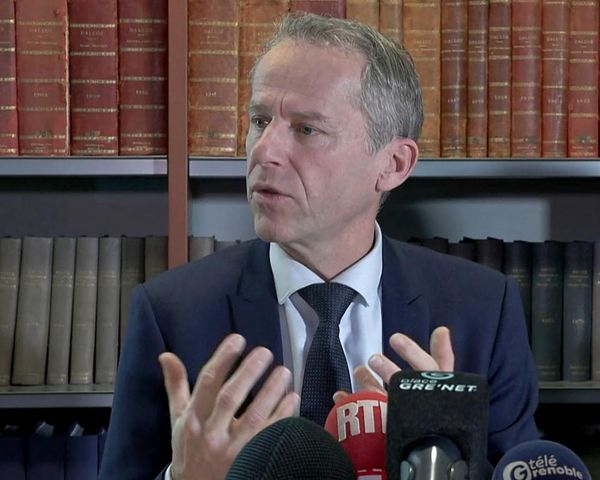
"Our shareholders take a long term view," smiles Geoff Muirhead, chief executive of Manchester Airport Group, which now owns East Midlands, Humberside and Bournemouth airports and has an eye on other acquisitions in the UK.
"While they are looking at this as a commercial venture full stop, they are very much interested in growing the business for the shareholders' benefit. They think there is not a particular conflict of interest ... between their civic aims - creating jobs and wealth - and running a good business. These are not incompatible."
Reaping the benefits
The shareholders concerned are 10 local councils, with Manchester itself the largest of them with a 55% stake. They preside over a business with a £265m annual turnover and a handy operating profit of £50m.
It directly employs 2,000 in Manchester, with a further 17,000 working for another 270 businesses on the site which straddles the Cheshire boundary. Three terminals and a new £172m second runway - which brought protesters to tunnels and trees in an attempt to halt construction - handled over 19 million passengers last year, bound for 170 destinations worldwide.
It is such a handy nest egg for hard-pressed councils that, periodically, the question of a partial sale or flotation to boost municipal coffers has been suggested, sometimes by the odd free market zealot, or the last Tory government, which was ideologically opposed to an enterprise which has grown to become the second largest airport operator in the UK.
"The owners of the airport took the brave decision to invest when ... it was a lot more risky," says Muirhead. "The benefits of that have been reaped, but there is still a lot more to be done."
He insists that Manchester Airport Group, or MAG, is successful because of sound business principles and forward planning - taking the long view - which would certainly do justice to the private sector on mainland Europe, if not the short-termist UK.
While careful not to overtly criticise BAA, it is clear that the rival's monopoly position in the south east and in Scotland - where it owns Glasgow, Edinburgh and Aberdeen airports - grates. "It is interesting to think about the BAA structure, about whether that's appropriate," muses the chief executive. "I am sure they are happy with it." But how to break a monopoly?
While the issue is not yet as high on the political agenda in England as in Scotland, MAG prefers to bide its time, carefully weighing up expansion at home but not abroad. The acquisition trail began in 1999, when for around £10m it became the majority shareholder at Humberside airport, which handles around 450,000 passengers annually and employs 350. It has charter flights serving European and other holiday spots as well as scheduled services to Amsterdam and Aberdeen.
MAG joined the bigger league last year when it bought East Midlands, with 2.2 million passengers annually, and Bournemouth, with 270,000 a year, from the National Express Group as a package for over £240m. Just off the M1, East Midlands was clearly the prize as the traditional home of British Midland, now rebranded BMI, which has a string of passenger and charter services as well as being one of the largest cargo airports in the UK. Six thousand people work on its site at Castle Donnington.
Growing organically
One attraction at Bournemouth - while small, with only 190 staff - is the potential for developing the extensive land holdings of the airport on the booming south coast. Initially, MAG wanted to sell it on. Now it is not so sure.
While emphasising that they are purely committed to the core activity of running successful airports, Muirhead accepts they have a challenge at what he reckons is the "biggest undeveloped property" on the south coast. "How do we turn that round in a way that adds value?" he asks. "There are issues about planning and development in Bournemouth. If we can get that sorted out we will add a lot of value ... do we dispose of that side of it?"
While much is in the melting pot, MAG is eyeing the potential elsewhere. "You grow businesses organically," says Muirhead. "Some people grow them through acquisitions. Manchester was ready to really add value ... so long as it was core business acquisition. We are not into property development, building hotels, or anything like that."
Expansion for MAG is harder than for a conventional public limited company. While the government gave it freedom to borrow outside the constraints of the public sector borrowing requirement, it has to have ministerial permission before any acquisition can be made.
Crucially, it cannot invest in enterprises away from its core activity - although it would like the power, say, to put money into updating rail links. Taking the west coast main line from Manchester Piccadilly, for instance, cannot be done without big improvements to signalling and track. Its investment in an extension of Greater Manchester's Metrolink "supertram" system to the new transport interchange stretches the boundary of its operations to the limits. It got around the problem by not taking a stake in the enterprise itself.
Muirhead insists they will continue to make airport investments "if and when they become available" in the UK, with opportunities looming in a "volatile market". Could, say, Teesside and Belfast City airports be in the frame? "We are looking at every opportunity," he says.
The other priority, however, is ensuring that Manchester becomes a national airport in the public psyche, an alternative "hub" to the over-congested London and the south east. By bringing train services into its own station at the airport, MAG has already provided rail links to Britain's third airport from much of the north and beyond. The new interchange, alongside the station, will provide services from central England up to the Scottish borders as well as the north and mid-Wales across to the Wash.
In the longer run, the company is pinning its hopes on improved south-north rail links. Muirhead accepts that while air services between London and Manchester would make little sense with a faster west coast main line, the airport would be a beneficiary in the longer term.
"There's no reason why good rail links can't start providing good alternatives outside the south east," he says. "Why do people from [other] northern parts of the UK have to go to London? Aviation in the regions has a lot more to offer - it needs a policy framework that encourages it and a pricing framework that makes regional airports more attractive - and there is no reason why the price in the south east should not be a lot higher because of congestion." For good measure, he adds: "I think we should have a policy in this country that says if it doesn't have to be in the south east it won't be."
On the move
· Manchester airport is spending £1bn to provide new train/tram/bus interchange in 2003 and update three terminals
· Target set for 25% of all journeys to airport to be by public transport in three years' time
· 3,000m second runway was first commercial full-length runway to be built in Britain for more than 20 years
· Serves an estimated 32% of the UK's population and expects to overtake Gatwick as the country's second airport within 15 years
· Handles more than 19m passengers annually, including 9.7m charter, 6.5m international scheduled and 3m journeying within UK
· Generates an estimated £600m annually for the north-west economy alone