The political landscape has proceeded to a new phase of debate following accusations by opposition leaders that the country is now operating under what they describe as the "blue regime".
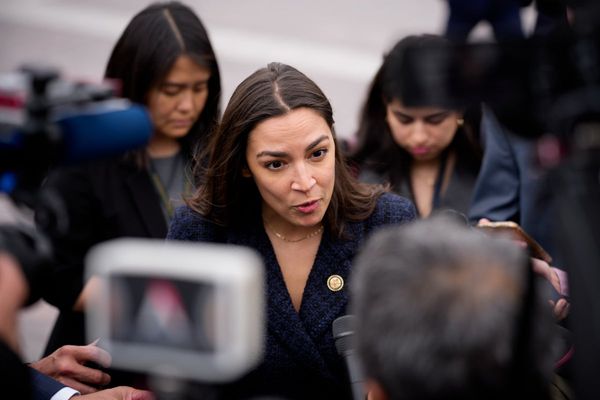
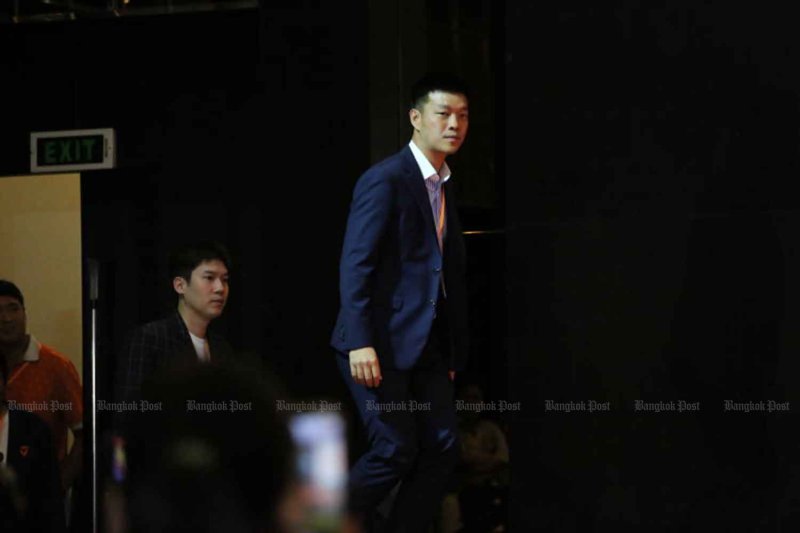
The term gained prominence after Natthaphong Ruengpanyawut, leader of the opposition and head of the People's Party (PP), accused entrenched political forces of "capturing the country" through what he described as coordinated influence over both elected and unelected bodies.
He said key institutions, including independent agencies and the Senate, were no longer acting solely as democratic safeguards but instead reinforcing a centralised power structure.
For now, the growing debate over the so-called "blue regime" depicts a broader struggle over how the post-coup political order should be understood: whether it represents stabilising institutional adaptation or the consolidation of a deeply entrenched system designed to preserve elite dominance under democratic appearances.

Democracy facade
Olarn Thinbangtieo, deputy dean of the Faculty of Political Science and Law at Burapha University, said the concept of a "blue regime" denotes interpretations of political interactions between formal constitutional institutions and informal centres of power.
While acknowledging there is no legal evidence proving coordinated control, Mr Olarn said the political structure seems to be influenced by a dominant political network closely associated with the ruling Bhumjaithai Party (BJT), known for its signature blue colour.
He said Thailand formally retains the appearance of parliamentary democracy -- complete with a constitution, elections and independent institutions -- while real political direction may originate from actors operating outside the constitutional framework.
Mr Olarn said the arrangement differs from traditional coup-era authoritarianism because it derives legitimacy through legal procedures and institutional design rather than overt military intervention.
"It is a far more sophisticated political game," he said. "Power is distributed through legal structures, but institutions ultimately move in the same direction under signals from actors outside the formal system."
Such systems become unstable if they primarily serve elite or factional interests rather than broader public welfare. If public frustration grows unabated, he said, the country could eventually face renewed mass protests or structural political upheaval.
He also argued the system undermines a core principle of representative democracy -- genuine electoral competitiveness.
"The rules appear designed so that some groups can never truly win power," he said, adding the constitutional structure itself may have been engineered to prevent fundamental political change while maintaining legal legitimacy.
'2017 constitution plus'
Debate over the "blue regime" has been especially intense amid discussions on drafting a new constitution.
Mr Olarn warned constitutional reform itself could become dominated by the same political networks critics are now challenging.
He argued opposition forces had miscalculated strategically by pressuring coalition partners into constitutional reform without fully understanding the broader balance of institutional power.
Under Constitutional Court interpretations, members of a Constitution Drafting Assembly (CDA) cannot be entirely directly elected since MPs, who represent the people, can dictate the rules for choosing the charter writers.
In the meantime, the Senate will likely retain significant influence over the drafting process.
As a result, Mr Olarn believes any future charter may ultimately strengthen rather than dismantle the post-coup power structure.
Instead of replacing the 2017 constitution, he warned Thailand could end up with what critics call a "2017 constitution plus" -- a revised charter that closes loopholes and further solidifies elite stability.
Still, he said the longevity of such a system would depend on whether it delivers benefits to the public or merely protects entrenched interests.
If the arrangement balances elite interests with public welfare, he predicted it could endure for a decade. But if corruption and patronage dominate, the system could face serious backlash within a few years.

No 'blue regime' narrative
Nikorn Chamnong, a party-list MP from BJT, dismissed the term as merely a political slogan designed to attack the party because blue is its official colour.
He said critics were attempting to create a public perception that the Senate and other institutions were aligned with BJT through simplistic political logic.
Mr Nikorn said accusations the party controls independent agencies or constitutional institutions are unfair and politically motivated.
"This is political rhetoric," he said. "It is an attempt to manufacture belief through repeated narratives."
He also criticised efforts to portray constitutional reform as already compromised before the drafting process has even begun, saying public consultations are still underway and critics are prematurely discrediting the process.
Mr Nikorn said Thailand remains governed by democratic means based on majority rule and warned against reducing every political development to colour-coded factional narratives.

'Two uncles' and 'deal system'
Stithorn Thananithichot, a political scientist at Chulalongkorn University, offered perhaps the sharpest interpretation of the emerging system.
He said the "blue regime" does exist, but not as a project exclusive to BJT or its influential political patrons. Instead, he sees it as a continuation of the power structure established after the 2014 coup.
The original post-coup model centred around the "two uncles" -- former prime minister Gen Prayut Chan-o-cha and former deputy prime minister Gen Prawit Wongsuwon backed by the 2017 constitution, the Senate and networks embedded in state institutions.
However, after the 2023 election weakened that model electorally, the system adapted.
"The uncle system no longer worked," he said. "So it evolved into a deal system."
Under his interpretation, post-election political arrangements were shaped through alliances between conservative establishment forces and former rivals, including factions associated with former premier Thaksin Shinawatra and the "red" political camp.
Although governments may change, the underlying institutional structure remains intact, he said.
He believes the coalition tied to establishment forces possesses enough parliamentary strength to steer constitutional reform largely on its own terms.
He warned the biggest risk lies not necessarily in the final referendum, but in the method used to select members of the CDA.
If the selection process is tightly controlled by political networks, Thailand could confront allegations similar to previous accusations of Senate collusion -- except this time involving the charter drafters themselves.