Since the storm, Carlos Hernandez and his wife have spent most days under a portable canopy in front of their ruined house, looking out at cotton fields stripped clean by Hurricane Harvey's winds.
All around them, in growing piles, are the remains of their lives: photo albums, bags of clothes, the ceramic bowl their daughter bought them, their artificial Christmas tree.
With black mold blooming across their bedroom walls, the couple _ married for nearly six decades _ sleep at their daughter's place in nearby Portland.
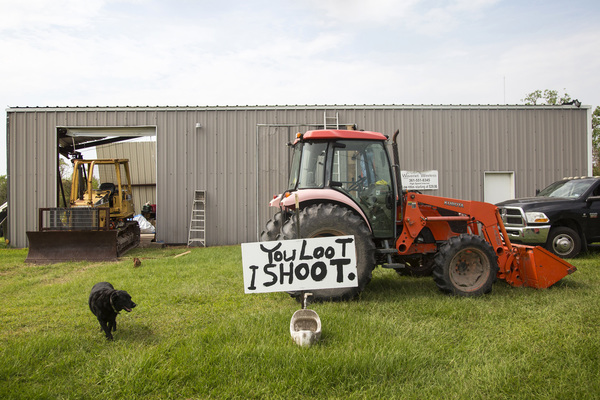
"We say we come over here to work, but we can't do much," said Hernandez, 75, who gets by on a cane and is awaiting knee surgery. "My wife's old. I'm old. But this morning we moved a little bit of stuff."
Officials in this tiny coastal city, population 333 and falling, say 80 percent of the structures in Bayside were destroyed or damaged. A month after the hurricane, it's hard to find the other 20 percent. House after house lies in ruins. Some were blown completely apart by Harvey's 130 mph winds. At many others, Harvey peeled back roofs and poured down rain that is rotting homes from the inside out. Residents like the Hernandezes anxiously await a decision from FEMA on emergency aid.
Bayside sits on Copano Bay, directly west of Rockport, the picturesque fishing village that briefly captured the nation's attention when Hurricane Harvey's eyewall made landfall there. But Bayside, where Harvey also churned mercilessly for hours, generated little more than a blip on the radar of public consciousness, even in Texas.
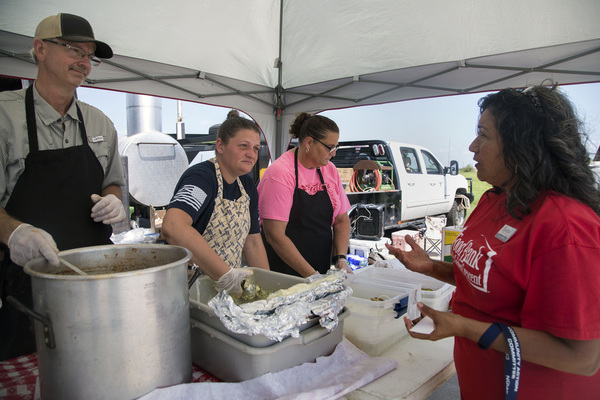
"We're used to being the little town that's kind of overlooked," said Karen Clark, Bayside's assistant city secretary. "I don't see it being treated any differently than it has always been. We can't make a name for ourselves. We're just Bayside, but we're nice people. That's our main asset."
It's a refrain you hear repeated up and down this hardscrabble patch of the Texas coast, home to an increasingly diverse community of shrimpers, crabbers, chemical plant workers and more affluent retirees.
Wedged between the beaches of Port Aransas and the vacation rentals of Port O'Connor, the area is filled with small towns that suffered massive damage in the storm. For some, the hurricane will forever alter the course of their future: Already in Bayside, at least eight families, close to 10 percent of the population, have decided to abandon the city. Small towns have seen their economies grind to a halt, and city budgets, already teetering on the edge of solvency, are in peril.
The storm is also changing what these small towns will look like in the future. In Bayside, Harvey has reopened a bitter debate over the city's pre-storm decision to prohibit single-wide manufactured homes in the city.
"Now, especially as we rebuild, some residents may need that," Clark said. "We're going to have to figure out all that. Not everyone is going to be happy."
City leaders in the region worry that they lack the personnel and expertise to handle what promises to be years of seeking grants and recovery funds from the federal government. Roads, harbors, piers, pump stations and water treatment plants will all need to be rebuilt or repaired. After the state's most recent hurricanes _ Ike and Dolly _ cities were forced to navigate a thicket of regional, state and federal bureaucracies.

County officials have pledged to help such small communities. And the state's Harvey recovery czar, Texas A&M System Chancellor John Sharp, grew up in a small coastal town _ Placedo _ and has vowed to make sure small cities get their due. But experts in disaster recovery say it's common for small towns, and especially unincorporated areas, to struggle to compete for recovery funds.
"We have a city secretary, assistant city secretary and two maintenance workers, and that's it," Clark said. "We don't have all these engineers, administrators; we don't have any of that, and we need help on that desperately."