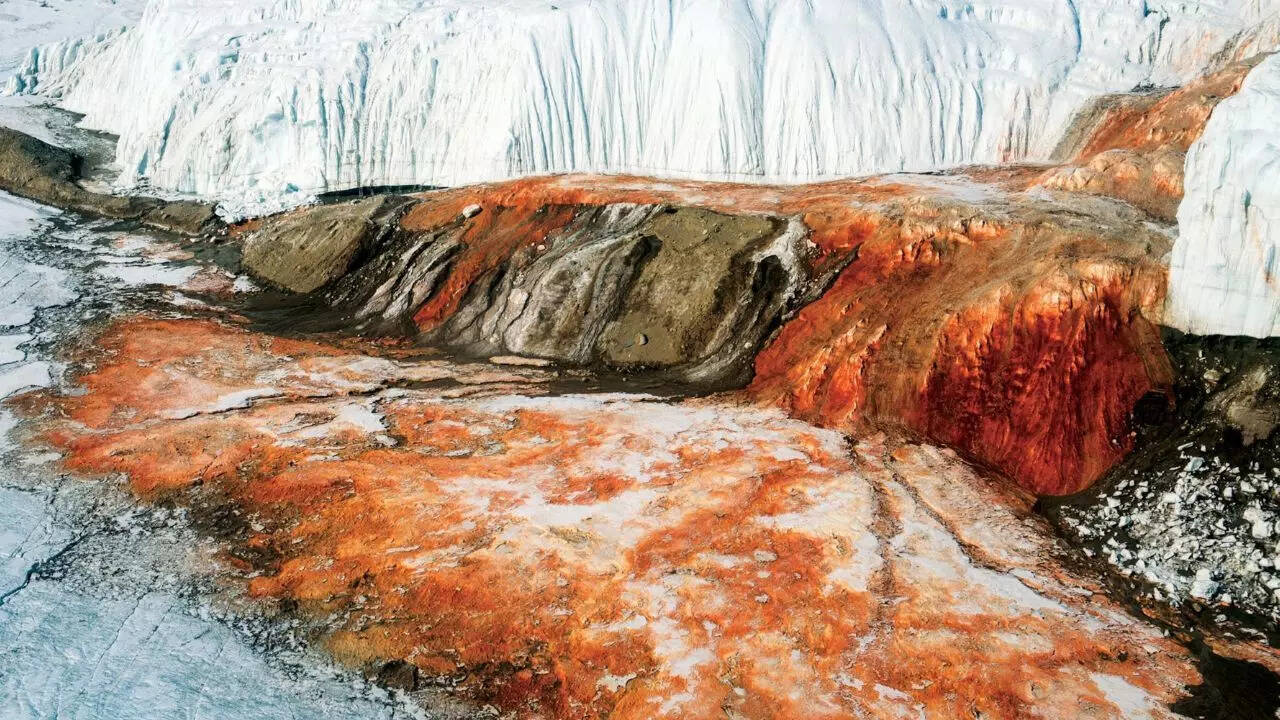
Antarctica is also known to have some of the most extreme and harsh environments on the planet, where life struggles to exist in the freezing climate and harsh winds. However, even in such extreme conditions, there exists a fascinating natural wonder that is nothing short of surprising: Blood Falls, a waterfall that flows with a deep, reddish-colored liquid from the Taylor Glacier into Lake Bonney. The sight of the waterfall is both fascinating and chilling, as if blood is oozing out of the ice. However, the actual story of its color, origin, and the life it supports beneath the glacier is much more interesting.
Blood Falls is more than a strange sight; it is a symbol of the ability of life to thrive in extreme conditions and the natural processes that are taking place beneath the glaciers. The iron-rich, high-salinity water, which has been locked away for millions of years, is still supporting life and carving out the landscape, making it one of the most fascinating natural wonders in the world. Although it may look ominous due to its red color, it holds an amazing story of survival and geological history.
Blood Falls in Antarctica’s McMurdo Dry valleys: The iron-rich crimson waterfall mystery
Blood Falls is situated in Antarctica’s McMurdo Dry Valleys, which are also known as one of the driest deserts in the world. The waterfall flows from the end of the Taylor Glacier. It cascades slowly into Lake Bonney and is approximately five stories high. The mere presence of the waterfall in such a dry and icy region is quite remarkable. Unlike the rivers in other regions, which are full of life and flow with a considerable amount of water, Blood Falls is seasonal, very slow-moving, and originates from water that is trapped deep beneath the ice.
However, despite its terrifying look, the waterfall is not composed of blood. The red coloration is generated by iron-rich brine flowing out of the subglacial water that is trapped under the Taylor Glacier. About two million years ago, the rise of sea levels resulted in the formation of a saltwater lake in East Antarctica. Subsequent glaciation led to the formation of glaciers over the lake, which in turn sealed the lake from the atmosphere. The water beneath the glacier was highly salty, three times saltier than regular seawater, and did not freeze despite being covered by 400 meters of ice. When this iron-rich water flows out and interacts with the oxygen in the atmosphere, it oxidizes, resulting in the distinctive red coloration on the ice.
Antarctica’s blood falls: Ancient subglacial lake supports unique microbial life
Blood Falls is supported by a subglacial lake, which is completely isolated from sunlight and atmosphere. For millions of years, this lake has been isolated from the outside world, supporting a highly unique form of life. The lake is chock-full of iron and other minerals that are removed from the bedrock by glaciers. This ancient lake supports life in the form of microorganisms that have adapted to survive in extreme conditions such as the absence of oxygen and light. The microorganisms derive energy from sulphates, which are recycled back with the help of iron, thus supporting a chemical cycle. Blood Falls is one of the few instances of life that supports itself in extreme isolation.
The waterfall is sustained by a system of subglacial rivers that transport highly saline water. Water with high salt content has a lower freezing point, and as such, the iron-rich brine is able to flow despite the cold conditions in Antarctica. As the iron-rich brine moves through the cracks in the glacier, it melts the surrounding ice slightly because of the latent heat, which sustains the flow of the waterfall. The iron content of the water increases as it approaches the surface, making the waterfall intensely red as it flows into Lake Bonney.
Blood falls and life in harsh conditions
In addition to its dramatic colour, Blood Falls gives scientists a window into life in such extreme environments. The microorganisms that exist beneath the glacier are similar to those found around deep-sea hydrothermal vents and are able to thrive in environments that are lacking oxygen and have high salinity levels. Researching these microorganisms can give scientists valuable information about life on Earth in the distant past and potentially help them understand how life might exist on other planets with similar extreme conditions, such as icy moons or arid worlds.