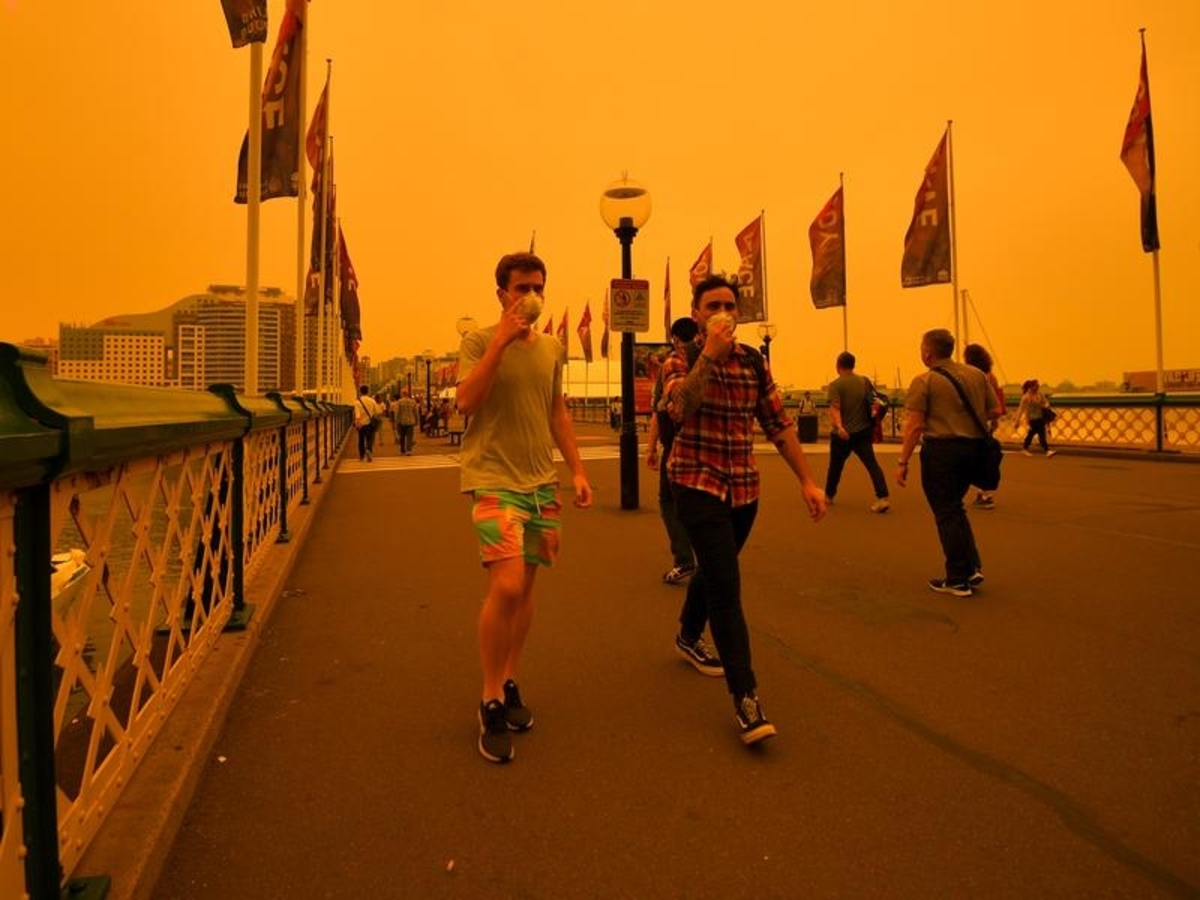
Breathing and heart problems surged during the Black Summer bushfire season, causing researchers to warn climate change requires better fire-prevention strategies to reduce health problems.
The peer-reviewed research, published in the journal Science of the Total Environment, found presentations for respiratory issues in NSW in 2019/20 were six per cent higher than the previous two fire seasons.
Cardiovascular presentations were 10 per cent higher.
"The results indicate that the unprecedented bushfires led to a huge health burden, showing a higher risk in regions with lower socio-economic areas and more bushfires," lead researcher Professor Yuming Guo said on Monday.
"This study could help to develop more targeted policies and strategies to prevent adverse effects and recover from the disaster, especially in the context of climate change and the COVID-19 pandemic."
While cardiovascular issues were relatively elevated regardless of fire density or SES status, respiratory presentations increased 12 per cent in high fire density areas and nine per cent in low SES areas.
Excess visits for breathing problems peaked in the New England and North West (up 45 per cent) while significant increases were also found on the mid-north coast (up 19 per cent) and central west (up 18 per cent).
The 2019-20 bushfire season, in which 34 died and more than five million hectares were burnt over six months, led to record readings for air pollution in NSW.
Small particles in bushfire smoke have been shown to result in increased cell damage and the smoke can led to lung inflammation.
Unlike previous studies that relied on air pollution figures, the Monash University researchers used a model that examined fire density to overcome the lack of air pollution data in rural areas.
The researchers say their study is the first to use a two-stage interrupted time series to quantify the effects of the Black Summer.