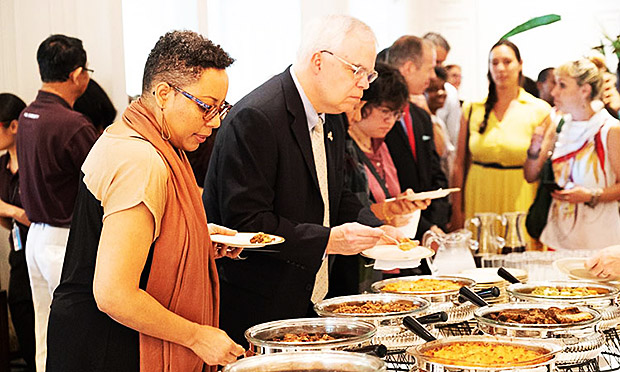
The savoury aroma of jambalaya, jerk chicken and corn bread filled the century-old chambers of Bangkok's US Ambassador's Residence recently. The dining room of African-American expats waiting for the feast listened intently to Joanne Hyppolite, a Haitian-American curator from the Smithsonian National Museum of African American History and Culture (NMAAHC). Hyppolite, who's an expert in African-American and African-diaspora material and expressive culture, was explaining how these famous African-American dishes came to be.
Hyppolite, who was in Thailand for two weeks, toured and gave talks around the Kingdom last month to celebrate America's Black History Month, an annual celebration of achievements by African-Americans as well as a recognition of the central role of blacks in US history. Her trip was the continuation of the celebration of 200 years of friendship between the US and Thailand, in the hopes that Thais will learn more about the diverse culture of America.
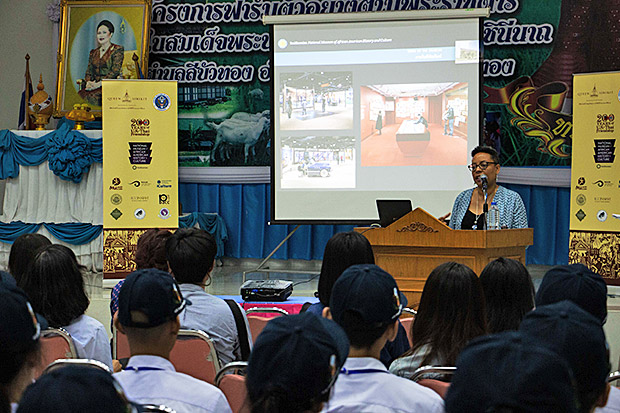
She gave talks regarding museum professionalisation; what it's like to be a curator; the hundred years it took to build the National Museum of African American History and Culture; technologies of 21st century museums; and, of course, African-American and Thai-traditional foodways. With Thailand not having much of a museum culture, her talks at local museums and schools provide priceless information on building, maintaining and developing state-of-the-art facilities.
"I used to work at a very small museum before I worked at the big Smithsonian, so I have a lot of sympathy for smaller spaces and their budget, and what they can and cannot do," said Hyppolite. "So far, I went to the Queen Sirikit Museum [of Textiles] and that's one of the best models of museums today. It's very modern. The conservation lab is state-of-the-art. The exhibition is very well done, and the collection is cared for up to really good museum standards in the world. But I would also tell you that even in the US we have museums that are not doing as good a job as Queen Sirikit or other [Thai] museums."
Hyppolite, who holds a PhD in literature from the University of Miami, an MA in African-American Studies from the University of California, Los Angeles, and a BA in English and Afro-American Studies from the University of Pennsylvania, was a curator for nine years at the Museum of History, Miami, before getting her spot at the NMAAHC.
"It was a long journey," she said. "I was a specialist in traditional culture, community research. I was always curating very diverse ethnic groups in the US as part of my work there, and when the African American Museum was being constructed and started hiring staff, everybody wanted to come work for this museum."
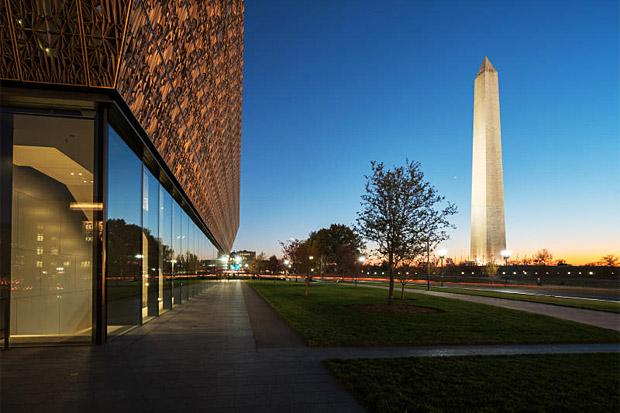
The NMAAHC, which was opened in 2016 after literally a hundred years in the making, finally offered a position in Culture and African American groups -- the perfect fit for Hyppolite.
"That was very forward-thinking of the museum, because they could just do what people define as traditional African-American -- those who came as part of the Transatlantic slave trade and those descendants of the communities. But they understand that America is very diverse and that there have been immigrant black groups from the Caribbean and Africans who have been a long time a part of the black experience in general of the US. They want to make sure that they are telling their stories as well, so I came to help tell their stories."
Reaching out to the public for several years, Hyppolite and her team asked questions of what the people wanted to see; what kind of stories should the museum tell; how should the curators present these stories; in what manner would people receive it best; and whether they should tell some of the more difficult stories of what the African-American community has had to face.
"We used the answers to guide the experiences we created, so that helped make a big difference. We knew that we were representing what the public wanted," she said.
"We were the only Smithsonian museum to start without a collection. Nothing in 2003 when we came into being. Nothing to tell a story of 500 years of history with [laughs], and we had to do it very fast, between 2005 and 2016. We had to build a collection. That was the biggest challenge -- finding the artefacts and the images that would help us adequately address 500 years of culture, history and art."
Talking to collectors and going to auction houses to acquire historic artefacts, what is most amazing about the NMAAHC is that 50% of the collection was donated by the public -- something that Thai collectors would never dream of doing due to the questionable or non-existent methods with which the state archives artefacts.
"People found us and said, 'I have this artwork by a major African-American artist. You are building this new museum. We know that you need it, let me give it to you'. Or, 'I have my grandfather's freedom papers from when he was an enslaved person'. Fifty percent -- that's a big deal for us."
The NMAAHC also utilises the latest technology in order to support and tell African-American history and culture in the most interactive and efficient ways.
"We have this really great [virtual-reality programme] that puts you in the seat of Rosa Parks -- the civil rights icon who refused to give up her seat in Montgomery, Alabama. So you are her, sitting on the bus, and you experience what she experienced when she stayed in her seat. It's very powerful and we brought it here with us to Thailand. We've been giving the students and audience members a chance to experience it. Thai people understand that it was frightening for African-Americans to be in this position, and even the ones who don't speak English understand what they're hearing, seeing and feeling. That's great, because the point of the experience is to get people to empathise with the African-American experience. It's wonderful that it does that across languages."
With profound and honest stories that implement 21st-century technologies like virtual reality and interactive 3D models, the NMAAHC has become the hottest ticket in Washington, DC. Since 2016 they've seen over 5 million visitors, and tickets have to be booked three months in advance.
Will Thailand ever even consider a museum that honestly chronicles our history, let alone the history of the country's minorities?
"Remember, it took a very long time to even get to our museum," said Hyppolite. "Progress is definitely slow. We're a federal institution, which means having the government make it a mandate that this is important -- it needs to be represented. So the way this museum was born is through a lot of advocacy.
"Community members, celebrities, congressmen who backed up the project came forward and said we need to have this museum, and they said it through multiple decades, multiple times. Representative John Lewis introduced legislation to create this museum in every scenario of congress from 1989-2003, when it got passed. Even if you feel like you're not succeeding, it's about repetition and sticking to it and persistence in order to achieve those kinds of objectives."