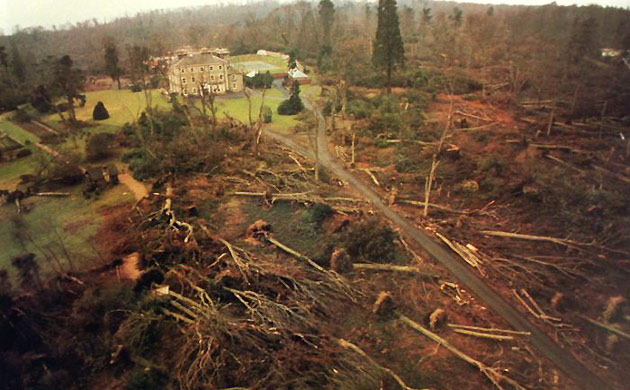
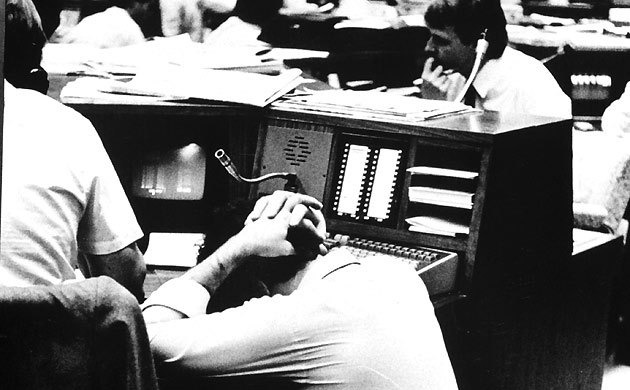
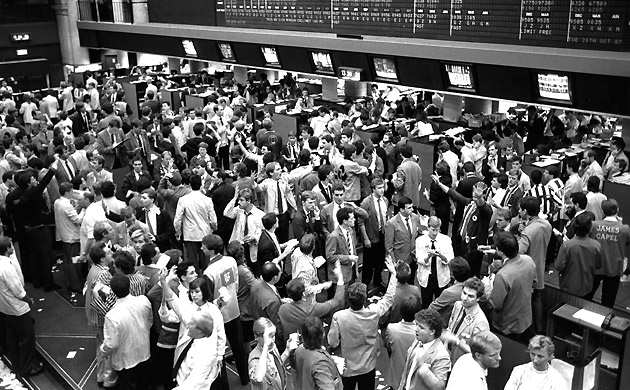
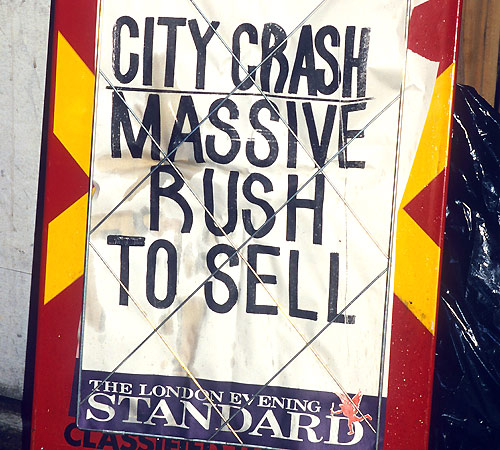
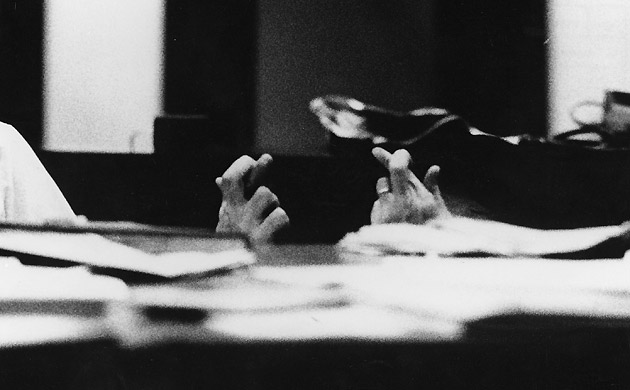
The precise causes of Black Monday are still disputed, but one key factor was the great storm that hit Britain the previous Friday. Only a few traders managed to struggle to work. The rest spent the weekend worrying about positions they had left open, following a drop on Wall Street. The crash began in Hong Kong and Tokyo, followed by a wave of panic selling when the markets opened in London on the morning of Monday October 19. Photograph: Mike Howarth/PAAt one stage the FTSE 100 index was down by over 13%. It closed at 2,052.3, down 249.6, a fall of 10.8%. This was its biggest one-day fall ever, and destroyed £50bn of market value. City traders were shocked by the scale of the sell-off, with some fearing that the financial system would shut down under the pressure.Photograph: The Independent/Rex FeaturesThe crash put the electronic systems of the time under huge pressure. So many sell orders flooded in that the computers were unable to keep up. Brokers later blamed program trading for fuelling the crash, as early share price falls triggered automatic sell options which exacerbated the decline.Photograph: News Group/Rex Features
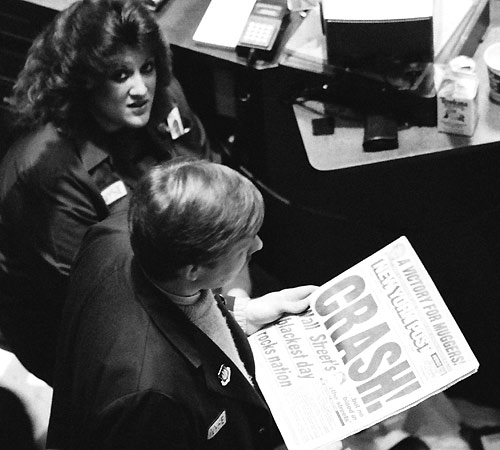
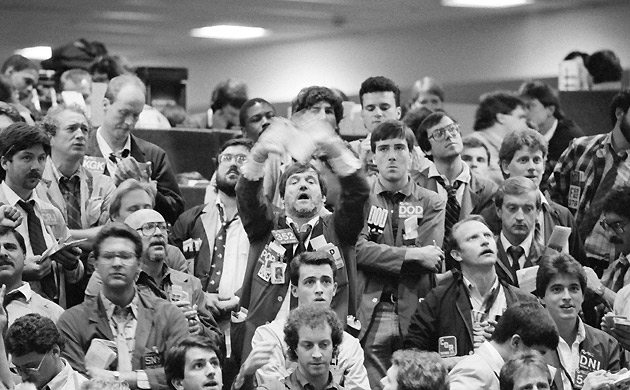
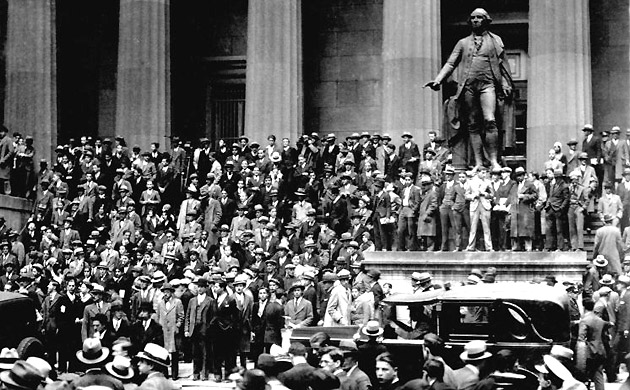
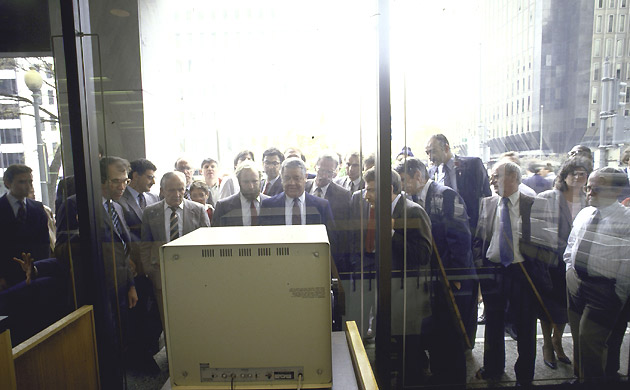
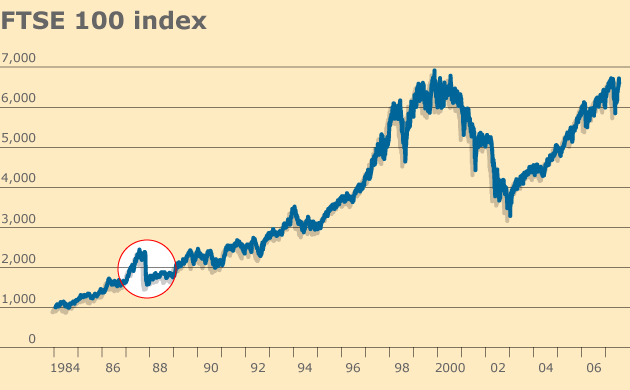
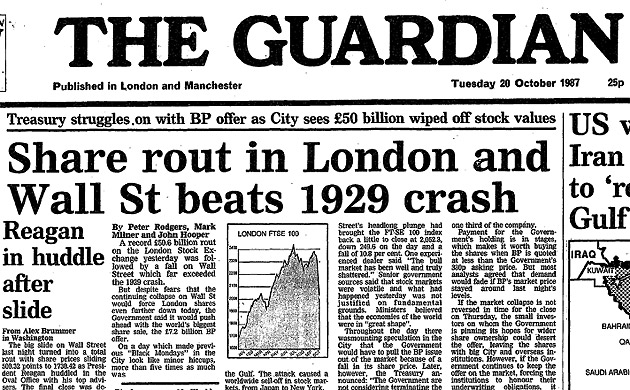
This was the decade of privatisation and widespread share ownership, and the public was gripped by the unfolding crisis. The great bull run of the 1980s was coming to a close in spectacular style. Photograph: Nils Jorgensen/Rex FeaturesIn America, some US traders found that orders they had placed the week before had still not been processed. For hours, attempts to trade on most Dow stocks were fruitless.Photograph: Bettmann/CorbisThe Dow Jones Industrial Average lost over $500bn. These traders at the Chicago Stock exchange watched in horror as the full scale of Wall Street's losses became clear.Photograph: Bettmann/CorbisThe Dow's 22.6% fall was bigger than during the Wall Street crash of 1929, which brought on the Great Depression and left millions out of work.Photograph: APGripped by the crisis, Americans watched the action unfold on electronic screens, as at this display in the window of stockbroker Dean Witter Reynolds.Photograph: Marty Katz/GettyThe Federal Reserve, and central banks around the world, stepped in with interest rate cuts. The medicine proved remarkably effective. In Britain, the fall from July's peak on the FTSE 100 of 2443 to November's low of 1565 was 36% - but the main index still ended the year higher than it started it.Photograph: The Independent/Rex FeaturesThe events of October 1987 felt like the end of the world at the time, but look back at the charts now: the crash looks like a minor blip within bull market that can be said to be have run from the early 1980s to the dotcom excitement at the end of the century.Photograph: GuardianRead how the Guardian originally reported the crash here, and here.Photograph: Guardian
Sign up to read this article
Read news from 100’s of titles, curated specifically for you.