The companies behind one of the region's largest industrial estates appear to have overcome a road block to the $88 million project.
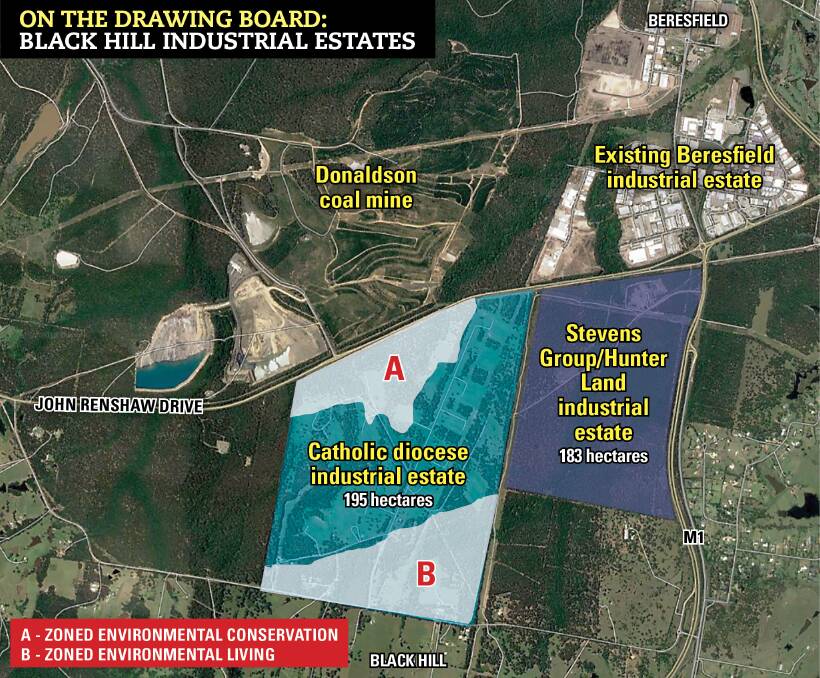
Stevens Group and joint-venture partner Hunter Land have lodged a development application to clear and subdivide the first 61-lot section of their 200-lot Black Hill industrial estate after consulting with Transport for NSW and City of Newcastle over road access to the site.
The Land and Environment Court (LEC) rejected the subdivision of the entire 183-hectare estate last year.
Hunter Central Coast Regional Planning Panel also rejected a larger industrial estate on land owned by the Catholic Diocese of Maitland-Newcastle next door.
The twin knock-backs were due to disputes with Roads and Maritime Services over how the two estates will interact with John Renshaw Drive and the M1 motorway.
Broaden Management, the company proposing to buy and develop the diocese land, has begun its own LEC challenge.
But the Stevens-Hunter Land team say in documents supplied to the council that their new subdivision application reflects the outcome of talks with TfNSW and a new TfNSW traffic analysis.
The subdivision application shows two roads in and out of the estate, one of them with traffic lights, and includes a complicated arrangement to allow access to part of the adjoining estate until Broaden builds its own access road.
Coal and Allied gained concept approval for the eastern site from the Planning and Assessment Commission in 2013 before selling it to the Stevens Group.
Stevens first applied to subdivide the land in 2018.
Together, the two sites are classified as an economic "catalyst area" in the NSW government's Greater Newcastle Metropolitan Plan.
For faster access to the latest Newcastle news download our NEWCASTLE HERALD APP and sign up for breaking news, sport and what's on sent directly to your email.