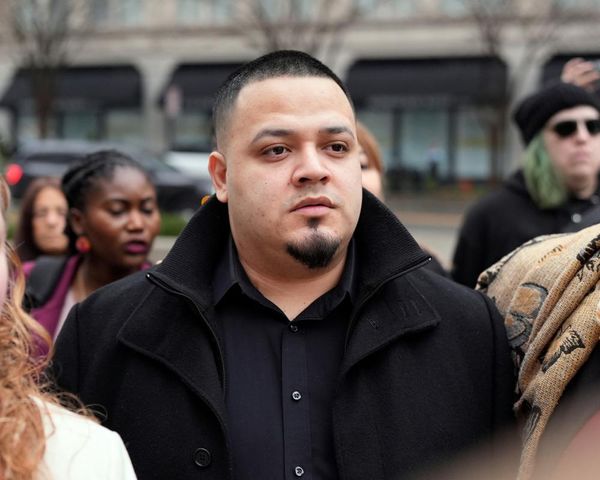
A Black firefighter has filed a federal civil rights suit claiming repeated noose incidents created a hostile, racially hostile workplace.
The complaint, filed by veteran Bloomfield firefighter Patrick Thomas, seeks approximately 19 million ($25 million) in damages for alleged racial harassment after a colleague allegedly handed him a tied noose during training and made mocking remarks.
Thomas says the gesture was not harmless but an explicit evocation of lynching and slavery that left him traumatised and forced him on stress leave.
The Incident And The Lawsuit
Thomas's complaint alleges two separate incidents in which a co-worker displayed and threw a noose during department training sessions, then treated the action as a joke. In an interview with NBC New York, Thomas recounted that a fellow firefighter handed him a tied noose and said: 'I want you to figure out what kind of knot this is.' Thomas replied: 'This is a noose. This is what people used to hang my ancestors from trees.'
The civil complaint, filed in the United States District Court for the District of New Jersey on 16 November 2025, names the Township of Bloomfield, the Bloomfield Fire Department, the fire chief, the alleged perpetrator, and several John Doe defendants.
It accuses the department and township of failing to stop repeated racially hostile conduct and of allowing a work environment permeated by intimidation and racial taunts. The federal filing is listed in court-tracking services and has been reported by specialised legal outlets.
@nbcnewyork Disturbing surveillance video has now surfaced two years after a black Bloomfield firefighter accused a white colleague of knotting a rope into a noose and taunting him. That firefighter just filed a $25 million lawsuit against the township. #newjersey #controversy #firefighter #bloomfield
♬ original sound - NBC New York
Human Damage, Institutional Failure
Thomas's attorneys argue that the noose was not a harmless prop but a weaponised symbol that conveyed a threat grounded in America's history of racial terror. The complaint says the department's internal responses were insufficient and that, after the incidents, any internal probe was either stalled or superseded by outside criminal inquiry.
Officials say the township began an internal review that was later paused when the Essex County Prosecutor's Office opened a criminal investigation. One Bloomfield firefighter was later charged in connection with the 16 November 2023 incident; that criminal matter has its own procedural history.
Legal experts say cases of symbolic intimidation, nooses, racist graffiti, and lynching imagery, present powerful claims under federal civil-rights law when they are shown to be part of a hostile work environment.
They note that institutions must address both the single act and the pattern: repeated gestures, laughter from colleagues, or a failure to discipline will strengthen a plaintiff's case. Thomas's suit seeks not only compensation but institutional accountability and systemic change.
Public Reaction And Wider Context
Following the release of surveillance and body-cam video and Thomas's statements to reporters, community reaction has been intense. Some colleagues have condemned the act as a monstrous insult that should never have occurred in a public safety service.
Others have reacted with disbelief or minimisation, framing it as a poor joke. That split has deep consequences in tightly knit firehouses where teamwork and trust are essential.
This Bloomfield case follows a string of high-profile incidents nationwide in which nooses or noose-like imagery prompted criminal charges, civil suits, or federal probes. The imagery resonates because it carries the historical memory of lynching and slavery, which courts have treated as aggravating and demeaning.
For Black public servants, the incidents are not abstract; they cut into recruitment, retention, and the well-being of staff who serve in the name of public safety.
The dispute now moves into the federal court process. Discovery will likely require the release of internal communications, training records and videos. Thomas has already given on-camera interviews describing the emotional toll. If the complaint withstands motion practice, depositions and document production could expose whether the department took adequate steps to stop the conduct and whether its leadership tolerated or minimised racial intimidation.